Locations:





Differences in infection rates, management, outcomes and transmission
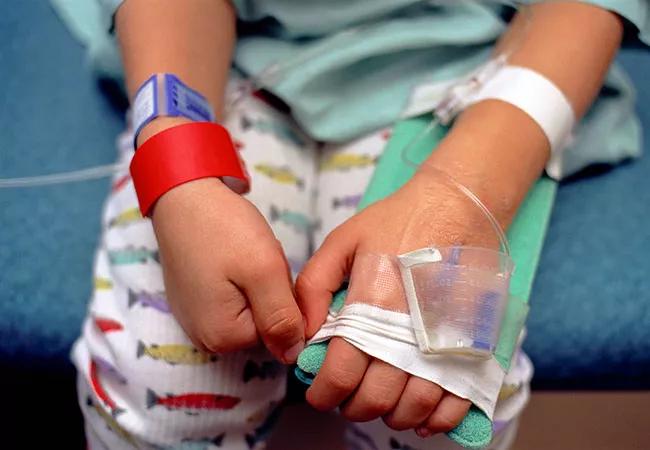
Image content: This image is available to view online.
View image online (https://assets.clevelandclinic.org/transform/32131aaf-28d1-4adf-a65d-1a306a75f440/650x450-COVID-Sick-Child_jpg)
650×450-COVID-Sick-Child
Signs and symptoms of SARS-CoV-2 infection in children are usually less severe than in adults, and are similar to those observed in other respiratory tract infections, according to Ei Ye Mon, MD, and Yamini Mandeliea, MD, the authors of an article recently published in the Cleveland Clinic Journal of Medicine’s Curbside Consults.
Advertisement
Cleveland Clinic is a non-profit academic medical center. Advertising on our site helps support our mission. We do not endorse non-Cleveland Clinic products or services. Policy
In the U.S., children comprised just over 11% of all COVID-19 cases, 1%-3.5% of COVID-19 related hospitalizations and 0%-0.2% of deaths related to COVID-19 as of October 2020. The authors note that COVID-19 diagnoses in children may be underreported due to varying testing prioritization, largely asymptomatic cases, or mild symptoms at the time of presentation.
A significant portion of pediatric cases (45%) are asymptomatic, according to the U.S. Centers for Disease Control and Prevention, and data indicate that fever, cough and shortness of breath are less commonly reported in children than adults with COVID-19. Children and infants with at least one underlying health condition, especially chronic lung disease, cardiovascular disease or immunosuppression are more likely require hospitalization, and children in racial or ethnic minority groups have been disproportionately affected.
In the first six months of the pandemic (March-September 2020), incidence among adolescents was twice that of children aged 5 to 11 years. Further in-depth studies are needed; however, a few studies suggest that children younger than 10 may be less likely to be infected and less likely to spread a SARS-CoV-2 infection to others, according to the authors.
Although it is not known why symptoms may be more muted in children than as adults when infected with COVID-19, the authors posit a few theories, including:
Advertisement
In most cases of COVID-19 in children, supportive care is usually sufficient. That said, for children 12 and older, weighting at least 40 g, the FDA has approved the use of remdesivir to treat COVID-19. Children under 12 who weigh at least 3.5 kg may still be candidates under an emergency use authorization, and clinical trials are underway.
Although the condition remains rare, there are reports of patients developing Multisystem Inflammatory Syndrome in Children (MIS-C). MIS-C is a Kawasaki-like condition; symptoms include fever, diffuse polymorphic rash, bilateral non-exudative bulbar conjunctivitis, cracked lips, oral and pharyngeal erythema, and cervical lymphadenopathy. Early recognition is crucial as these patients may be critically ill and require care in a pediatric intensive care unit, as well as evaluation from multiple subspecialties including infectious disease, cardiology, hematology/oncology and rheumatology.
To read the Curbside Consult in its entirety, visit the Cleveland Clinic Journal of Medicine.
Advertisement
Advertisement

Try these moves to relieve butt pain and numbness

Systemic change needed to improve health outcomes for parents and children, say researchers
Rare genetic variant protected siblings against seizures and severe hypoglycemia

Movie has more positive impact than expected, says Head of Adolescent Medicine
Genetic changes are similar between some vascular anomalies and cancers

Expert panel advises a two-tier structure for surgical centers
Our new head of pediatric general and thoracic surgery shares his passion and vision
Basic understanding of condition and treatment is lacking
 Search