Locations:





Cleveland Clinic researchers have found evidence that manipulating the channel activity of TRPV4 may provide a novel therapeutic approach for fibrotic diseases of the lung and other organs.
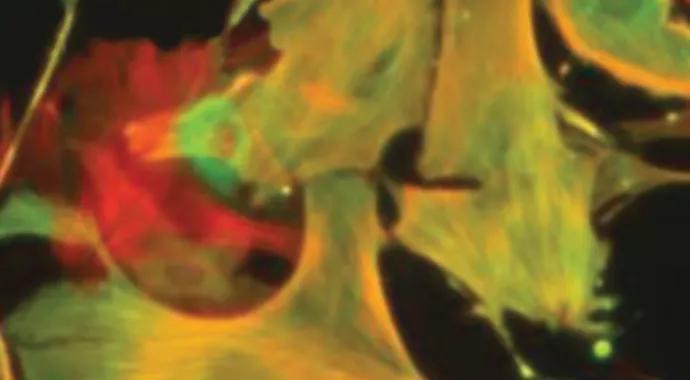
Image content: This image is available to view online.
View image online (https://assets.clevelandclinic.org/transform/4bee3ecf-bd93-4269-8bfe-75e6d1ed4c2f/TRPV4-690x380_jpg)
TRPV4-690×380
Advertisement
Cleveland Clinic is a non-profit academic medical center. Advertising on our site helps support our mission. We do not endorse non-Cleveland Clinic products or services. Policy
Idiopathic pulmonary fibrosis (IPF) is a fatal fibrotic lung disorder with marginally effective medical treatment. Myofibroblasts are critical to the fibrogenic lung repair process through their ability to produce collagen, secrete pro-fibrotic cytokines and contract tissue. Although myofibroblasts require active transforming growth factor-β (TGF-β) and a mechanical signal for their generation, the nature of the mechanical signal and the mechanism by which the mechanical signal is sensed have remained elusive.
In a search through the literature, my team noted that a calcium-permeable cell membrane ion channel named transient receptor potential vanilloid 4 (TRPV4) was activated upon plasma membrane stretch and thus could act as a mechanosensor. Thus, we investigated whether TRPV4 plays a role in myofibroblast differentiation and/or in vivo lung fibrosis.
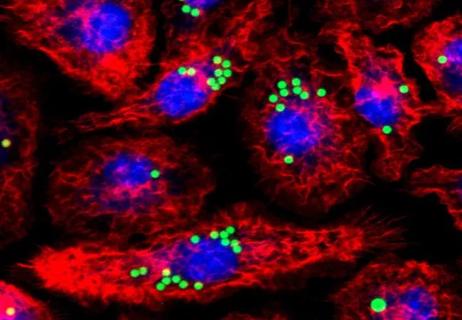
In work recently published in the Journal of Clinical Investigation, we show that inhibition of TRPV4 by small molecule inhibitors and/or downregulation/deletion of TRPV4 using molecular or genetic techniques resulted in an almost complete blockade of both the calcium influx response as well as the myofibroblast differentiation response to TGF-β
Image content: This image is available to view online.
View image online (https://assets.clevelandclinic.org/transform/67abf508-7002-4442-b431-5bf28dc7ebdc/JCI-cover_jpg)
Moreover, TRPV4 exhibited its mechanosensing and myofibroblast differentiating effect under conditions of matrix stiffness in the range of normal and fibrotic lung (1-25 kPa), suggesting it can sense changes in matrix stiffness during the fibrogenic process. Using a model assay system developed in our laboratory, we also noted that TRPV4 blocked the myofibroblast differentiation response to actual fibrotic lung tissue. Furthermore, TRPV4 deficiency protects mice from in vivo lung fibrosis in an experimental murine model.
Advertisement
These data identify TRPV4 as a long-elusive mechanosensor/transducer that mediates myofibroblast differentiation and in vivo pulmonary fibrogenesis. Successful manipulation of TRPV4 channel activity may be a novel therapeutic approach for fibrotic diseases of the lung and other organs. TRPV4 has also recently been shown to be involved in other disorders associated with pulmonary parenchymal stretch including ventilator-induced lung injury, and a TRPV4 inhibitor for pulmonary edema due to pulmonary venous hypertension is undergoing Phase I trials.
In other work in our group, we are studying the role of TRPV4 in macrophage function (with Rachel Scheraga, MD), and the role of nonmuscle myosin in inducing the pro-fibrotic fibroblast phenotype (with Brian Southern, MD).
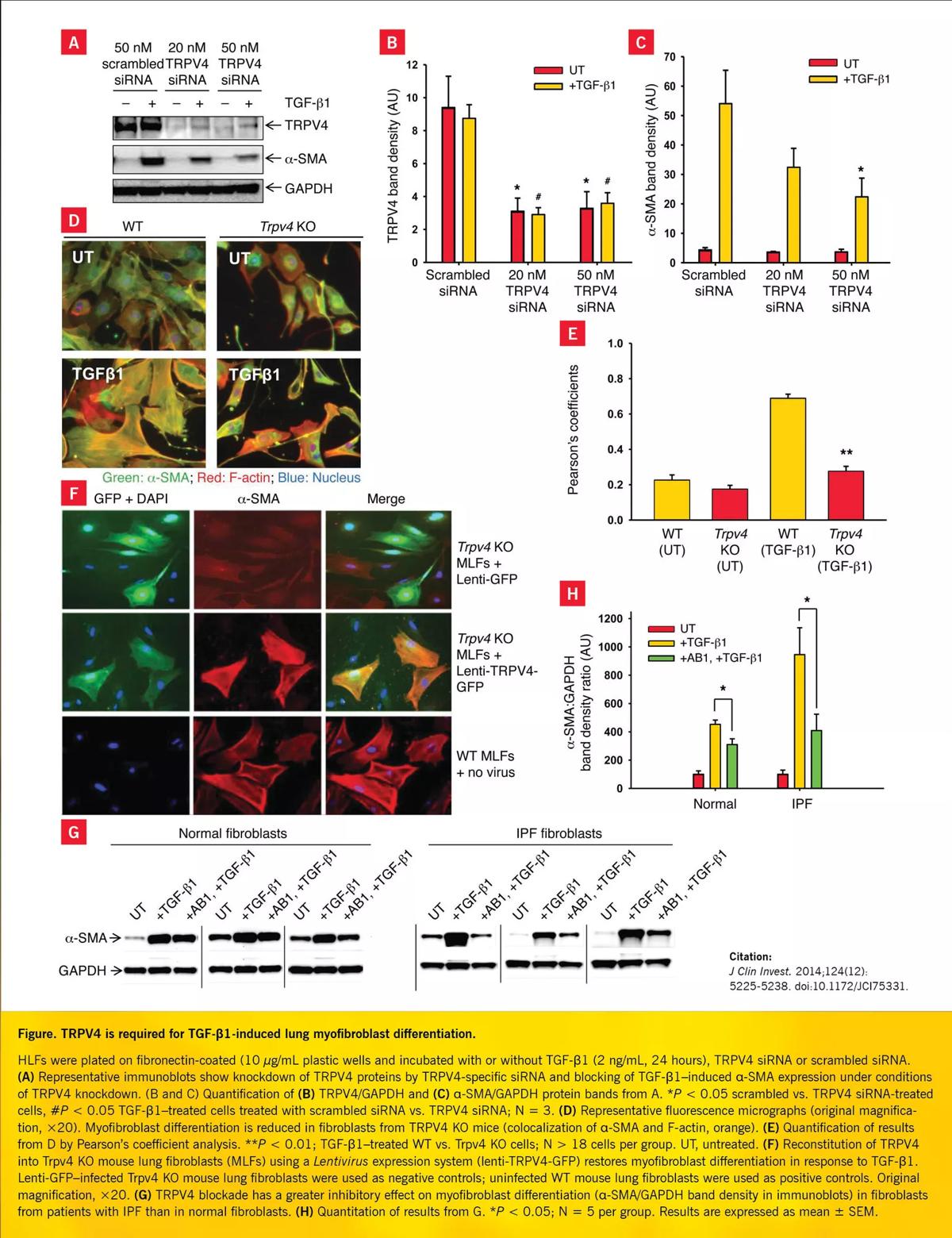
Image content: This image is available to view online.
View image online (https://assets.clevelandclinic.org/transform/b8b55cfc-638f-4a78-8d7f-cbc4cc41779a/14-PUL-280-Respiratory-Exchange_p9_jpg)
Dr. Olman is a staff physician in the Respiratory Institute with a primary appointment in the Department of Pathobiology.
Advertisement
Advertisement
Volatile organic compounds have potential in heart failure diagnostics
Caregivers are provided with real-time bronchoscopy patient findings
Insights for diagnosing, assessing and treating
A Cleveland Clinic pulmonologist highlights several factors to be aware of when treating patients

New program sets out to better support underserved patient populations
Cleveland Clinic pulmonologists aim to further lower waitlist times and patient mortality
Lessons learned from cohorting patients and standardizing care
New tools and protocols to improve care
 Search