Locations:





Helps patients visualize proper tongue placement
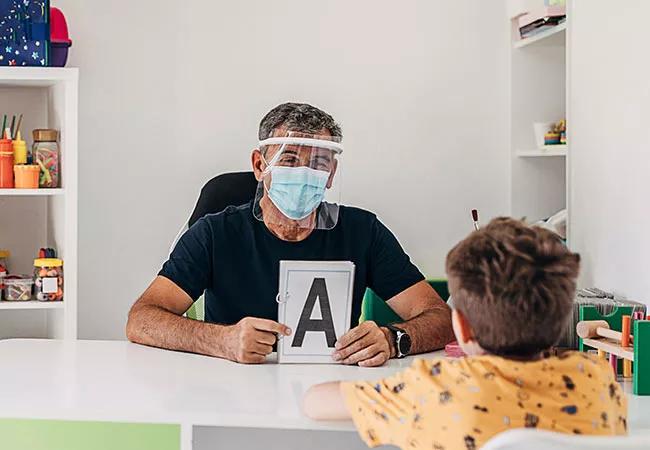
Image content: This image is available to view online.
View image online (https://assets.clevelandclinic.org/transform/45034c31-4a9c-47df-972b-60c63d51e7e3/650x450-Speech-Therapy_jpg)
650×450-Speech-Therapy
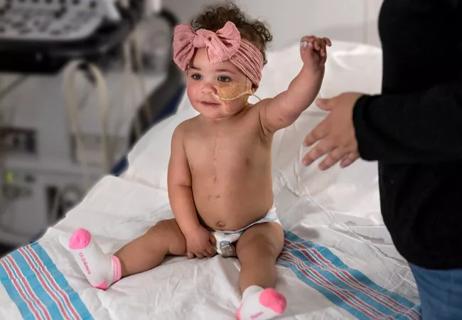
Cleveland Clinic speech-language pathologists are using ultrasound to help patients with persistent articulation disorders understand how to move their tongues to produce the desired sounds.
Advertisement
Cleveland Clinic is a non-profit academic medical center. Advertising on our site helps support our mission. We do not endorse non-Cleveland Clinic products or services. Policy
The technology has been particularly helpful in remediating R sounds, which some children pronounce like W.
“The R sound is hard to target, because the tongue does not touch anything in the mouth,” speech-language pathologist Lisa Leonard, MA, CCC-SLP, Inpatient Therapy Clinical Manager at Cleveland Clinic Children’s, explains. “You cannot see how it is produced, and there are many ways to produce it. This makes it hard to describe to a child how to position their tongue and how much tension to use to make the sound correctly.”
This is where ultrasound can help. The technology has been utilized for this purpose in university programs, but has only recently moved into the clinical setting. Leonard and her colleagues consider it a valuable tool for patients who have maxed out or are moving slowly with conventional treatment.
The technology employs an ultrasound probe that plugs into the USB port of a computer. Moving the curved probe under the chin enables the therapist to demonstrate correct tongue position for sounds such as AR, ER, OR, AIR, EAR, IRE or R as the first letter of a word.
The probe is then used on the patient, allowing them to visualize their own tongue movement and understand how it affects sound.
“With ultrasound, you can also look at other sounds, like S and L, in addition to R. Everyone produces them differently,” says Leonard.
The first patient to take advantage of ultrasound for sound remediation was a motivated 10-year-old, whose only sound error was R. She began traditional coaching and cuing on tongue placement in late May 2020, but was unable to make gains. When ultrasound was introduced, she picked up the concept quickly and mastered correct tongue placement for R in only a handful of sessions. She was discharged from therapy after Thanksgiving.
Advertisement
“She found ultrasound helpful, because she could see her tongue position in correct and incorrect sound production,” says Jacquelyn Kearns, CCC-SLP, her speech therapist.
It typically takes months—even longer—for children to figure out how to produce the R sound correctly. After they learn to make the sound, the typical progression is to use it in small words, then in bigger words, then in sentences and, finally, in conversation.
“We were impressed with the rapid rate at which the patient was able to use R correctly in syllables, and the ultrasound was no longer needed once she was able to produce R at the word level. The feedback she received motivated her, and we saw improvements from week to week.”
Speech remediation at a young age is encouraged to prevent children from becoming targets of peer ridicule, which can begin around age 7 or 8. Yet even with speech therapy, some children are never able to gain control over certain sounds and are ultimately discharged for lack of progress.
Leonard feels that many of these former patients, now teenagers, still may be able to learn to make the sound correctly with the help of ultrasound.
“They may not have had the advantage of ultrasound in the past, so it may be worth a try now if the patient is motivated,” she says.
Speech remediation with ultrasound requires referral by a pediatrician to a hospital-based therapy program, like the one at Cleveland Clinic Children’s. Pediatricians can “write ‘R sound error/articulation, evaluation and treatment’ on the referral, and our team will make sure the patient sees the right therapist,” says Leonard.
Advertisement
Advertisement

Try these moves to relieve butt pain and numbness

Systemic change needed to improve health outcomes for parents and children, say researchers
Rare genetic variant protected siblings against seizures and severe hypoglycemia

Movie has more positive impact than expected, says Head of Adolescent Medicine

Genetic changes are similar between some vascular anomalies and cancers
Expert panel advises a two-tier structure for surgical centers
Our new head of pediatric general and thoracic surgery shares his passion and vision
Basic understanding of condition and treatment is lacking
 Search