Locations:





Can disulfiram boost the efficacy of chemotherapy in this patient population?
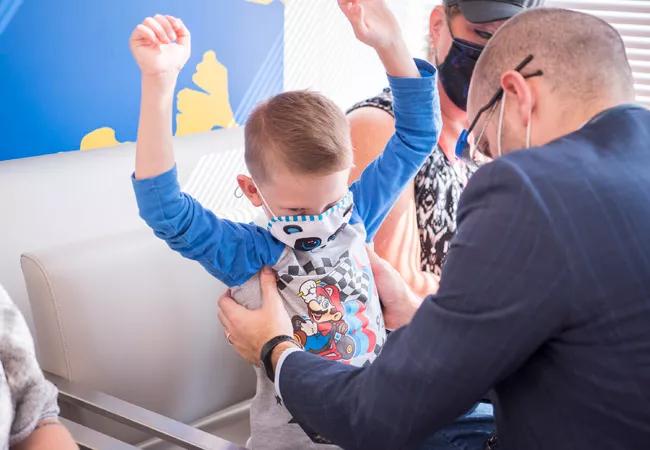
Image content: This image is available to view online.
View image online (https://assets.clevelandclinic.org/transform/4ec41427-5e9c-4272-b466-bb3acadd43c1/trucco-with-patient-1)
22-CHP-3220861 CQD-Trucco – Phase 1 trial Disulfiram Combined
Children and young adults with relapsed or refractory sarcomas have a poor prognosis. When these cancers recur, as happens in many cases, only 20% of these patients become long-term survivors. In comparison, newly diagnosed patients with localized sarcomas have a 70% cure rate.
Advertisement
Cleveland Clinic is a non-profit academic medical center. Advertising on our site helps support our mission. We do not endorse non-Cleveland Clinic products or services. Policy
To improve outcomes for patients with relapsed/refractory sarcomas, Cleveland Clinic Pediatric Institute is conducting the first trial evaluating whether disulfiram (Antabuse), used safely for more than 60 years to treat chronic alcohol abuse, can boost the efficacy of chemotherapy in this population. Cleveland Clinic treats many pediatric sarcoma patients, including providing 200-300 second-opinion consultations annually for patients with these cancers.
Disulfiram may seem like an unlikely drug to treat cancer. As an alcoholism drug, it inhibits the enzyme, aldehyde dehydrogenase (ALDH), that the body uses to break down alcohol. Inhibiting ALDH doesn’t cause any major side effects unless alcohol is consumed when it causes very unpleasant side effects. In recent years, studies in mice and cancer patients have found that ALDH is expressed at high levels in subpopulations of cancer cells that are resistant to chemotherapy.
“Combining disulfiram with chemotherapy might reverse the resistance seen in some relapsed sarcoma cells. This is the first study specifically targeting the chemotherapy resistance seen in relapsed/refractory sarcomas,” says Matteo Trucco, MD, a pediatric hematologist/oncologist at the Cleveland Clinic Department of Pediatric Hematology-Oncology and Blood and Marrow Transplantation and principal investigator for the trial.
Supported by Cleveland Clinic’s Velosano Kids cancer initiative and other foundations, the trial has two aims:
Advertisement
Since disulfiram has not been tested in combination with liposomal doxorubicin in any population, and there is little experience giving disulfiram to children, the first phase of the trial will test this regimen in six adults with relapsed/refractory sarcoma. The second phase will test the regimen in pediatric patients with refractory/relapsed sarcoma and determine the appropriate dose of disulfiram.
To assess the efficacy of adding disulfiram to the chemotherapy regimen, participants’ tumors will be biopsied before and after treatment to test ALDH expression levels as a pharmacodynamic measure of disulfiram’s inhibition of ALDH. Researchers will also use RECIST criteria on radiographic imaging to determine if the sarcomas are responding to therapy. Then, they will correlate ALDH expression levels to tumor response to determine if ALDH expression can predict who will benefit from the addition of disulfiram to chemotherapy. “We are really hoping that this regimen will target and eliminate resistant sarcoma cells and prevent tumor recurrence to improve the overall survival for these patients,” says Dr. Trucco.
The trial is estimated to take one to two years; if it is successful, the investigators will move on to a Phase 2 trial to further test the efficacy of this regimen with the disulfiram dose determined by this trial.
Advertisement
Advertisement

Try these moves to relieve butt pain and numbness

Systemic change needed to improve health outcomes for parents and children, say researchers
Rare genetic variant protected siblings against seizures and severe hypoglycemia

Movie has more positive impact than expected, says Head of Adolescent Medicine

Genetic changes are similar between some vascular anomalies and cancers
Expert panel advises a two-tier structure for surgical centers
Our new head of pediatric general and thoracic surgery shares his passion and vision
Basic understanding of condition and treatment is lacking
 Search