Locations:





Focus on neonates’ well-being improves outcomes
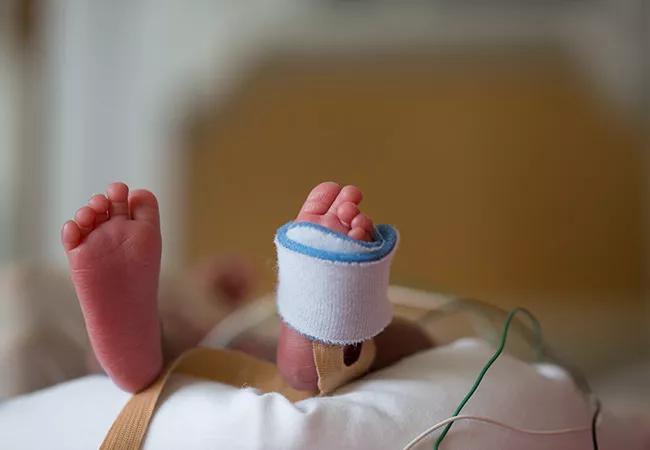
Image content: This image is available to view online.
View image online (https://assets.clevelandclinic.org/transform/12976c70-acb7-4c6e-b94f-b734e9988b84/650x450-NICU_jpg)
650×450-NICU
During the past two decades, survival rates have improved for the approximately 300,000 premature infants born annually in the United States. As a result, the focus of premature infant care has expanded from supporting heart and lung function to improving well-being and optimizing growth and development.
Advertisement
Cleveland Clinic is a non-profit academic medical center. Advertising on our site helps support our mission. We do not endorse non-Cleveland Clinic products or services. Policy
These fragile beings still face many challenges starting life in the newborn intensive care unit (NICU). The noisy hospital environment, many invasive procedures and lack of physical contact with parents can affect development: 15% of babies born prematurely have developmental delays and learning disabilities that are not explained by disease.
“We are constantly investigating ways to make the nursery environment as similar as possible to what the newborn would experience at home,” says Hany Aly, MD, Chair of Neonatology at Cleveland Clinic Children’s.
With the goal of creating a healthier environment for premature infants, Dr. Aly has spearheaded research on skin, protecting skin integrity and enabling beneficial physical contact.
“The skin is the largest organ in the body, yet the amount of research on skin is minuscule compared to research on the lung and brain,” says Dr. Aly. “Skin not only protects against infection but also has sensors that connect directly to the brain and help the brain’s growth and development.”
A major challenge in caring for babies who leave the womb too early is keeping them warm and moisturized. Dr. Aly advises against the universal use of topical lotions and oils, which studies have shown can stimulate the growth of bacteria and species of Candida. In a randomized controlled study, he found that moisturizing with warm, sterile water is ineffective, so he recommends minimizing the use of chemicals, such as antiseptics, and achieving optimal humidification in the incubator.
Advertisement
Sensors — some invasive — that are used to monitor infants’ body functions also pose a challenge because they can damage patients’ delicate skin. Additionally, the pain from needle insertion is associated with adverse neurodevelopmental outcomes. Dr. Aly led a study of noninvasive transcutaneous carbon dioxide (tcPCO2) monitoring using reduced-temperature probes after reports of skin complications with high-temperature probes. This technique was found to be a safe and reasonably accurate method for monitoring CO2 and is routinely used at Cleveland Clinic Children’s, significantly reducing skin-breaking procedures.
Invasive monitoring may be further reduced with a new advance — a wireless sensor system that can gather a wide range of medical data, including cardiac function, body temperature and blood pressure, with clinical-grade precision, using lightweight wireless patches attached to the baby’s chest and foot. Currently pending approval by the U.S. Food and Drug Administration, the wireless sensor system will be quieter and less intrusive than conventional wire-based monitoring, and will allow for more direct physical contact between parents and infant, says Dr. Aly.
Numerous studies have shown the benefits of touch for premature infants. Dr. Aly led two studies that examined whether physical contact affects bone mineralization and weight gain.
The weight gain study compared the effects of massage with and without kinesthetic stimulation (KS) on weight gain and length of hospital stay in medically stable infants weighing more than 1,000 grams. While there was no impact on hospital stay, the infants who received massage and KS had increased average daily weight gain compared to the other groups that received only massage or no intervention.
Advertisement
In the bone mineralization study, infants receiving massage and physical activity had improved bone formation without affecting bone resorption. The two interventions had a synergistic effect, increasing PICP, a biomarker of bone formation.
At Cleveland Clinic Children’s, a team of physical therapists provides these interventions to infants in the NICU. “We have seen improvements in the babies who receive this treatment,” says Dr. Aly. “Massage helps systemic functions, stimulating the nerve endings of skin.”
Parents are encouraged to have physical contact with their infants and are taught how to provide massage. They are the only ones who have skin-to-skin contact with infants. “Infants can recognize their mother’s smell and voice, and therefore, skin-to-skin contact can affect heart rate, regulate the autonomic nervous system and increase bonding,” says Dr. Aly. “It also decreases stress in mothers of premature infants, who feel helpless and have higher rates of postpartum depression than mothers whose babies are born at full term.”
Touch serves another vital function for premature infants, who are prone to becoming cold outside of the incubator: “It’s amazing to see how contact with the mother warms the infant and regulates body temperature,” says Dr. Aly.
Advertisement
Advertisement

Try these moves to relieve butt pain and numbness

Systemic change needed to improve health outcomes for parents and children, say researchers
Rare genetic variant protected siblings against seizures and severe hypoglycemia

Movie has more positive impact than expected, says Head of Adolescent Medicine
Genetic changes are similar between some vascular anomalies and cancers
Expert panel advises a two-tier structure for surgical centers
Our new head of pediatric general and thoracic surgery shares his passion and vision
Basic understanding of condition and treatment is lacking
 Search