Locations:





 Search
Traditional diagnoses may not reflect biology of tumor
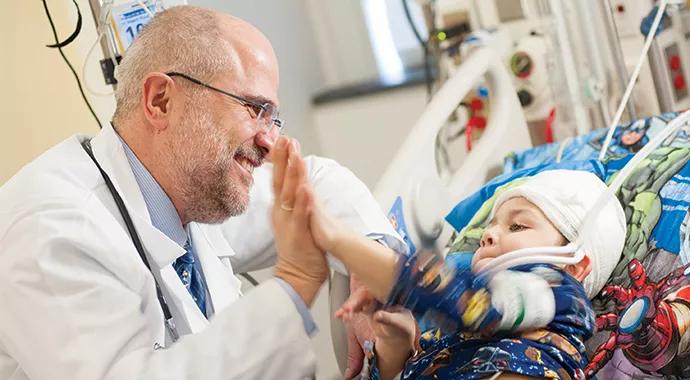
Image content: This image is available to view online.
View image online (https://assets.clevelandclinic.org/transform/1cde05f7-8aa8-4236-86d6-6cf4407fc745/Hemonc_690x380_jpg)
Hemonc_690x380
Aggressive chemotherapy protocols have yielded high cure rates for many forms of pediatric cancer. Yet options remain limited for patients who fail these treatments or have cancers highly resistant to known therapies.
Advertisement
Cleveland Clinic is a non-profit academic medical center. Advertising on our site helps support our mission. We do not endorse non-Cleveland Clinic products or services. Policy
Johannes Wolff, MD, believes that imprecise diagnoses may be the reason for many of these treatment failures.
The pediatric oncologist, who is Chair of Cleveland Clinic’s Department of Pediatric Hematology, Oncology and Blood & Marrow Transplantation, believes that choosing treatments based on traditional diagnoses made by pathology do not necessarily reflect the biology of the tumor.
“I have come to believe we will be more successful by treating individual tumors with biologic agents known to be effective against individual biomarkers,” he says.
The approach, known as targeted therapy, initially took hold in adult oncology but is now being offered at a few pediatric centers, including Cleveland Clinic Children’s, to children who have failed multiple chemotherapy agents or do not qualify for any treatment protocol.
Under his targeted therapy strategy, Dr. Wolff determines the molecular composition of a tumor and then selects the medication(s) most likely to be effective against it. “This approach has the highest chance of extending event-free survival,” he says.
Success is measured against expectations. “If the expected length of life is 10 months and the child lives 14 months, treatment was a success,” he notes.
Dr. Wolff is building a database of outcomes to help oncologists choose the best agent for a particular patient without conducting a literature search. He envisions creating a targeted therapy program that is robust on multiple fronts.
Confident of the value of targeted therapy to improve outcomes, Dr. Wolff ultimately hopes to convince the FDA to use data derived from his database to approve new drugs. The alternative, he says, fails children.
Advertisement
“We’ll never be able to do clinical trials with targeted drugs for children when patient groups are broken down by tumor markers, because we’ll never have enough patients,” he says.
While an outcomes database may prove invaluable in guiding individual therapy, clinical trials remain the standard for evaluating treatment potential in large populations.
The Children’s Oncology Group has asked Dr. Wolff to write a clinical trial protocol for a novel drug for diffuse intrinsic pontine glioma (DIPG), a fast-growing brain tumor affecting the nervous system. Though standard chemotherapy often produces a remission lasting several months, the tumor always returns and few patients survive.
In his former position at MD Anderson Cancer Center, Dr. Wolff discovered that recurrent radiation had a dramatic effect on quality of life in children with DIPG. “It did not extend survival time, but it enabled these children to walk and talk again for their remaining days,” he says. “Their parents were extremely grateful.”
Dr. Wolff intends to continue his research with a trial involving simultaneous radiochemotherapy building on radiosensitization.
“We don’t need to give up so soon,” he says. “When standard chemotherapy no longer works, and you think there are no more options, come here. We have options.”
Advertisement
Advertisement

Try these moves to relieve butt pain and numbness

Systemic change needed to improve health outcomes for parents and children, say researchers
Rare genetic variant protected siblings against seizures and severe hypoglycemia

Movie has more positive impact than expected, says Head of Adolescent Medicine

Genetic changes are similar between some vascular anomalies and cancers
Expert panel advises a two-tier structure for surgical centers
Our new head of pediatric general and thoracic surgery shares his passion and vision
Basic understanding of condition and treatment is lacking