Locations:





Focus is exocrine pancreatic stem cell development
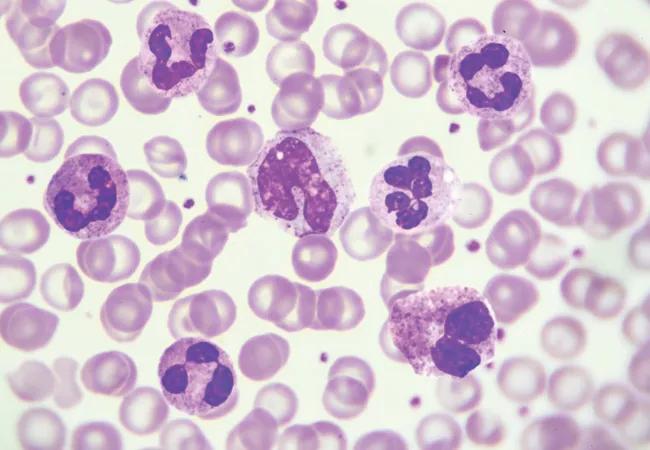
Image content: This image is available to view online.
View image online (https://assets.clevelandclinic.org/transform/28d7b451-222b-49b1-981d-42955db0feae/21-CHP-2564661-CQD-Corey-Pathophysiology-of-Human-CSF3R_650x450_jpg)
21-CHP-2564661 CQD Corey – Pathophysiology of Human CSF3R_650x450
Two very different diseases — pancreatic cancer and Shwachman-Diamond syndrome (SDS), a congenital bone marrow failure disorder — share something important in common: abnormal exocrine pancreatic stem cell development. Characterized by pancreatic atrophy, SDS may increase the risk of developing pancreatic and other gastrointestinal cancers. A Cleveland Clinic study currently underway of pancreatic stem cells in SDS may yield new insights into pancreatic cancer.
Advertisement
Cleveland Clinic is a non-profit academic medical center. Advertising on our site helps support our mission. We do not endorse non-Cleveland Clinic products or services. Policy
“By studying rare childhood disorders with genetic mutations like SDS, we’ve learned a lot about normal and abnormal processes that affect blood, metabolism, and organ development. We are building on this experience to expand our research into pancreatic cancer,” says Seth Corey, MD, MPH, a pediatric oncologist at Cleveland Clinic Children’s and a professor in Pediatrics and Molecular Medicine at Cleveland Clinic, who is leading the study.
Pancreatic cancer is the tenth most common cancer in the United States, with 37,000 people diagnosed annually. Since is it usually diagnosed at an advanced stage, it is the fourth most lethal. With cases on the rise, greater understanding and new treatments are badly needed.
“Pancreatic cancer is poorly understood. We need to learn more about why it develops, the genes involved in its development and why it’s so chemoresistant,” says Dr. Corey.
The pancreas is one of the body’s most metabolically active organs, with both endocrine and exocrine functions. Endocrine functions include the sensing of blood sugar levels and producing insulin. Exocrine functions center on the production of enzymes to digest proteins and fats. The pancreas develops from both endocrine and exocrine stem cells, which make the enzyme-producing acinar cells. About 93% of pancreatic cancers are exocrine tumors.
Using CRISPR/Cas9 editing, Dr. Corey’s lab developed a zebrafish model that is a close phenocopy of human SDS. They have used zebrafish models to study other genetic disorders and cancers, such as Ewing sarcoma. Zebrafish have distinct advantages over mouse models for research: their rapid development of organs, transparency of developing tissues, prodigious production of eggs that afford statistical significance and low costs of maintenance and breeding.
Advertisement
The zebrafish model is deficient in the genes that cause SDS, which are critical to assemble ribosomes, complex cellular machines that synthesize proteins. In ongoing studies, Cleveland Clinic investigators are characterizing the stress pathways that arise in SDS. “We have identified and characterized overlooked molecules involved in the stress pathways that can lead to cancer development,” says Dr. Corey.
The study is focusing on pancreatic acinar stem cells to increase understanding of their basic mechanisms for proliferation and differentiation and the stress pathways that develop when these cells are unable to synthesize critical proteins. When mutated cells emerge from pancreatic stem cells, they don’t follow normal rules on limited growth control, a process that may ultimately lead to cancer. “By understanding the different control mechanisms for pancreatic stem cells and the critical vulnerabilities as they mature, cancer development could be arrested. These vulnerabilities could provide a target for therapeutics to eradicate malignant pancreatic cancer cells,” says Dr. Corey.
Advertisement
Advertisement

Try these moves to relieve butt pain and numbness

Systemic change needed to improve health outcomes for parents and children, say researchers
Rare genetic variant protected siblings against seizures and severe hypoglycemia

Movie has more positive impact than expected, says Head of Adolescent Medicine
Genetic changes are similar between some vascular anomalies and cancers
Expert panel advises a two-tier structure for surgical centers
Our new head of pediatric general and thoracic surgery shares his passion and vision

Basic understanding of condition and treatment is lacking
 Search