Locations:





In vitro research seeks strategies to prevent epithelial disruption
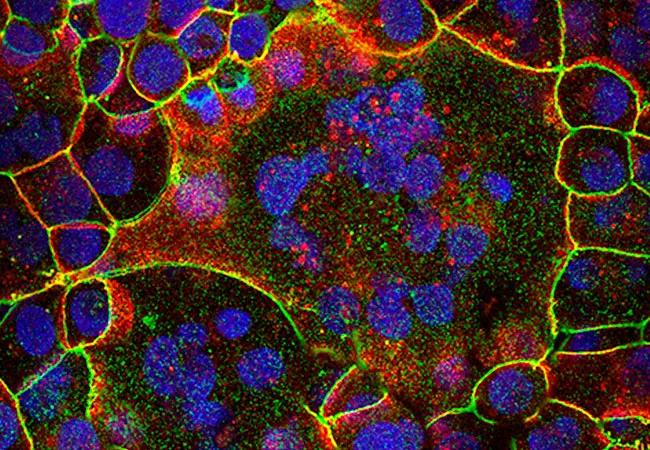
Image content: This image is available to view online.
View image online (https://assets.clevelandclinic.org/transform/d5b5c003-d281-40a8-b016-649f336528b2/650x450-RSV_jpg)
650×450-RSV
Respiratory syncytial virus (RSV) is the most important viral infection causing acute lower respiratory infection in young children, and is associated with long-term inflammation after infection, persistent wheezing and childhood asthma.
Advertisement
Cleveland Clinic is a non-profit academic medical center. Advertising on our site helps support our mission. We do not endorse non-Cleveland Clinic products or services. Policy
In the past, RSV was considered solely a pediatric disease, but in recent years it has been observed to also be an important cause of morbidity and mortality in older and high-risk adults. Little is known about the pathogenesis of RSV infection, and there is no efficient antiviral therapy or vaccine to manage the disease, so treatment remains largely supportive.
Previous research conducted by Fariba Razaee, MD, a pediatric pulmonologist in the Center for Pulmonary Medicine, and her group established that RSV infection leads to dysfunction of the airway epithelium — which forms a barrier to the outside world and plays a crucial role in regulating responses to allergens, viral infections and other environmental stimuli — and disruption of its function.
In a recent article published in PLOS One, the team presented results of a new series of cell-culture studies they conducted that dissected the pathways involved in RSV-induced barrier disruption and looked at how modifying the involved mechanisms could restore the barrier’s integrity. Specifically, they sought to investigate the effects of increased cyclic adenosine monophosphate (cAMP), as well as the molecular mechanisms underlying cAMP actions.
“The cyclic AMP (cAMP) signaling pathway is involved in the regulation of many essential cellular processes,” explains Dr. Razaee. “In this series of experiments, we showed that both forskolin, a chemical compound and activator of adenylyl cyclase, which is responsible for cAMP production, and a stable cell-permeable cAMP analog significantly reduced RSV-induced barrier breakdown.”
Advertisement
In addition, the group found that increasing cAMP levels decreased the replication of the virus even when treatment was delivered to the cell culture several hours after RSV infection. “Increasing cAMP levels worked as both a prophylactic and a therapeutic intervention,” she notes. “This is important because it raises the possibility that we can use cAMP-elevating drugs to stabilize the respiratory barrier and limit airway inflammation in patients who have been infected with RSV.”
The group found that cAMP protects the epithelial barrier by significantly attenuating the disassembly of apical junctional complex (APC) via the activation of protein kinase A (PKA). The increased cAMP level also reduced the reorganization of the actin cytoskeleton, including apical accumulation of cortactin, an essential actin-binding protein, and reduced expression of the RSV F protein. “In short, cAMP reduced RSV-induced disruption of the structure and function of the airway epithelial barrier by stabilizing the epithelial junctions and inhibiting viral biogenesis,” she says.
Dr. Razaee says that these novel findings “are significant because better understanding of the mechanisms involved in RSV disease will not only enhance our knowledge of basic biology, but will also aid in the design of agents that could specifically target virus-mediated pathology, treating acute and chronic sequalae of infection.”
The researcher reports that “the next step in our research will be to see if these observations can be replicated in an animal model, specifically the RSV murine model, which offers advantages for studying the pathogenesis of RSV-induced long-term airway disease.” Eventually, the team plans to focus on clinical studies to investigate the effect of viral infection on the airway barrier of patients suffering from respiratory illnesses.
Advertisement
Advertisement

Try these moves to relieve butt pain and numbness

Systemic change needed to improve health outcomes for parents and children, say researchers
Rare genetic variant protected siblings against seizures and severe hypoglycemia

Movie has more positive impact than expected, says Head of Adolescent Medicine
Genetic changes are similar between some vascular anomalies and cancers
Expert panel advises a two-tier structure for surgical centers
Our new head of pediatric general and thoracic surgery shares his passion and vision
Basic understanding of condition and treatment is lacking
 Search