Locations:





Annual data report analyzes the latest trends in lung transplantation
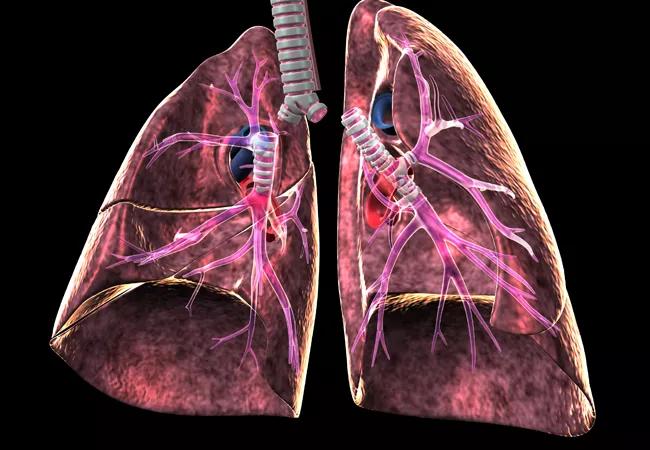
Image content: This image is available to view online.
View image online (https://assets.clevelandclinic.org/transform/babf5743-2ed8-41fc-81d1-7c0cf1cd6dc6/18-PUL-036-Budev-Hero-Image-650x450pxl_jpg)
18-PUL-036-Budev-Hero-Image-650x450pxl
The trends, demographics and outcomes data of lung transplantations (LTs) performed in the United States in 2017 are outlined in the latest LT annual data report published in the February 2019 issue of the American Journal of Transplantation. Compiled by a panel of experts convened by the Organ Procurement and Transplantation Network and the Scientific Registry of Transplant Recipients (SRTR), the publication outlines relevant LT statistics for 2017.
Advertisement
Cleveland Clinic is a non-profit academic medical center. Advertising on our site helps support our mission. We do not endorse non-Cleveland Clinic products or services. Policy
“This report represents a sweeping look at what’s happening in the country in lung transplantation,” says Maryam Valapour, MD, MPP, Director of Lung Transplant Outcomes at the Respiratory Institute, Senior Staff for Lung Transplantation at the SRTR and lead author of the publication. “One of its goals is to stimulate research.”
According to the latest analyses, the number of LTs has increased continually since 2012, reaching a record high of 2478 in 2017 — an increase of 133 transplants from 2016. More than two-thirds of transplants were bilateral.
“Our analysis has shown that lung transplants are increasingly utilized in the country,” says Dr. Valapour. “This is largely due to the increasing organ donor numbers, improvements in the treatment of patients with end-stage lung disease and efforts of the scientific community to improve the utilization of recovered organs through the use of new technologies.”
However, despite an increase of 126 donors in 2017, the expert panel notes that the need for organs is still greater than the pool of available donors. Consequently, 326 patients died or became too ill to undergo transplant, and another 1,360 remained on the waiting list at the end of 2017.
Pulmonary fibrosis remains the leading indication for LT, comprising nearly two-thirds of transplants performed. While individuals between the ages of 50-64 represent the largest group of recipients, there has been a steady increase in recipients over the age of 65, who represent the second largest cohort. Sixty-five medical centers across the U.S. performed LT in 2017, with a median of 26 transplants performed per program. Three transplant programs, including Cleveland Clinic’s, performed more than 100 transplants in 2017, accounting for 15.1% of all transplants in the U.S.
Advertisement
“Our program has been one of the top three highest-performing transplant programs in the country for the last decade,” says Dr. Valapour. “In 2017, we performed 129 lung transplants.”
According to the 2017 report, the short-term (one-year) survival of transplant recipients continued to improve, while long-term (10-year) survival had clearly declined. The increasingly older age and higher lung allocation scores (LAS) of U.S. LT recipients likely contribute to this trend.
“We are now transplanting sicker and significantly older patients than 10 years ago, partly because we can keep patients with lung disease alive longer, so I think that this is one of the reasons we’re seeing the long-term survival plateau,” says Dr. Valapour. “Advancements in technology, including ECMO [extracorporeal membrane oxygenation] and EVLP [ex-vivo lung perfusion], have largely made this possible.”
Dr. Valapour explains that ECMO is used in patients waiting for a donor lung while EVLP is used on the donor side to reevaluate and optimize the organ prior to transplantation. The use of ECMO increased from 1% in 2012 to 2.2% across the US in 2017. Cleveland Clinic uses both technologies to maximize the likelihood of a positive transplant outcome.
Dr. Valapour says that important policy changes occurred in November of 2017 that aimed to broaden the geographic sharing of donor lungs. The initial catchment area of donor organ allocation was changed from the donation service area to a geographic area whose perimeter is defined by a 250 nautical mile radius emanating from the donor hospital. This means that the sickest patients within the 250-mile radius will have priority access in organ allocation.
Advertisement
An early analysis of transplant and mortality rates found that neither transplant nor mortality rates meaningfully differed by recipient distance from their transplant center for those patients who lived within a 250-mile radius of the center.
“However, transplant recipients who lived ≥ 250 miles from their transplant center experienced an overall lower post-transplant survival compared with those who lived closer than 250 miles from their transplant center. Work has to be done to better understand why that is the case.” says Dr. Valapour.
Advertisement
Advertisement
Volatile organic compounds have potential in heart failure diagnostics
Caregivers are provided with real-time bronchoscopy patient findings
Insights for diagnosing, assessing and treating
A Cleveland Clinic pulmonologist highlights several factors to be aware of when treating patients

New program sets out to better support underserved patient populations
Cleveland Clinic pulmonologists aim to further lower waitlist times and patient mortality
Lessons learned from cohorting patients and standardizing care
New tools and protocols to improve care
 Search