Locations:





The rising burden of NAFLD
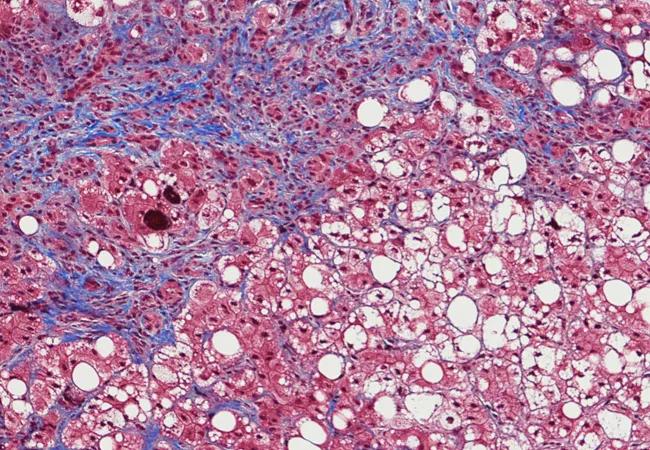
Image content: This image is available to view online.
View image online (https://assets.clevelandclinic.org/transform/0d9c2712-9e05-4650-8471-5685c93e3510/17-DDI-3953-Fibrosis-CQD_jpg)
17-DDI-3953-Fibrosis-CQD
In the past few decades, nonalcoholic fatty liver disease (NAFLD) has become more prevalent in U.S. adolescents and is currently the most common cause of chronic liver disease in this age group. This finding corresponds to the high prevalence of childhood obesity — the Centers for Disease Control and Prevention (CDC) estimates that obesity affects 13.7 million (18.5 percent) children and adolescents in the US.
Advertisement
Cleveland Clinic is a non-profit academic medical center. Advertising on our site helps support our mission. We do not endorse non-Cleveland Clinic products or services. Policy
“NAFLD is almost always associated with obesity; we are seeing this correlation in both children and adolescents,” says Praveen Selvakumar, MD, Pediatric Gastroenterologist in Cleveland Clinic’s Department of Pediatric Gastroenterology. “Various studies estimate that roughly 30 to 50 percent of obese patients have NAFLD.”
Dr. Selvakumar explains that early diagnosis and treatment significantly influence the overall outcome of patients with NAFLD.
“Left untreated, the presence of fat in the liver can lead to significant liver damage, and even end-stage liver disease,” he says. “Even adolescents and young adults have required liver transplantation due to end-stage liver disease caused by NAFLD.”
Dr. Selvakumar says that one of the challenges of diagnosing NAFLD is the absence of symptoms in the early stages of disease.
“NAFLD is characterized by a broad clinicopathologic spectrum. Fat accumulation in the liver may lead to varying degrees of inflammation in which case the condition progresses to nonalcoholic steatohepatitis (NASH). Further damage can lead to varying stages of fibrosis and, eventually, cirrhosis,” he says. “However, most often, patients typically do not experience any symptoms and are often referred by a primary care physician either based on the elevation of liver enzymes or fat seen on a liver ultrasound. These tests are usually done as a part of screening in overweight and obese children.”
According to Dr. Selvakumar, a definite confirmation of diagnosis is made with a liver biopsy, but liver biopsies cannot be performed for all patients. As far as the age of onset is concerned, he says that the most common age at presentation is between 10 and 17 years, although NAFLD has also been reported in patients as young as 5 years old.
Advertisement
Dr. Selvakumar and his team of collaborators recently examined the prevalence of NASH and advanced fibrosis, two of the most advanced stages of NAFLD, in US adolescents. The study, submitted for publication to the European Journal of Pediatrics, analyzed data of 8.539 adolescents, aged between 12 and 18 years, enrolled in the National Health and Examination Survey during three time periods: 1988-1994, 1999-2004, and 2005-2010. Non-invasive models based on laboratory findings and anthropometric parameters were used in the study to assess the prevalence of NAFLD, NASH, and liver fibrosis in the studied population.
“We found a fourfold increase in the prevalence of NASH in adolescents from 1988 to 2010. The rates of NASH occurrence increased from 0.74 percent in the 1988-1994 period all the way up to 3.4 percent in the 2005-2010 period,” says Dr. Selvakumar. “NASH was most prevalent in Mexican-American adolescents affecting approximately 5 percent of them in the 2005-2010 period.”
While the prevalence of NASH in U.S. adolescents raised concerns, the rates of advanced fibrosis remained low.
“Contrary to adults, in this pediatric group of patients we did not observe an increase in the prevalence of advanced fibrosis,” says Dr. Selvakumar. “The rates of advanced fibrosis were 0.20 percent in the studied population and 1.4 percent in Mexican-American adolescents during the 2005-2010 period.”
Dr. Selvakumar believes that genetic variants might account for the greater prevalence of NASH and advanced fibrosis seen in Mexican-American adolescents.
Advertisement
“One of the most common genetic polymorphisms associated with an increased risk of steatosis, NASH and even fibrosis is PNPLA3. Interestingly, this gene polymorphism is more prevalent in the Mexican-American population compared to African-Americans or Caucasians,” says Dr. Selvakumar and adds, “While having the PNPLA3 genetic polymorphism does not mean that a patient will develop NAFLD, this genetic polymorphism may make the development of NAFLD more likely in the presence of other risk factors, such as an unhealthy diet, physical inactivity and obesity.”
While obesity is a well-recognized comorbidity associated with NAFLD, Dr. Selvakumar emphasizes that not all adolescents who develop NAFLD are obese. In a different study, published in the July, 2018, issue of the Journal of Pediatric Gastroenterology and Nutrition, his research team found that NAFLD affects approximately 8 percent of lean adolescents in the U.S.
“We found that insulin resistance significantly increases the propensity to develop NAFLD in this population. The risk of developing NAFLD was fourfold higher in lean adolescents who had insulin resistance,” he says. “Similar to type 2 diabetes, insulin resistance appears to be an initiating factor for the development of NAFLD in lean adolescents. In addition, there could be potential genetic causes underlying the development of fatty liver disease in this population. We need more studies to further characterize this condition in adolescents.”
Advertisement
Advertisement

Try these moves to relieve butt pain and numbness

Systemic change needed to improve health outcomes for parents and children, say researchers
Rare genetic variant protected siblings against seizures and severe hypoglycemia

Movie has more positive impact than expected, says Head of Adolescent Medicine

Genetic changes are similar between some vascular anomalies and cancers

Expert panel advises a two-tier structure for surgical centers
Our new head of pediatric general and thoracic surgery shares his passion and vision
Basic understanding of condition and treatment is lacking
 Search