Locations:





NICU Follow-Up Clinic gives patients their best chance
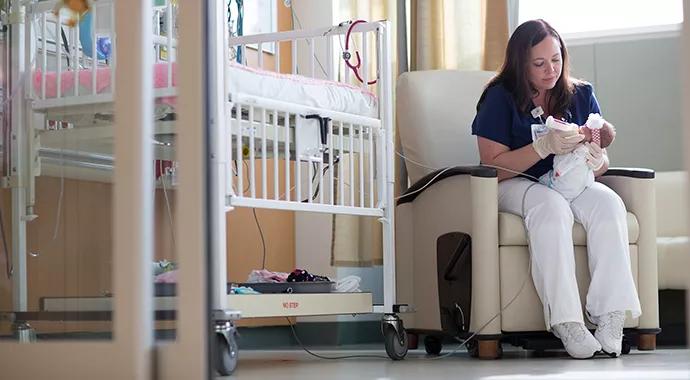
Image content: This image is available to view online.
View image online (https://assets.clevelandclinic.org/transform/fb0ce549-b94e-4aee-9ab6-7dd0e0d42178/690x380-Preterm-High-Risk_jpg)
690×380-Preterm-High-Risk
Advertisement
Cleveland Clinic is a non-profit academic medical center. Advertising on our site helps support our mission. We do not endorse non-Cleveland Clinic products or services. Policy
Advances in obstetric and neonatal care have led to lower mortality for preterm and high-risk infants. This very good news is tempered by the resulting fact that more infants today are being discharged with neurodevelopmental sequelae. Common issues include growth failure, unresolved medical problems and neurodevelopmental delays. Many primary care pediatricians are challenged by these time-consuming, complex medical conditions, in view of two realities: (1) pediatricians who trained decades ago became accustomed to infants dying from extreme prematurity or major malformations, and (2) today’s pediatric trainees spend less time in the neonatal intensive care unit (NICU) setting.
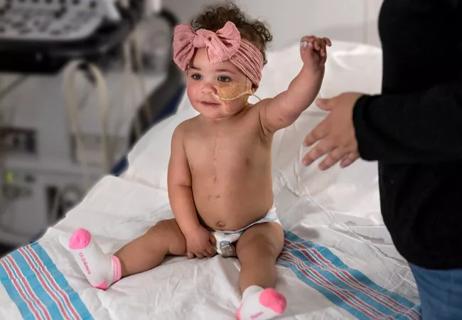
To support the unique needs of preterm and high-risk infants, their families and their pediatricians, Cleveland Clinic Children’s Hospital established a comprehensive NICU Follow-Up Clinic. We use a collaborative approach to treating the medical, developmental, rehabilitative and psychosocial aspects of care. Our multidisciplinary team includes a neonatologist, a neonatal/pediatric nurse practitioner, a social worker, a dietitian, physical and occupational therapists and other caregivers who meet twice weekly and collaborate closely with the infant’s pediatrician and subspecialists. We coordinate medical management and help families understand and implement treatment regimens. This approach enables our high-risk patients to achieve their greatest potential.
The NICU Follow-Up Clinic transitions infants and their families from the intensive care setting to home, providing psychosocial support and managing many aspects of the infants’ complex medical issues after discharge. This is particularly important during the first year of life, when preterm infants are susceptible to infection and rehospitalization. We assist with weaning supplemental oxygen from infants with chronic lung disease, and we optimize growth and nutrition in infants with malabsorption, feeding intolerance or oral aversion following necrotizing enterocolitis or short-gut syndrome. For infants affected by intraventricular hemorrhage or hypoxic-ischemic encephalopathy, we provide assessment for spasticity and lack of coordination.
Advertisement
A hallmark of a comprehensive neonatal follow-up program is the neurodevelopmental evaluation. For this purpose we use the Bayley Scales of Infant Development (BSID) test, which assesses cognitive development, motor skills (gross and fine) and language skills (receptive and expressive). The evaluation is typically done at 8 to 12 months and again at 18 to 24 months corrected ages. In addition to providing a comprehensive assessment for determining developmental delays, the information from the test can be used by the neonatal team to evaluate the impact of treatment and management strategies during the infant’s NICU hospitalization.
Because prematurity also increases a child’s risk for autism, early screening with the Modified Checklist for Autism in Toddlers (M-CHAT™) allows us to identify toddlers whose behavior warrants a comprehensive autism evaluation. Based on the infant’s developmental assessments and neurologic evaluation, referrals to therapy services (physical, occupational, speech and/or behavioral) may be made.
Dr. Peterson is a neonatologist specializing in the comprehensive developmental follow-up and medical management of premature and high-risk infants after hospital discharge. For more information about Cleveland Clinic’s NICU Follow-Up Clinic, please contact Dr. Peterson at 216.444.2568 or petersj2@ccf.org.
American Academy of Pediatrics Committee on Fetus and Newborn. Hospital discharge of the high-risk neonate: proposed guidelines. Pediatrics. 2008;102(2):411-417.
Wilson-Costello DE, Hack M. Follow-up for high-risk neonates. In: Martin RJ, Fanaroff AA,
Walsh MD, eds. Fanaroff and Martin’s Neonatal-Perinatal Medicine: Diseases of the Fetus and
Infant. 8th ed. Philadelphia, PA: Mosby Elsevier; 2006:1035-1043.
Advertisement
A female infant born at 25 weeks’ gestation, now at 4 months corrected age, is brought to the NICU Follow-Up Clinic for evaluation. The infant requires a 0.1-L nasal cannula with 100 percent supplemental oxygen due to prolonged ventilation and chronic lung disease. Since hospital discharge two months ago, she has experienced suboptimal weight gain on 24-calorie-per-ounce formula. Her mother reports that she is a sloppy feeder and sometimes chokes with her feeds. Recommended follow-up lab work to evaluate for anemia and osteopenia has not been ordered.
An examination by the NICU Follow-Up Clinic team is remarkable for mild subcostal retractions, right torticollis and increased lower extremity tone. A pediatric pulmonologist is contacted, and an overnight oximetry test is ordered to determine whether increased nasal cannula flow is warranted. The infant is referred for palivizumab (Synagis®) administration for respiratory syncytial virus prophylaxis. The dietitian is consulted, and the mother is provided with a recipe for 27-calorie-per-ounce formula. A modified barium swallow study is ordered to rule out aspiration.
The infant is referred to occupational therapy for a more thorough feeding evaluation and to physical therapy for stretching exercises. A social worker explains the benefits of the Bureau for Children with Medical Handicaps and provides the mother with necessary paperwork. Medications are weight-adjusted, and lab work is ordered. The infant is scheduled for medical follow-up and a formal developmental evaluation at 8 months corrected age. The team’s recommendations are communicated to her pediatrician and subspecialists via electronic medical record.
Advertisement
Advertisement

Try these moves to relieve butt pain and numbness

Systemic change needed to improve health outcomes for parents and children, say researchers
Rare genetic variant protected siblings against seizures and severe hypoglycemia

Movie has more positive impact than expected, says Head of Adolescent Medicine

Genetic changes are similar between some vascular anomalies and cancers
Expert panel advises a two-tier structure for surgical centers
Our new head of pediatric general and thoracic surgery shares his passion and vision
Basic understanding of condition and treatment is lacking
 Search