Locations:





Progress has been made, but there is still no categorical evidence of efficacy
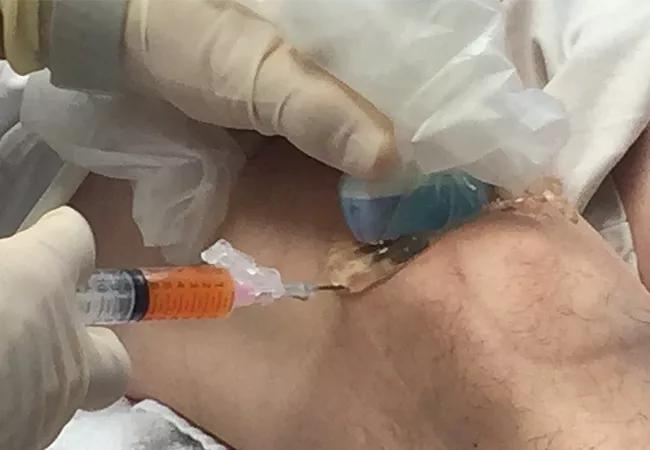
Image content: This image is available to view online.
View image online (https://assets.clevelandclinic.org/transform/6ba870eb-0b4b-41f5-91db-de6e48ab9a33/16-ORT-1508-Tejpar-Hero-Image-650x450pxl_jpg)
16-ORT-1508-Tejpar-Hero-Image-650x450pxl
By Jason Genin, DO, and Dominic King, DO
Advertisement
Cleveland Clinic is a non-profit academic medical center. Advertising on our site helps support our mission. We do not endorse non-Cleveland Clinic products or services. Policy
Last year, you indicated that we needed more, reproducible evidence of the effectiveness of orthobiologics. Have there been any new studies that you feel are stronger?
There is an abundance of anecdotal and clinical experience, and 10 meta-analyses in the last two years, but it has been challenging to standardize protocols in order to create reproducible data. In the literature, we see a need to classify the products. Using the term orthobiologics may be too broad – in order to achieve reproducible results, we need to separate each type of injection (e.g., amniotic fluid, platelet-rich plasma, placental tissue, bone marrow derived stem cells, adipose derived stem cells etc.), location and stage of disease, as well as a patient’s age and gender.
Perhaps the largest study to date was published in February 2019, in the American Journal of Sports Medicine. The trial followed 167 patients with knee osteoarthritis who received either platelet-rich plasma (PRP) or hyaluronic acid (HA) for 24 months. This double-blind, randomized clinical trial found both treatments improved knee function and symptoms over time. PRP was not superior to HA in terms of symptomatic or functional improvement at any point in the follow up period. The only significant difference between the two injection types was in the reintervention rate (i.e., the number of patients who underwent a new injective or surgical treatment of the joint). Patients who received PRP injections were able to go for longer periods before reintervention. Considering the potential for infection with each injection or surgery, this finding is clinically relevant.
Advertisement
A smaller (N=53), randomized, controlled, single-center trial was published in Arthroscopy in January 2019, which compared the effects of injections of leukocyte-poor platelet-rich plasma (LPPRP) to HA or saline solution in patients with knee osteoarthritis. At one year, only patients receiving LPPRP had sustained improvements in the Western Ontario and McMaster Universities Osteoarthritis Index (WOMAC; increased by 21%) and the International Knee Documentation Committee (IKDC; increased by 40%).
These two studies are a step in the right direction, but do not provide categorical support for the use of PRP injections. Outside of those two studies, we have not really seen much in the way of new, high-quality research for osteoarthritis of the knee. There are some good efforts underway to try to mediate the lack of data to support these practices. The main development in the last year or so, in our opinion, is that researchers are collaborating to move the field forward.
What do we know about the pathologies of these illnesses?
Our current theory is that the role of the synovium and synovitis is grossly undervalued in the treatment of symptoms related to osteoarthritis. Anecdotally, patients who have a large degree of synovitis (determined through physical examination or through musculoskeletal ultrasound evaluation) tend to respond more favorably to most injectables, including hyaluronic acid viscosupplementation injections and platelet rich plasma. There are no studies observing the effect of these injections in patients who have positive or negative synovitis. We feel that there are two main phenotypes of osteoarthritis:
Advertisement
These have previously been mentioned as “wet” or “dry” osteoarthritis, but without any defining features or categorization. We are working to develop a study examining the effects of leukocyte poor platelet rich plasma (LP-PRP) for iOA vs mOA.
Advertisement
Advertisement
Biologic approaches, growing implants and more
Study reports zero infections in nearly 300 patients
How to diagnose and treat crystalline arthropathy after knee replacement
Study finds that fracture and infection are rare

Center will coordinate, interpret and archive imaging data for all multicenter trials conducted by the foundation’s Osteoarthritis Clinical Trial Network

Reduced narcotic use is the latest on the list of robotic surgery advantages
Cleveland Clinic specialists offer annual refresher on upper extremity fundamentals
Cleveland Clinic orthopaedic surgeons share their best tips, most challenging cases and biggest misperceptions
 Search