Locations:





Indwelling catheters safe and effective for at-home postoperative pediatric care
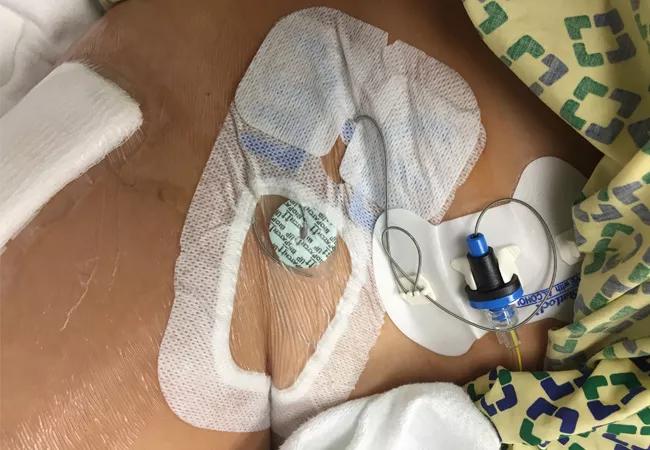
Image content: This image is available to view online.
View image online (https://assets.clevelandclinic.org/transform/82dcc4d8-73a2-4f4b-9b6b-948ded5fc46f/16-ORT-2503-Goodwin-Hero-Image_jpg)
16-ort-2503-goodwin-hero-image
Advertisement
Cleveland Clinic is a non-profit academic medical center. Advertising on our site helps support our mission. We do not endorse non-Cleveland Clinic products or services. Policy
Management of postoperative pain has always been a priority in the care of orthopaedic surgical patients, perhaps even more so in the pediatric patient population. Patients’ and parents’ typical and significant anxiety makes an excellent postoperative pain plan essential.
Oral and intravenous narcotics have been the gold standard for managing postoperative pain, but pediatric dosing can be challenging. As providers, we tend to undertreat pain in order to prevent side effects and potential complications. Side effects such as sedation, nausea and vomiting, and constipation are frequent with a narcotics-only approach.
Our Center for Pediatric Orthopaedics and Spine Deformity (the Center) has adopted and is currently fine-tuning a multimodal approach to managing postoperative pain. With our colleagues in the Department of Pediatric Anesthesiology, we have developed pain management strategies that have significantly improved patients’ postoperative subjective pain scores, reduced side effects from systemic narcotics and even decreased hospital stays in many cases.
Perhaps the most effective tool in our arsenal has been the nerve block with indwelling catheter. An established method in adults, these regional anesthetics are proving tremendously helpful for our pediatric patients. They are administered either in the preop area or under anesthesia with ultrasound guidance, based on the comfort level of the patient. Either a single shot or indwelling catheter is placed, which the patient can use for up to five days in the outpatient setting. Our group contacts the family daily to assess the patient’s pain and answer questions if an indwelling catheter is in place. Patients discontinue catheters on day five, or sooner if it is no longer needed.
Advertisement
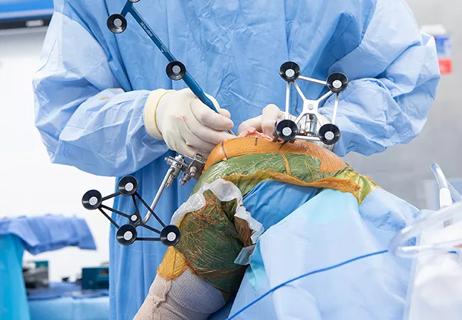
We are currently studying indwelling catheter effectiveness at the Center. Preliminary results are exceptionally promising, suggesting no deep infections or nerve injuries in the catheter group. Patients undergoing foot/ankle reconstruction are home the day of surgery in over 95 percent of cases. Patients undergoing femoral procedures such as osteotomies routinely leave the hospital after a 23-hour stay with a femoral nerve catheter (Figure), a significant improvement over the traditional hospitalization of two to three days.
Open knee procedures are now routinely outpatient with either a single-shot or femoral nerve catheter. Preliminary results suggest pain scores and narcotics consumption also decrease in these patients. Patients typically embrace the concept of the catheter, and few have difficulty managing it at home, as it requires essentially no direct attention from the patient or family members.
Our Center has also embraced and is currently studying weight-based use of liposomal bupivacaine. Early results within our scoliosis protocol suggest a benefit without additional side effects. Our scoliosis pain management protocol continues to work well with average length of stay slightly over three days, largely attributable to the aggressive pain management protocol.
Overall, management of postoperative pain remains critically important in all orthopaedic surgery, especially in the care of children. Our multimodal and individualized approach has significantly improved patient experience with a reduction in postop pain and narcotics-related side effects without additional morbidity. Ongoing studies are quantifying the benefits of these invaluable techniques in the postoperative management of pediatric orthopedic patients.
Advertisement
Dr. Goodwin is Director of the Center for Pediatric Orthopaedics and Spine Deformity, Program Director for the Pediatric Orthopaedic Surgery Fellowship and Assistant Professor at Cleveland Clinic Lerner College of Medicine.
Advertisement
Advertisement
Biologic approaches, growing implants and more
Study reports zero infections in nearly 300 patients
How to diagnose and treat crystalline arthropathy after knee replacement
Study finds that fracture and infection are rare
Center will coordinate, interpret and archive imaging data for all multicenter trials conducted by the foundation’s Osteoarthritis Clinical Trial Network
Reduced narcotic use is the latest on the list of robotic surgery advantages
Cleveland Clinic specialists offer annual refresher on upper extremity fundamentals
Cleveland Clinic orthopaedic surgeons share their best tips, most challenging cases and biggest misperceptions
 Search