Locations:





Even the youngest, smallest patients can be recipients
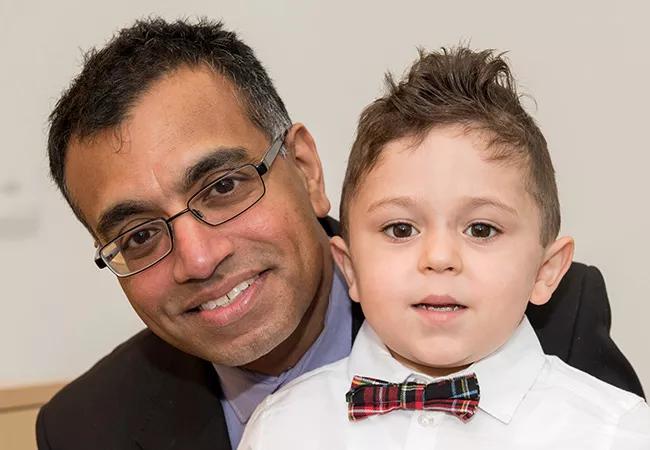
Image content: This image is available to view online.
View image online (https://assets.clevelandclinic.org/transform/790b6516-2983-4abc-8993-75516f211f25/650x450-Living-Donar-Transplant-Patient_jpg)
650×450-Living-Donar-Transplant-Patient
By Koji Hashimoto, MD, PhD, and Kadakkal Radhakrishnan, MD
Advertisement
Cleveland Clinic is a non-profit academic medical center. Advertising on our site helps support our mission. We do not endorse non-Cleveland Clinic products or services. Policy
Living-donor liver transplantation (LDLT) has been the preferred option for thousands of Americans with liver failure. Instead of enduring worsening disease while waiting for an organ from a deceased donor — which may never come — patients receive a partial liver graft from a healthy living donor during a previously planned, well-coordinated surgery.
Donor and recipient surgeries are performed simultaneously at the same location, so the graft’s time without blood supply is measured in minutes, not hours, improving its viability.
Outcomes of liver transplantation involving a living donor are consistently better than those involving a deceased donor. However, LDLT poses distinct challenges — particularly in pediatric recipients.
Rather than taking generous portions of tissue, including large vessels and bile ducts, from a deceased adult donor for an adult recipient, surgeons use a much smaller partial liver graft from a living adult donor for a pediatric recipient. Arteries and veins are sometimes a fraction of the size and less than half the length of those from a whole liver graft. Transplanting partial liver grafts into children requires extreme technical detail and minuscule handiwork, often including microsurgical reconstruction.
In this case study, we discuss a 2-year-old who was the recipient of a partial liver graft from a living adult donor.
The recipient, a U.S. citizen living in Dubai, was born with progressive familial intrahepatic cholestasis (PFIC) Type 2, a genetic liver disease that hinders the flow of bile and can cause liver failure. He was jaundiced from the first few weeks of life and had excessive itching due to a buildup in the blood of bile acids and other agents excreted by the liver.
Advertisement
Biliary diversion surgery was successful temporarily. However, within a few months, the condition worsened and the patient developed bleeding tendencies due to vitamin K deficiency. Vitamin K injections did not resolve the clotting issues, and his facial itching intensified along with eyelid swelling.
At approximately age 2, the patient was placed on the UNOS wait list for a liver transplant. Vitamin K injections continued every two to four weeks, yet his international normalized ratio (INR) numbers remained elevated, indicating poor clotting. He had elevated liver enzymes and remained jaundiced. His itching progressively worsened.
Due to the patient’s poor quality of life, we recommended finding a living donor to avoid a potentially long wait for a cadaveric donor. No family members or friends were suitable donors for the patient, as most would need visas to come to the U.S. After nearly four months on the wait list, the patient was matched with an anonymous living donor, an American adult in Western New York. The donor had been evaluated previously for donation to a friend who had become unsuitable for transplantation.
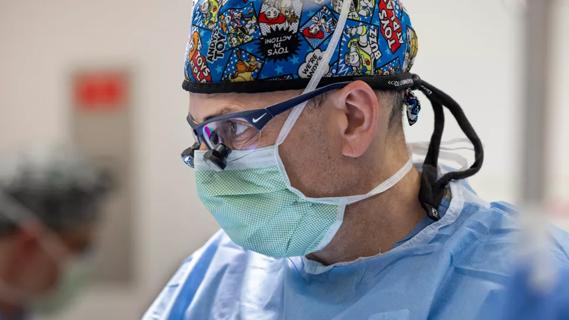
Two separate surgical teams conducted the surgeries concurrently. From the donor’s abdomen, one team removed approximately 20 percent of the liver — the left lateral segment, a graft commonly used for pediatric recipients. A second team opened the recipient’s abdomen and removed his entire liver, which was hardened and quite diseased.
The procedure to attach the liver graft took 10 to 12 hours. Due to the minuscule structures, connecting the hepatic artery was done under microscope.
Advertisement
Both surgeries were completed as planned, and liver segments in both patients were expected to regenerate to normal size in four to six weeks.
Immediately after transplant, the recipient began a standard regimen of immunosuppressive, steroid, antiviral, antifungal and other medications. He was discharged one week after transplant.
A month later, elevated liver enzymes prompted an investigation. An ultrasound showed narrowing in a bile duct due to scar tissue. A stent was placed in the duct, subsequently upsized, and then removed seven months later when imaging indicated the duct could remain open on its own.
Now 15 months post-transplant, there has been no sign of organ rejection, and liver function is normal. The recipient has returned to his home pediatric gastroenterologist for ongoing evaluation.
The donor recovered completely and has resumed normal life.
Liver transplant involving a living donor can be safe and effective, even for the smallest pediatric recipients. Any patient in need of liver transplant should be considered for LDLT due to shorter wait times (likely preventing further disease progression) and more favorable outcomes.
With an extremely limited number of organs from pediatric deceased donors, LDLT may be the best opportunity to get size-matched organs for sick children.
While living donation supplies grafts of higher quality, it requires a technically challenging procedure and double the patient care and concern — for both recipient and donor.
We applaud the altruism of living donors, particularly those who give anonymously, as in this case. And we are honored to be a conduit of that goodwill, from donors in one corner of the world to patients in another.
Advertisement
Dr. Hashimoto is a transplant surgeon at Cleveland Clinic, with a specialty interest in pediatric liver transplantation. Dr. Radhakrishnan is a pediatric gastroenterologist and hepatologist at Cleveland Clinic.
Advertisement
Advertisement

Try these moves to relieve butt pain and numbness

Systemic change needed to improve health outcomes for parents and children, say researchers
Rare genetic variant protected siblings against seizures and severe hypoglycemia

Movie has more positive impact than expected, says Head of Adolescent Medicine
Genetic changes are similar between some vascular anomalies and cancers
Expert panel advises a two-tier structure for surgical centers
Our new head of pediatric general and thoracic surgery shares his passion and vision
Basic understanding of condition and treatment is lacking
 Search