Locations:





Study shows how observation alone can mislead
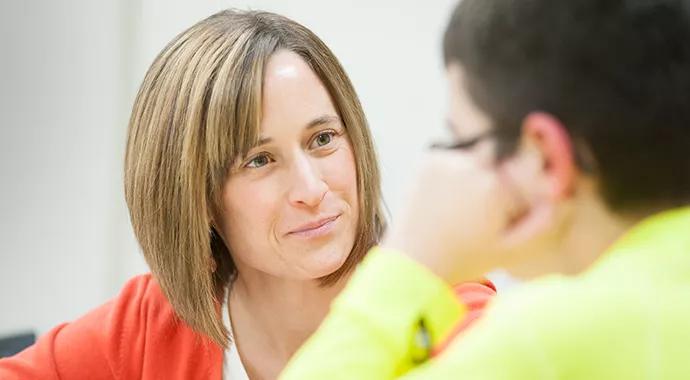
Image content: This image is available to view online.
View image online (https://assets.clevelandclinic.org/transform/d628f9fd-bc80-449c-8ad5-d7145aa10b2e/690x380-Speer_jpg)
690×380-Speer
Behavioral observation is a key element in diagnosing young patients with autism spectrum disorder. But during a 10- or 20-minute medical visit, how much atypical behavior is enough to raise concern?
Advertisement
Cleveland Clinic is a non-profit academic medical center. Advertising on our site helps support our mission. We do not endorse non-Cleveland Clinic products or services. Policy
A recent study published in Pediatrics evaluated the accuracy of identifying autism through brief observations. It’s the first study to quantify high rates of typical behavior in young children with autism — behavior that can skew a clinician’s decision to refer (or not refer) the child for further evaluation.
In the study, licensed psychologists with expertise in toddlers and autism analyzed 10-minute video samples of 42 children ages 15 to 33 months being evaluated for autism. For each, experts recorded “atypical” or “typical” ratings for five behaviors:
Based on these behaviors, experts indicated which participants should be further evaluated for autism. The experts’ responses were compared to formal screening and developmental testing results, from which participants had already been identified as having autism, language delays or typical development.
Not surprisingly, participants in the autism group had higher rates of atypical behavior than participants in the language delay and typical groups. However, typical behavior displayed by the children with autism still far exceeded their atypical behavior (89 percent vs. 11 percent, respectively).
As such, experts misidentified nearly 40 percent of participants with autism, not designating them for further evaluation.
“Given these results, clinicians need to be careful not to put too much emphasis on brief clinical observations to the exclusion of other critical clinical information,” says contributing researcher Leslie Speer, PhD, of Cleveland Clinic Children’s Center for Autism.
Advertisement
“Unfortunately, more often than not, there is a belief that children with autism do not display typical behavior,” notes Dr. Speer. “But they do. This is what makes evaluating these children difficult.”
On the other hand, she adds, children with typical development can sometimes exhibit atypical behavior, such as repetitive play, rigidity and failure to respond. This makes it difficult for clinicians to determine which behavior is significant and indicates clinical impairment or delay and which is not clinically significant or relevant, particularly during a brief observation.
This study indicates that brief clinical observations, even by autism experts, may not provide sufficient or reliable information for detecting autism risk.
Dr. Speer concludes: “This research and our clinical experiences suggest that behavioral observation should be used in addition to autism screening tools, parent observations, developmental testing and detailed history when making referral decisions.”
Advertisement
Advertisement

Try these moves to relieve butt pain and numbness

Systemic change needed to improve health outcomes for parents and children, say researchers

Rare genetic variant protected siblings against seizures and severe hypoglycemia

Movie has more positive impact than expected, says Head of Adolescent Medicine
Genetic changes are similar between some vascular anomalies and cancers

Expert panel advises a two-tier structure for surgical centers

Our new head of pediatric general and thoracic surgery shares his passion and vision

Basic understanding of condition and treatment is lacking
 Search