Locations:





Controlling molecule could lead to improved cough therapies for kids
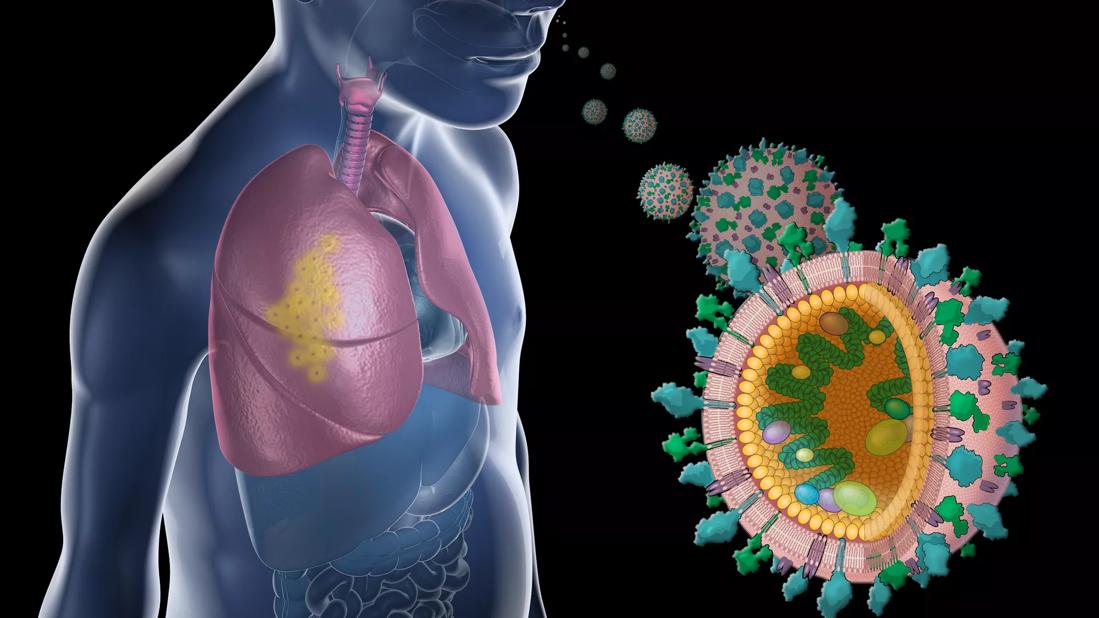
Image content: This image is available to view online.
View image online (https://assets.clevelandclinic.org/transform/a3da1f48-d397-4195-8975-a71c10216df4/RSV_HARFORD_jpg)
RSV_HARFORD
Few things are as distressing to a mother as a child’s chronic cough. But what about when that child is asthmatic and gets a virus? Children in this state of health often end up in the hospital.
Advertisement
Cleveland Clinic is a non-profit academic medical center. Advertising on our site helps support our mission. We do not endorse non-Cleveland Clinic products or services. Policy
What’s even worse is that there are no FDA-approved medicines available to deactivate the coughing mechanism. And many over-the-counter cough medications contain opiates that can be harmful to children. Unfortunately, the mechanism of cough, which is unique to humans, is difficult to study and not widely understood by physicians.
Researchers at Cleveland Clinic are working to change the landscape of pediatric pulmonology with a groundbreaking study published in the Journal of Allergy and Clinical Immunology. Led by Giovanni Piedimonte, MD, physicians from Cleveland Clinic’s Lerner Research Institute have demonstrated for the first time the significant differences in the behavior of a specific molecular calcium channel in epithelial cells, which are dependent on age and asthma status. This discovery could lead to safer, more effective cough treatments for asthmatic children who contract respiratory syncytial virus (RSV).
Previous research involved studying how neurons in the airway lining affect the cough mechanism in adults. Cleveland Clinic researchers decided to study the TRPV1-dependent calcium transport in the airway epithelium of children. Epithelial cells strongly influence the nerves in the airway and are the preferred target of viral infections. The researchers studied this mechanism in epithelial cells from the airways of children ages 5 and under. This marked the first time that pediatric cell models were used in this field of research.
When a child is healthy, TRPV1-dependent Ca2+ is fairly innocuous with minimal function. However, Dr. Piedimonte’s team discovered that this molecular channel is hyperactive in children infected by RSV. This hyperactivity creates a calcium imbalance within the cell, triggering cough and congestion. Interestingly, adults infected with the same virus do not experience these effects.
Advertisement
“Our study proved that asthmatic children already have a hyperactive calcium channel that’s extremely sensitive to environmental triggers (e.g., pollution),” explains Dr. Piedimonte. “If these children contract a virus, such as RSV, the hyperactive channel causes more severe symptoms that may require care in a hospital setting.”
When a child developed asthma or bronchitis in the past, many doctors thought that these conditions could only be triggered by environmental allergens. According to Dr. Piedimonte, these doctors couldn’t explain why two out of three children ages 5 and under that wheeze and cough tested negative for allergies.
“We needed to explore the mechanisms of the calcium molecule and the epithelial cells, which seem to trigger these symptoms without an allergic reaction,” reveals Dr. Piedimonte. “If the molecule’s behavior is producing the cough, we just need to figure out how to control the molecule to properly deactivate the cough mechanism in the asthmatic child.”
The study’s demonstration of the behavior of the calcium channel also helps explain why over 50 percent of children with respiratory symptoms don’t respond to adult asthma medication. “The channels are activated differently in adults, so new therapies must be targeted to help asthmatic children,” notes Dr. Piedimonte.
The key to helping pediatric asthma patients who contract RSV is finding ways to block the calcium channel. “While there are no current drugs to block the channel or vaccines to prevent RSV, there are some promising chemical compounds available at the research level,” explains Terri Harford, PhD, a postdoctoral fellow and the first author on the calcium channel study.
Advertisement
Although the compounds that were used in the study are not regulated for patient care, they could be tailored and tested to create new drug therapies for pediatric asthma in the future. “The exciting part is that we already know that these compounds work in animal models,” says Dr. Harford. “We just need to prove that they work in human models.”
Advertisement
Advertisement

Try these moves to relieve butt pain and numbness

Systemic change needed to improve health outcomes for parents and children, say researchers
Rare genetic variant protected siblings against seizures and severe hypoglycemia

Movie has more positive impact than expected, says Head of Adolescent Medicine
Genetic changes are similar between some vascular anomalies and cancers
Expert panel advises a two-tier structure for surgical centers
Our new head of pediatric general and thoracic surgery shares his passion and vision

Basic understanding of condition and treatment is lacking
 Search