Locations:





Referrals essential to identifying patients who need a risk assessment
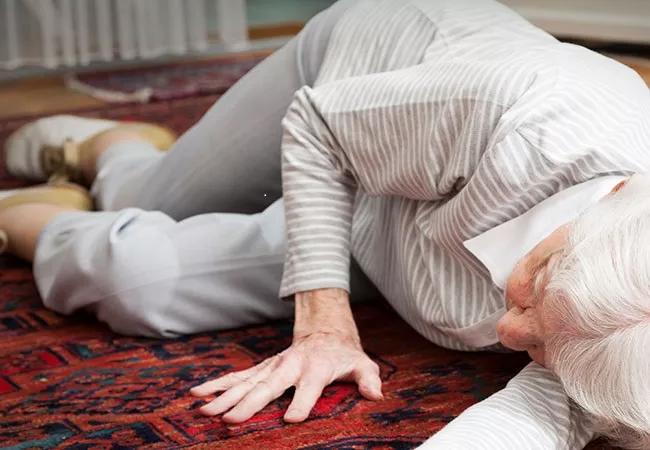
Image content: This image is available to view online.
View image online (https://assets.clevelandclinic.org/transform/736a3b3c-b3c3-4702-bc3d-2426fc58aa52/17-GER-380-Falls-650x450_jpg)
17-GER-380-Falls-650×450
For older Americans, falls are the leading cause of fatal and nonfatal injuries, according to the National Council on Aging (NCOA). And statistics from the Centers for Disease Control and Prevention (CDC) are jarring: Every year, one in four Americans over the age of 65 falls. And while the total cost of fall injuries was a shocking $34 billion in 2013, this cost is estimated to nearly double to more than $67 billion by 2020 as the population ages.
Advertisement
Cleveland Clinic is a non-profit academic medical center. Advertising on our site helps support our mission. We do not endorse non-Cleveland Clinic products or services. Policy
In an effort to reduce these statistics and be proactive in helping our older patients, Cleveland Clinic’s geriatric falls clinic has been offering in-depth assessments of fall risk factors for outpatients since 2011. The NCOA lists falls prevention programs, such as the geriatric falls clinic, as one of the leading solutions to reducing the number of falls for elderly patients.
“We want to reduce the incidence of future falls and reduce related injuries for these patients, which are associated with long-term care, morbidity and excessive healthcare costs,” says Anne Vanderbilt, MSN, RN, CNS, CNP, who runs the geriatric falls clinic on Cleveland Clinic’s main campus. “Our clinic evaluates patients in an outpatient setting to help them find ways to avoid a future fall.”
In recent months, the geriatric falls clinic has been working to raise awareness with providers in the emergency department (ED). This seems like a good avenue to pursue considering the statistic that every 11 seconds, an older adult is treated in the ED for a fall, adding up to more than 2.8 million injuries treated in the ED annually, which leads to more than 800,000 hospitalizations. This is according to the CDC.
Vanderbilt and a geriatric medical assistant hold the falls clinic on Fridays, with patients slotted in 90-minute appointments. During the first part of the appointment, the medical assistant conducts a basic screening: She reviews the patient’s medication and eating habits, takes orthostatic vital signs and conducts vision, cognition and depression screenings. Next, Vanderbilt gets an in-depth history of the patient’s falls. “I look for patterns,” she says. “Are there certain things contributing to the falls? There’s rarely one thing causing falls: It’s usually a combination of things.”
Advertisement
Next, Vanderbilt reviews the patient’s medication, which can sometimes factor into falls. For example, hypertension medication can lower blood pressure to a point where patients are at risk for falls. “They may have fabulously controlled blood pressure, but they are falling all the time,” says Vanderbilt. She also reviews the patient’s medical conditions and conducts a physical exam focused on neurologic strength. She uses three standardized tests recommended in the Center for Disease Control and Prevention (CDC) STEADI toolkit, which assess mobility, strength and endurance and balance.
After the exam, Vanderbilt makes recommendations, which may include changing medications and modifying the home environment. She encourages patients to take vitamin D. “There is increasing evidence that vitamin D helps not only with bone health, but also with balance and strength,” she says.
Patients may also need to modify their homes by removing throw rugs, adding handrails to stairs, placing non-slip strips in the shower, placing nightlights in the hallways and so on. Vision problems, and not wearing the proper eyewear are another common reason for falling.
She also advocates exercise. If balance is a primary issue, she suggests Tai Chi. If the patient is weak, then she recommends physical therapy.
“The No. 1 thing we try to do is reduce falls,” says Vanderbilt. “You can’t stop every fall, so we also have recommendations that reduce injuries from falls.”
Approximately four patients visit Cleveland Clinic’s geriatric falls clinic each week. Most are referred by their primary care physicians, orthopaedic specialists or the emergency department. While not all elderly patients require in-depth falls risk assessments, Vanderbilt encourages providers to refer patients when there is good reason.
Advertisement
“The biggest predictor of a fall is a history of a previous fall,” she says. “And older adults in particular will not tell you voluntarily. They are afraid you will take them out of their homes.” The American Geriatrics Society recommends that older adults who have had more than one fall per year, a fall with an injury, or a change to their balance or gait receive an in-depth assessment.
Advertisement
Advertisement

Pilot study confirms feasibility of conducting additional research on the novel treatment
Longer hospitalization does not mean a safer, faster recovery for patients age 70+
Structured data helps identify older adults at risk for poor outcomes, defines patients who require more comprehensive assessments

Self-administered tool can be completed in 10 minutes in waiting room
Social prescribing turns leisure activities into good “medicine”
A large geriatric study aims to find the answers

Analysis underscores how telehealth can help pinpoint elder abuse
 Search