Locations:





Social prescribing turns leisure activities into good “medicine”
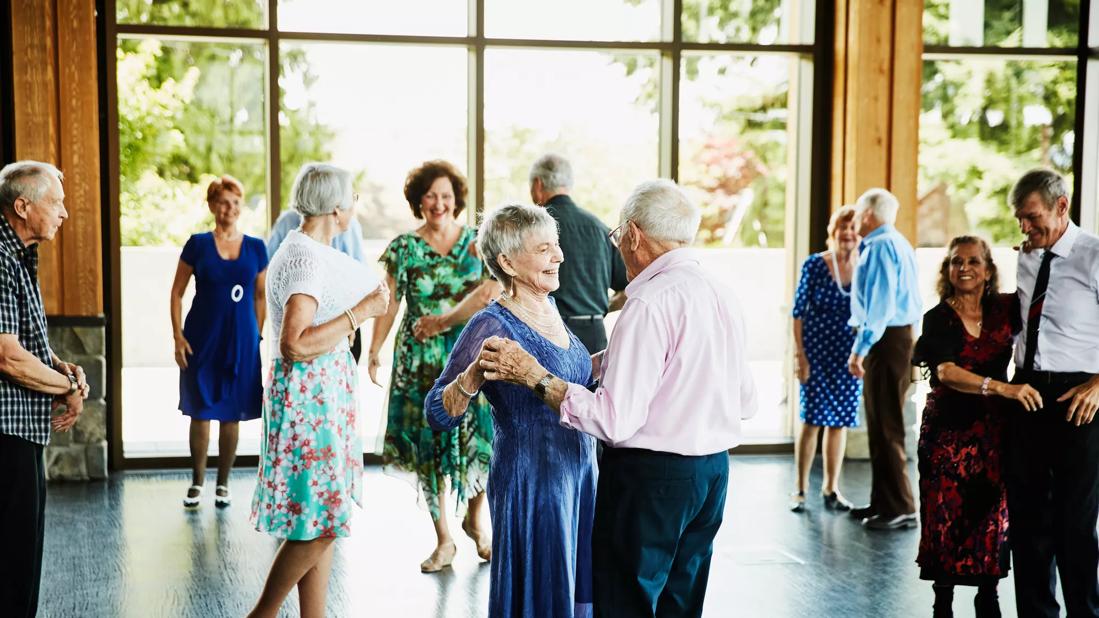
Image content: This image is available to view online.
View image online (https://assets.clevelandclinic.org/transform/c1d226fe-41c0-4d3d-baa4-522b5a2f659b/GettyImages-858729850_jpg)
Smiling couple holding hands and finishing dance in community center
It’s no secret that older adults benefit from increased physical activity and social interaction, but such lifestyle choices have traditionally been the domain of patients and their families. A new clinical model now seeks to position leisure-time activities as therapeutic interventions through a practice called “social prescribing.”
Advertisement
Cleveland Clinic is a non-profit academic medical center. Advertising on our site helps support our mission. We do not endorse non-Cleveland Clinic products or services. Policy
Geriatricians at Cleveland Clinic are adopting the novel approach, in which providers work with patients to pinpoint a beneficial activity and then “prescribe” participation. Although the concept is quite new in the United States, it has been used in the United Kingdom and Europe with demonstrable success, notes Ardeshir Hashmi, MD, Section Chief of Cleveland Clinic’s Center for Geriatric Medicine.
Dr. Hashmi says he became interested in social prescribing after working with elderly patients for whom medication seemed no longer helpful.
“People were coming in repeatedly to the ED, getting expensive workups, and then leaving — only to return again the following week with exactly the same complaint,” he says. “I just kept thinking there had to be a better way to address these patients’ concerns.”
Dr. Hashmi describes a 93-year-old patient who made regular trips to the ED with a variety of complaints. “The odd thing was, her symptoms suddenly disappeared once she was surrounded by medical staff,” he says.
Dr. Hashmi soon realized that the patient lived alone and had no one to reassure her when she became distressed. Feeling like he was out of medical options, he referred the woman to a geriatric social worker, who helped her enroll in ballroom dance classes. “Incredibly, the dancing started and the emergency visits stopped,” he says.
It was an “aha” situation for Dr. Hashmi, who reached out to patient advocate Dan Morse, cofounder of Social Prescribing USA, for support. A plan soon developed, and the Cleveland Clinic geriatric team implemented a formal social prescribing model in which clinicians aim to connect patients with community-focused activities. Ideally, these pursuits — like group exercise, art classes, outdoor activities, and volunteer opportunities — should be custom tailored to each individual patient, Dr. Hashmi says.
Advertisement
“That means really digging in to understand each patient’s interests and personal priorities — the things they live for,” he explains. “In some cases, the goal may be spending more time with grandchildren or being close to nature. For others, it might be art, music or cooking. Although the specifics vary, the object is the same: We want to give our patients a better quality of life.”
After the initial visit, the physician’s next step is to collaborate with a designated “link worker,” a non-medical professional whose role is to facilitate the patient’s participation in the designated activity, Dr. Hashmi explains. The link worker may help find ways to cover costs, register the patient for classes, or arrange transportation. They also follow up to hold the patient accountable and coordinate with the doctor to monitor outcomes.
In addition to reducing emergency visits, Dr. Hashmi emphasizes that social prescribing can be a productive alternative for older patients who would like to take fewer medications. “In traditional medicine, diet and exercise often take a back seat to pharmacological interventions,” he says. “Social prescribing allows us to flip the hierarchy by using lifestyle modifications as first-line treatments.”
Dr. Hashmi describes an elderly patient with heart failure who was experiencing shortness of breath during the day. Although he was taking a diuretic to treat excess fluid in his lungs, the medication was affecting his kidneys and bladder and waking him up at night.
Advertisement
“He was understandably frustrated, but I thought we could improve his symptoms by exploring the things that were most important to him,” Dr. Hashmi recalls. “I began by asking, ‘If your shortness of breath were better and you could get a good night’s rest, what would you do with that energy?’ His answer was simple. He said he wanted to be able to walk his grandson to school in the morning.”
Working with the patient to design a realistic program, Dr. Hashmi prescribed the patient just 10 minutes of regular aerobic exercise a day. “This seemingly minor change increased the patient’s breathing capacity significantly, enabling him to stop the diuretic,” he says. “The exercise reduced his blood pressure and glucose levels as well. Although we can’t turn back the clock, the patient is feeling better, sleeping better, and achieving his quality-of-life goal.”
The bottom line, explains Dr. Hashmi, is that social prescribing gives providers permission to have a different kind of conversation with their patients. “Clinicians are seeing their patients come back looking and feeling better. There’s immense reward and satisfaction in that – for everyone involved,” he says.
Advertisement
Advertisement
Pilot study confirms feasibility of conducting additional research on the novel treatment

Longer hospitalization does not mean a safer, faster recovery for patients age 70+
Structured data helps identify older adults at risk for poor outcomes, defines patients who require more comprehensive assessments

Self-administered tool can be completed in 10 minutes in waiting room
A large geriatric study aims to find the answers
Analysis underscores how telehealth can help pinpoint elder abuse
Accurate, transparent documentation may reduce risks associated with common disorder
 Search