Locations:





Nearly half of families face financial hardship from medical bills and associated expenses
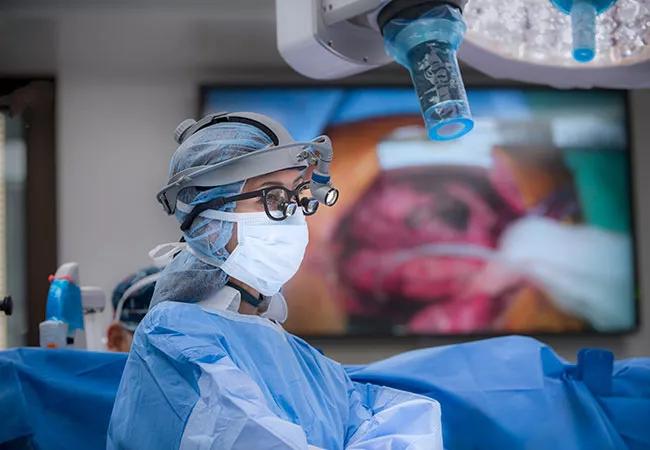
Image content: This image is available to view online.
View image online (https://assets.clevelandclinic.org/transform/fb3fdc09-dc90-46f2-bcba-57d864f5d913/650x450-Karamlou_jpg)
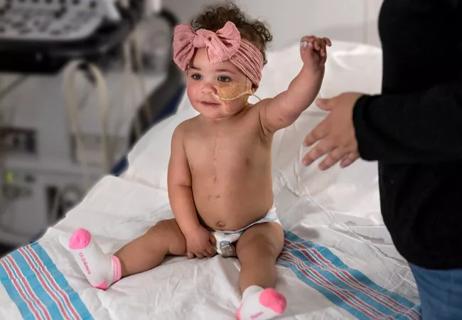
Tara Karmalou, MD, operates on child with congenital heart disease
About 1% of babies born in the U.S. have congenital heart disease (CHD), according to the U.S. Centers for Disease Control and Prevention, with about 1 in 4 of those babies having critical CHD. Not only is a sick child a profound stressor on families, but CHD can also be a huge financial burden, with recurrent hospitalizations, surgeries and outpatient services. In fact, the average healthcare cost per child from birth to age 10 is $136,682, according to the Journal of Pediatrics.
Advertisement
Cleveland Clinic is a non-profit academic medical center. Advertising on our site helps support our mission. We do not endorse non-Cleveland Clinic products or services. Policy
But how widespread is the problem? And what does that expense mean for families of these children because the cost of medical care? Addressing these issues is a priority for Tara Karamlou, MD, pediatric and congenital heart surgeon in the Department of Thoracic and Cardiovascular Surgery, Sydell and Arnold Miller Family Heart, Vascular & Thoracic Institute.
“We know that CHD can be a major financial burden on families,” says Dr. Karamlou. “We need a better idea of what that meant in terms of their household budget, and how it affects follow-up care and medication adherence, so that we can find ways to alleviate that burden.”
In a new study published in JAMA Cardiology, researchers looked at 188 families of children with CHD, drawn from the National Health Interview Survey between 2011 and 2017. Researchers found that 48.9% reported financial hardship due to medical bills, including 31.9% who reported hardship but were able to pay and 17% who were unable to pay at all.
Of those families who faced financial hardship due to CHD-related medical bills, 61.8% reported food insecurity, and 26.2% said they delayed care because of cost. However, the study did find that financial hardship didn’t affect adherence to medication, with rates at 5% or less across all families.
The study also found that financial hardship and adverse outcomes were more strongly connected in patients with private insurance than in those with Medicaid, which Dr. Karamlou attributes to those with private insurance being “more likely to travel to centers with highly specialized care,” she says. “That doesn’t mean something went wrong with these surgeries, but for many complex cases, these patients still aren’t going to do well.”
Advertisement
Dr. Karamlou, who did not participate in this study, believes that these problems can be addressed in two ways. The first is helping patient families — especially those who are economically disadvantaged, or coming from racial or religious minorities — with guidance on the entire treatment process, including cost, and identifying programs that might help.
“When a patient is admitted to Cleveland Clinic Children’s for surgery or cardiac catherization, a team of caregivers proactively maps out that hospital course. We start thinking about discharge challenges as soon as the patient is admitted,” she says. Working with an international patient population has helped Cleveland Clinic Children’s become “one of the most culturally sensitive organizations out there, which helps us work with our U.S.-based patients who may speak a language other than English, or come from different religious backgrounds.”
The second is establishing a more robust social safety net. That could start with Medicare playing a bigger role in overall care of patients with CHD. She points to California as being a trailblazer in this area.
First 5 California, which Dr. Karamlou calls “a landmark program,” focuses on early childhood development and family support services. During the COVID-19 pandemic, for example, First 5 county commissioners organized diaper and food drives and created pop-up child care.
The second initiative she said should be used as a model is the California Child Services High Risk Infant Follow-Up program, through which NICU patient are required to have neurodevelopmental follow-up for the first three years of life, paid for by Medicare.
Advertisement
“These have to be government sponsored programs. It’s the only way we’re going to reach these patients. It also has to be mandated at the center level,” she said. “If you make it a quality metric, then centers will endeavor to follow these patients.”
Cleveland Clinic Children’s has “done a lot to mitigate these types of situations,” Dr. Karamlou adds. Patient advocate and family groups (e.g., the Children’s Heart Foundation) assist families of CHD patients with what might not seem like medical costs, but that add up nonetheless. These added costs include things like parking fees, food and hotel accommodations “if families are going to have a child who is a patient for any amount of time,” she says.
Cleveland Clinic Children’s also has financial patient advocates who can guide these families through what care will cost, set up payment programs and help them identify financial assistance programs to help lower costs overall. Finally, Cleveland Clinic Children’s has a group called Healthcare Partners, formed from families and adult patients, that helps to understand family needs and organize processes to address them. These efforts are a cornerstone of all centers of excellence.
Advertisement
Advertisement

Try these moves to relieve butt pain and numbness

Systemic change needed to improve health outcomes for parents and children, say researchers
Rare genetic variant protected siblings against seizures and severe hypoglycemia

Movie has more positive impact than expected, says Head of Adolescent Medicine

Genetic changes are similar between some vascular anomalies and cancers
Expert panel advises a two-tier structure for surgical centers
Our new head of pediatric general and thoracic surgery shares his passion and vision
Basic understanding of condition and treatment is lacking
 Search