Locations:





Multicenter trial studies use of pirfenidone
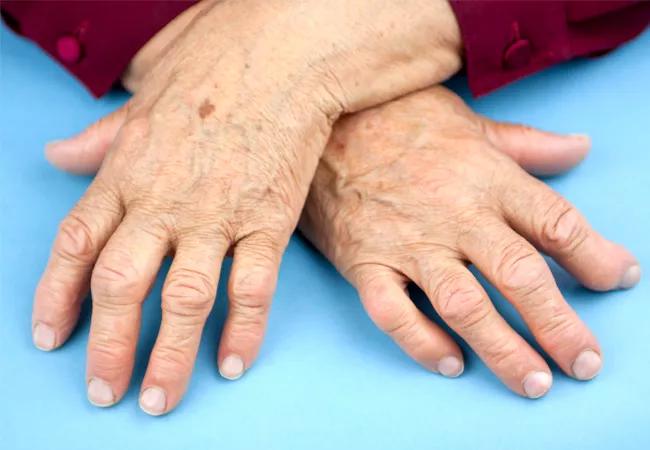
Image content: This image is available to view online.
View image online (https://assets.clevelandclinic.org/transform/c27347dd-7b85-4f01-b266-2eb925e13f29/18-PUL-4978-HIghland-Hero-Image-650x450_Option-_02_jpg)
18-PUL-4978-HIghland-Hero-Image-650x450_Option-_02
Advertisement
Cleveland Clinic is a non-profit academic medical center. Advertising on our site helps support our mission. We do not endorse non-Cleveland Clinic products or services. Policy
Pulmonary hypertension (PH) and interstitial lung disease (ILD) are leading causes of morbidity and mortality in rheumatic disease. Both PH and ILD may occur in patients with well-defined rheumatologic disorders, but they may also precede the extrapulmonary manifestations for years, or may have a forme fruste presentation limited to the lungs as seen in systemic sclerosis sine scleroderma.
There is also a heterogeneous group of patients with PH and/or ILD that have a clinical flavor of an underlying autoimmune disease. Recently the terminology “interstitial pneumonia with autoimmune features” (IPAF) has been proposed for patients with ILD and autoimmune features who do not meet American College of Rheumatology criteria for a defined connective tissue disease (CTD).
Early identification and treatment of these pulmonary complications is essential in order to improve outcomes in rheumatic diseases.
Cleveland Clinic’s Rheumatic Lung Disease Program offers a comprehensive multidisciplinary approach to the care of these complex patients that includes close collaboration with physicians from our rheumatology department as well as from the ILD, pulmonary hypertension and transplantation programs within the Respiratory Institute.
The pathogenesis of rheumatic disease is complex and is characterized by systemic, immunological, vascular and fibrotic abnormalities. At Cleveland Clinic, we are involved in multiple research studies that are shifting treatment paradigms towards the targeting of these multiple pathways through repurposing drugs approved for other indications and the exploration of novel therapies. One example is our work on rheumatoid arthritis-associated ILD.
Advertisement
Rheumatoid arthritis (RA) is a chronic inflammatory disease occurring in 1-2 percent of the general population. ILD is a common comorbidity that increases risk for premature death by nearly threefold and is responsible for approximately 10 percent of deaths in RA. Although most patients develop articular symptoms before lung manifestations, these may occur simultaneously or ILD may precede joint manifestations.
There is evidence on high-resolution chest computed tomography of ILD in approximately 20 percent of unselected patients with RA and in up to 80 percent of those with respiratory symptoms, and of these about 60 percent will have evidence of radiographic progression over the next 18 months. Among RA patients biopsied for a diagnosis of ILD, usual interstitial pneumonia is the most common histopathologic pattern seen, which may account for the poorer prognosis associated with RA-ILD in comparison with other CTD-ILDs for which nonspecific interstitial pneumonia is the prevailing pattern.
Currently available treatment for RA has resulted in marked improvement in the control of articular disease, but these benefits have not extended to RA-associated lung disease.
Pirfenidone is an antifibrotic agent approved for idiopathic pulmonary fibrosis based on its ability to reduce the rate of decline in forced vital capacity (FVC). The mechanism of action of pirfenidone in ILD is thought to be both anti-inflammatory and antifibrotic, making it an ideal candidate for investigation in RA-ILD.
Advertisement
The TRAIL-1 study is a multicenter, randomized, placebo-controlled study to test the safety and tolerability of pirfenidone versus placebo for the treatment of RA-ILD. The primary composite endpoint is incidence of decline from baseline in percent predicted FVC of 10 percent or greater or death during the 52-week treatment period.
This study is one of three major multicenter trials in which Cleveland Clinic’s Rheumatic Lung Disease Program is participating. It is hoped that this trial will ultimately expand the therapeutic approach to treating the devastating pulmonary complications of rheumatic disease.
To refer a patient, call 855.REFER.123.
Dr. Highland directs the Rheumatic Lung Disease Program in the Respiratory Institute at Cleveland Clinic.
Advertisement
Advertisement

Volatile organic compounds have potential in heart failure diagnostics

Caregivers are provided with real-time bronchoscopy patient findings
Insights for diagnosing, assessing and treating
A Cleveland Clinic pulmonologist highlights several factors to be aware of when treating patients

New program sets out to better support underserved patient populations
Cleveland Clinic pulmonologists aim to further lower waitlist times and patient mortality

Lessons learned from cohorting patients and standardizing care
New tools and protocols to improve care
 Search