Locations:





Study finds a combination of tests is needed
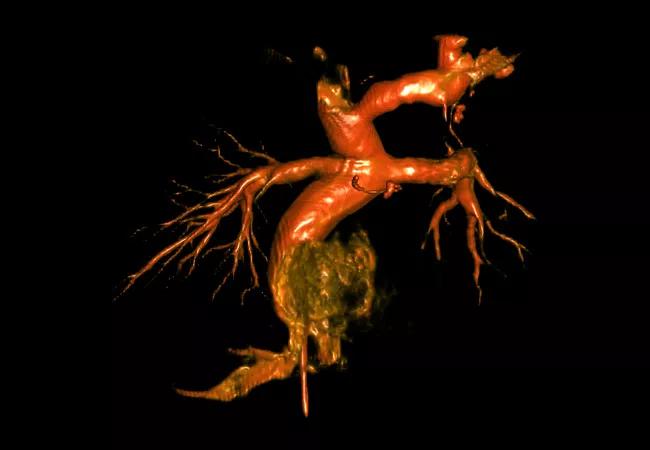
Image content: This image is available to view online.
View image online (https://assets.clevelandclinic.org/transform/3c2005de-1895-42b9-8a13-ad2b935d976c/23-CHP-3550414-CQD-Suntharos-Cardiopulmonary-1_jpg)
23-CHP-3550414 CQD-Suntharos – Cardiopulmonary
Children with heart defects who undergo the Fontan procedure need regular surveillance to assess their heart function, including cardiopulmonary exercise stress tests on a treadmill or bike, and cardiac catheterization. Catheterization can provide precise measurements to give a detailed picture of heart health, but the procedure is considered more invasive. Could the exercise stress test be used instead to make a comparable assessment? That’s what pediatric cardiologists at Cleveland Clinic set out to learn in a new study.
Advertisement
Cleveland Clinic is a non-profit academic medical center. Advertising on our site helps support our mission. We do not endorse non-Cleveland Clinic products or services. Policy
The short and surprising answer is no. Researchers found no correlation between cardiopulmonary exercise testing and cardiac catheterization. In addition, the exercise test showed no difference between high-risk and low-risk Fontan patients. That doesn’t mean these tests aren’t useful, however.
“The takeaway is that we cannot use one thing or the other,” says Patcharapong Suntharos, MD, Director of the Pediatric Cardiac Catheterization Laboratory at Cleveland Clinic and a co-author of the study. “In order to evaluate patients as complex as the Fontan’s population, you need more than one test. We need a combination of tests together to come up with a conclusion.”
The cardiopulmonary exercise test can give providers a functional assessment of cardiopulmonary performance, and previous studies have found that poor results on an exercise test are associated with increased risk of hospitalization or cardiovascular events.
Cardiac catheterization is used to calculate cardiac output, measure pressures and saturations, and conduct an angiogram for a snapshot of heart health and is frequently performed under general anesthesia. However there is no clear evidence showing the utility of this procedure, and because it is more invasive, it’s usually only recommended for routine monitoring once every five to 10 years.
For the study, researchers conducted a retrospective review of 65 Fontan patients who had undergone cardiac catheterization and had a cardiopulmonary exercise test within six months of each other. They then evaluated the test parameters to look for correlations between the results. They also evaluated the exercise test parameters to see if they showed any differences between high-risk and low-risk patients.
Advertisement
“We thought it was going to be correlated, meaning that if you have unfavorable stress test data, then you should have bad cath parameters as well,” Dr. Suntharos says. “But we found no correlation whatsoever. Even when we compared patients considered high risk and low risk, based on their clinical symptoms, we found no correlation between these two groups.”
In addition to supporting the continued use of both tests to provide a comprehensive assessment for this population, Dr. Suntharos says it might be worthwhile to take another look at the parameters of the exercise test as well as define better protocol for a cardiac catheterization. “I want to look at other types of parameters, so that we might be able to come up with something that’s better than what we’re looking at right now,” he says.
Dr. Suntharos plans to continue gathering data for a follow-up study.
The study, “Correlation Between Cardiopulmonary Exercise Testing Parameters and Invasive Hemodynamic Parameters in Fontan Population,” was presented at the annual meeting of the American College of Cardiology.
Cleveland Clinic Children’s recently launched the FRONTIER (Fontan Resiliency enhancement Optimized interdisciplinary care, Neurodevelopmental support, Therapeutic, Interventions and Exercise Rehabilitation) Clinic, a comprehensive, multidisciplinary program that aims to improve the short- and long-term outcomes and quality of life of children, adolescents and adults with Fontan circulation.
Advertisement
Advertisement

Try these moves to relieve butt pain and numbness

Systemic change needed to improve health outcomes for parents and children, say researchers
Rare genetic variant protected siblings against seizures and severe hypoglycemia

Movie has more positive impact than expected, says Head of Adolescent Medicine

Genetic changes are similar between some vascular anomalies and cancers
Expert panel advises a two-tier structure for surgical centers

Our new head of pediatric general and thoracic surgery shares his passion and vision
Basic understanding of condition and treatment is lacking
 Search