Locations:





Benefits could extend to patients with COPD
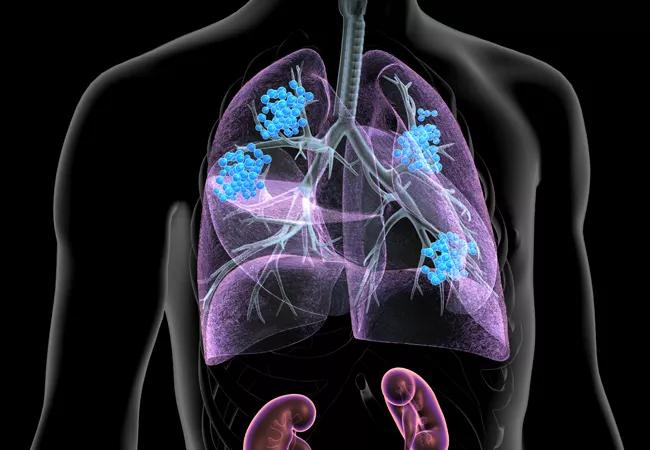
Image content: This image is available to view online.
View image online (https://assets.clevelandclinic.org/transform/fc7381d8-1c99-412d-a9da-d91f038ab565/18-PUL-4530-Hatipoglu-Hero-Image-650x450pxl_02_jpg)
18-PUL-4530-Hatipoglu-Hero-Image-650x450pxl_02
By Amy Attaway, MD, and Umur Hatipoğlu, MD
Advertisement
Cleveland Clinic is a non-profit academic medical center. Advertising on our site helps support our mission. We do not endorse non-Cleveland Clinic products or services. Policy
Electronic inhaler monitoring (EIM) is a novel modality that enables real-time assessment of adherence to inhaled therapy. EIM systems generally consist of sensors placed on inhalers that record the time of administration for inhaled medications coupled with cloud-based data analytics and mobile and computer-based user interfaces. They may include reminders to patients when doses are missed. Through interactive user interfaces accessible via computers or cell phones, providers and patients can track medication utilization patterns.
Adherence data, shared with the provider and available at the point of care, facilitate discussions between the provider and patient. Methods proven effective in fostering adherence, such as shared decision-making and educational interventions, can be implemented with more confidence.
EIM also can inform the assessment of treatment effectiveness. For instance, a patient whose disease is poorly controlled and whose adherence to medications is poor should benefit from interventions that foster adherence. On the other hand, patients whose disease is not adequately controlled in the face of satisfactory adherence should be considered for augmentation of their treatment regimen.
Most of the EIM studies performed in the clinical arena have involved asthma patients. In an elegant study by Foster and colleagues, 143 subjects with asthma were randomized into four groups involving:
Advertisement
All groups were given an EIM, and their adherence was tracked via the device for the study’s six-month period. The investigators found that adherence was higher in the groups that had access to inhaler reminders compared to the groups for whom reminders were not offered (73%+/-26% of prescribed doses versus 46%+/-28%; P<0.0001). Although all groups experienced similar improvement in overall asthma control, a smaller proportion of patients in the inhaler reminder groups experienced severe exacerbations compared to non-reminder groups.
Sulaiman and colleagues combined EIM with inhaler technique feedback, utilizing previously validated digital audio recordings of flow pattern to assess technique. Adult subjects (n=218) with severe uncontrolled asthma were block randomized to intensive education versus biofeedback. Both groups received electronic inhaler monitoring. In the intensive education group, patients received instruction for optimal inhaler technique based on a checklist. The biofeedback group received training and instruction based on EIM-collected data to reinforce regular dosing intervals and improve inhaler technique. At the three-month time point of the study, adherence among the subjects in the biofeedback group was significantly higher than that of the intensive education group (74% versus 64% respectively; P<0.007). Errors in inhaler technique were common in both groups and included low peak inspiratory flow (50% of errors) and exhalation into the diskus before inhalation (39% of errors).
Advertisement
In this study, electronic inhaler monitoring also allowed the clinicians to combine adherence data with disease control status to fine-tune treatment. For instance, nonadherent patients that had poor disease control would receive interventions that target better adherence. On the other hand, patients with good adherence and poor disease control would need escalation of treatment.
The Respiratory Institute’s Center for Comprehensive Care in COPD has piloted an EIM program that enrolled COPD patients that had a hospital admission or ER visit due to COPD exacerbation during the prior year. Our experience suggests good acceptance of EIM by patients and higher medication adherence rates than what has been reported in the literature for patients with COPD. We recently reported the preliminary healthcare utilization data from this cohort at the 2018 American Thoracic Society. Among the 20 patients that completed at least six months of monitoring, annualized all-cause hospitalizations and ED visits were reduced (5.2+3.5 visits pre-implementation versus 3.2+2.3 post implementation, P=0.034). Annualized COPD-related hospitalizations and ED visits were lower as well, although this did not achieve statistical significance (3.9+3.2 visits pre-implementation versus 2.3+2.2 post-implementation, P=0.07).
Studies published to date suggest benefit of EIM in poorly controlled asthma patients. It is highly plausible that this benefit would extend to patients with COPD that have poor adherence and high healthcare utilization. Additionally, EIM-guided protocols could provide a practical, in-office approach to objectively assessing adherence and inhaler technique.
Advertisement
While EIM appears promising, further studies are necessary to understand how best to implement the technique and which populations to target with the intervention. The Center for Comprehensive Care in COPD will continue to investigate the utility of EIM in optimizing the care of our patients.
Dr. Hatipoğlu is Director of the COPD Center within the Respiratory Institute.
Dr. Attaway is associate staff in the Department of Pulmonary Medicine.
Advertisement
Advertisement
Volatile organic compounds have potential in heart failure diagnostics

Caregivers are provided with real-time bronchoscopy patient findings
Insights for diagnosing, assessing and treating
A Cleveland Clinic pulmonologist highlights several factors to be aware of when treating patients

New program sets out to better support underserved patient populations
Cleveland Clinic pulmonologists aim to further lower waitlist times and patient mortality

Lessons learned from cohorting patients and standardizing care

New tools and protocols to improve care
 Search