Locations:





Monthly training day engages fellows and faculty
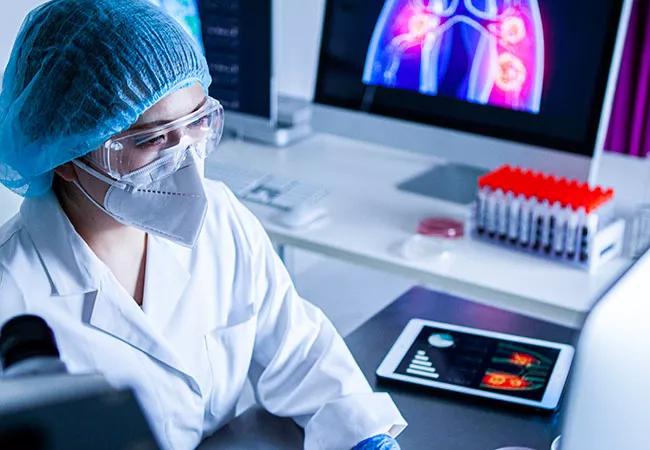
Image content: This image is available to view online.
View image online (https://assets.clevelandclinic.org/transform/291c999d-1421-4719-b80f-b52c74328aa6/650x450-Education-Day-Fellows2_jpg)
650×450-Education-Day-Fellows2
At any given time, trainees in Cleveland Clinic’s three-year combined pulmonary and critical care fellowship program are delivering care across campus — whether they’re staffing the bronchoscopy suite or another procedural area, managing outpatient and inpatient care or responding to acute needs in the ICU. Training also includes off-service and off-campus rotations, enabling trainees to develop working knowledge of other medical disciplines and gaining Level 1 trauma center experience.
Advertisement
Cleveland Clinic is a non-profit academic medical center. Advertising on our site helps support our mission. We do not endorse non-Cleveland Clinic products or services. Policy
“It’s a robust and well-rounded model, but the nature of the experience makes it nearly impossible to expect a well-attended weekly lecture,” says Rendell Ashton, MD, who has been director of the pulmonary/critical care fellowship program at Cleveland Clinic since 2010. “Further, the breadth of subspecialty concentrations within pulmonary and critical care medicine makes it essential to create clinical exposure opportunities for our trainees.”
And that hasn’t always been easy, according to Dr. Ashton. Several years ago, in response to these challenges, it became clear that in order to create a meaningful experience for fellows, leadership must engineer a day of dedicated learning to one topic and make it easy for all fellows to attend.
“We decided to consolidate didactic teaching into one day each month and organize the day around a clinical theme, like asthma or lung cancer, for example,” explains Dr. Ashton. Each of these days has a faculty champion, specialty grand rounds with a visiting professor, interactive workshops, lectures from faculty in the discipline of the day, and overviews of basic, clinical and population-based research initiatives.
The interactive component enables fellows to get their hands on the equipment and have an interactive learning experience in a low-risk environment. For the bronchoscopy education day, the workshop included a session for fellows to perform a bronchial blocker placement on simulation models. For cystic fibrosis (CF) days, fellows experimented with oxygen delivery equipment and mucus clearance devices to better understand how the technology is used in care of CF patients.
Advertisement
The exposure to expertise in pulmonary and critical care complements the first-year fellow experience, which is designed to help trainees develop core competencies to diagnose and manage pulmonary diseases and begin a customized career track. This continues in years two and three, but with a heightened focus on exploring academic and leadership opportunities, developing mentored relationships, and applying those skills into a career in medicine. The fellows participate in monthly education days throughout their 3-year training.
In late summer, the team regrouped for the first Education Day of the new academic year. The topic – COPD – is not new in the rotation, but the format certainly was. While the COVID-19 pandemic altered the traditional structure of Education Day programming, feedback from the entirely virtual session still remained largely positive, says Dr. Ashton, and even preferred by some learners.
One thing that is unlikely to change is the Education Day program itself. Dr. Ashton, a pulmonary and care critical physician and longtime medical educator, knows how important it is to schedule dedicated learning time for trainees. In Cleveland Clinic’s Respiratory Institute, this emphasis on education is a central feature. Without support from institute leadership as well as the faculty who cover the fellows’ clinical duties one day each month, Education Day would not be possible.
He concludes, “Patient-centered care will always be the central tenet of our work, and education and training enable the highest possible level of care. In the service of our patients, it’s our responsibility to continue creating opportunities to train the next generation of physician leaders.”
Advertisement
Advertisement
Volatile organic compounds have potential in heart failure diagnostics
Caregivers are provided with real-time bronchoscopy patient findings
Insights for diagnosing, assessing and treating
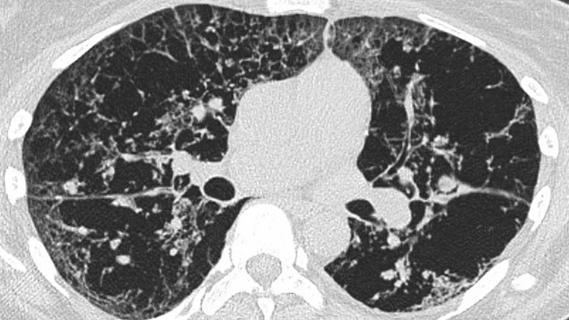
A Cleveland Clinic pulmonologist highlights several factors to be aware of when treating patients
New program sets out to better support underserved patient populations
Cleveland Clinic pulmonologists aim to further lower waitlist times and patient mortality
Lessons learned from cohorting patients and standardizing care
New tools and protocols to improve care
 Search