Locations:





 Search
This case illustrates the importance of looking at the bigger picture when considering a patient’s respiratory symptoms.

Image content: This image is available to view online.
View image online (https://assets.clevelandclinic.org/transform/3c301b67-cb92-4f48-987f-91e96dce5338/22-PUL-2781258-CQD_Dr_-James-K_-Stoller-AATD-case-study-650x450-1_jpg)
chest examination
A 21-year-old male college student sought a second opinion after presenting with low alpha-1 antitrypsin (AAT) levels, episodic dyspnea with wheezing, and a cough. The patient’s serum AAT level was 46 mg/dL, and the AAT genotype was PI*SZ. Augmentation therapy (with pooled human plasma-derived AAT) was recommended locally. Inhaled corticosteroids and bronchodilators did not alleviate his symptoms. The patient was a never smoker, but he had a history of frequent respiratory tract infections in his early childhood and several allergies (dander, dust mites, peanuts and eggs). The patient also had a family history of respiratory issues; his mother had asthma.
Advertisement
Cleveland Clinic is a non-profit academic medical center. Advertising on our site helps support our mission. We do not endorse non-Cleveland Clinic products or services. Policy
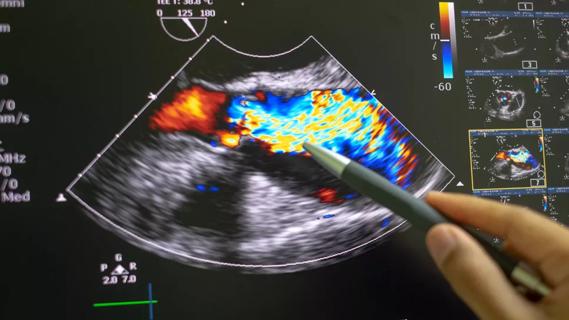
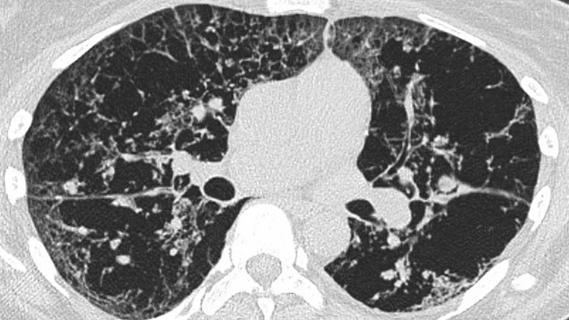
Physical examination of the patient showed normal vesicular breath sounds bilaterally. The patient’s skin was also clear of lesions suggestive of panniculitis or vasculitis. Pulmonary function testing (PFT) showed some pseudo-restriction, air trapping, a normal diffusion capacity and no obstruction. An echocardiogram was within limits. However, a chest CT showed mild diffuse peribronchial thickening, scattered tree-in-bud opacities and mucoid impaction with mild air trapping on expiratory images. Eosinophilia was detected with 630 eosinophils/mL (12.5%), and the patient’s serum IgE level was elevated at 267 kU/L (upper limit of normal = 114 kU/L).
Since the patient had no indication of emphysema or fixed airway construction, the care team pursued an alternative diagnosis to AATD to account for the patient’s dyspnea and wheezing. The patient’s family history (allergies, eosinophilia and elevated IgE level) was consistent with moderately persistent asthma, which was the revised diagnosis.
Future plans for augmentation therapy were stopped, and benralizumab was added to his usual regimen for eosinophilic asthma. The patient was also advised to abstain from drinking alcohol.
Following a year of therapy, the patient showed marked improvement. He reported resolution of symptoms, and his Asthma Control Test score improved from 19 to 23. The patient’s post-bronchodilator forced expiratory volume (FEV1) and forced vital capacity (FVC) values also improved from 65% and 74% of predicted to 77% and 84% of predicted, respectively.
Advertisement
“This was a fascinating and instructive case,” says James Stoller, MD, MS, Chair of the Education Institute at Cleveland Clinic and corresponding author of the study. “The diagnosis of AATD helped frame the case and explained the patient’s physiology. But that diagnosis of AATD also blinded clinicians to the underlying pathology of asthma, which was the actual reason for the patient’s symptoms.”
AATD is under-recognized, and patients with AATD commonly experience lengthy times between the initial symptoms and first actual diagnosis. However, it is important to look at a patient’s symptoms holistically when considering an AATD diagnosis. When there is no fixed airflow obstruction on PFTs or emphysema on imaging, AATD should not cause symptoms and an alternate diagnosis should be considered. It’s also important to remember that augmentation therapy is only recommended for individuals with severe deficiency of AAT who have emphysema and fixed airflow obstruction.
“Currently, intravenous augmentation therapy is the only specific therapy available to treat AATD,” says Dr. Stoller. “The FDA recommends a regimen of 60 mg/kg once weekly, but these drugs are very expensive. So, cost is one more reason to make sure that AATD is the correct diagnosis before pursuing treatment options.”
Among patients with AATD as in the general population, asthma is quite prevalent, but any mechanism for an association is unclear. “There is some research that suggests that the loss of alpha-1 antitrypsin-related immunomodulatory and anti-inflammatory activity in these patients contributes to an asthmatic phenotype, but available data are conflicting and more research is needed,” explains Dr. Stoller. “However, we do know that patients with asthma and AATD often have more severe asthma and may have an overall more challenging clinical course.”
Advertisement
Dr. Stoller highlights four major takeaways from this case when it comes to treating patients with AATD:
Advertisement
Advertisement

Volatile organic compounds have potential in heart failure diagnostics

Caregivers are provided with real-time bronchoscopy patient findings
Insights for diagnosing, assessing and treating
A Cleveland Clinic pulmonologist highlights several factors to be aware of when treating patients

New program sets out to better support underserved patient populations
Cleveland Clinic pulmonologists aim to further lower waitlist times and patient mortality

Lessons learned from cohorting patients and standardizing care
New tools and protocols to improve care