Locations:





 Search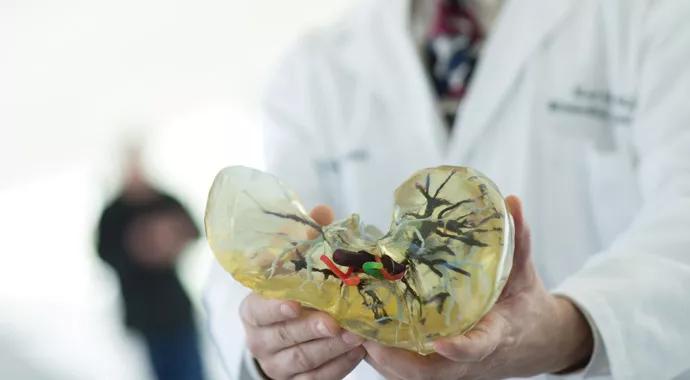
Image content: This image is available to view online.
View image online (https://assets.clevelandclinic.org/transform/d9387bbe-51f3-411a-93d2-92d964eef7d7/3D-Liver-690_jpg)
3D-Liver-690
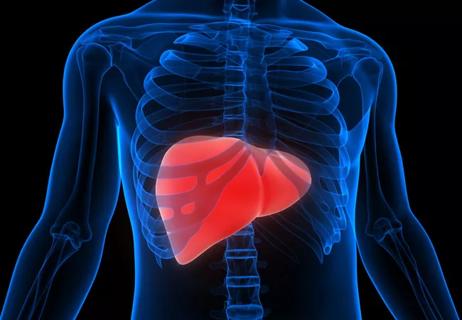
“Imagine you are a surgeon going to perform a resection of half of a liver for a transplant and you are actually provided with a 3-D model of the liver you will encounter the next day,” says Nizar Zein, MD, Chief of Hepatology and Medical Director of Liver Transplantation at Cleveland Clinic. “You can look at the 3-D ‘printout’ and plan your surgery.”
Advertisement
Cleveland Clinic is a non-profit academic medical center. Advertising on our site helps support our mission. We do not endorse non-Cleveland Clinic products or services. Policy
This technology exists. Working with Cleveland Clinic Lerner Research Institute’s Medical Devices Unit, Dr. Zein has built more than 20 of these liver models to date – in a flexible resin with internal lumen geometry generated from a reconstructed CT scan – to improve surgical planning and training.
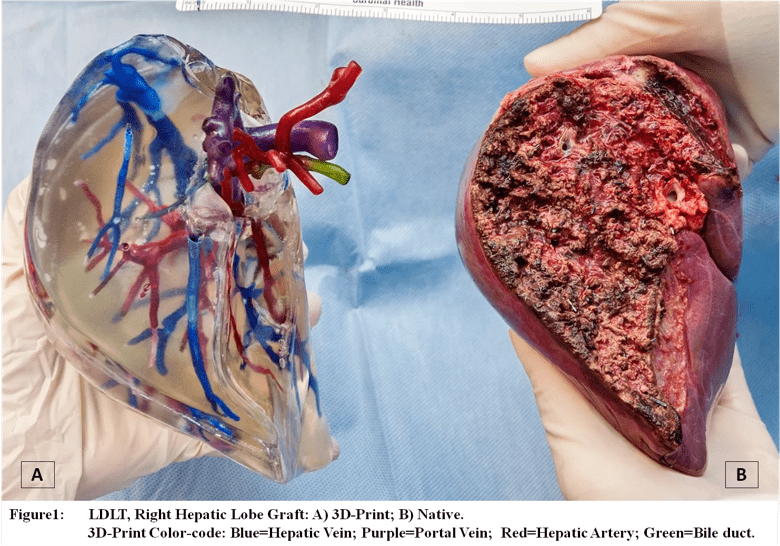
Image content: This image is available to view online.
View image online (https://assets.clevelandclinic.org/transform/787a0045-b241-480c-8c56-e3e4f8d47170/LDLT_RHLG1_png)
Advertisement
Advertisement

Strong patient communication can help clinicians choose the best treatment option
ctDNA should be incorporated into care to help stratify risk pre-operatively and for post-operative surveillance

The importance of raising awareness and taking steps to mitigate these occurrences
New research indicates feasibility and helps identify which patients could benefit
Treating a patient after a complicated hernia repair led to surgical complications and chronic pain
Standardized and collaborative care improves liver transplantations
Fewer incisions and more control for surgeons

Caregiver collaboration and patient education remain critical