Locations:





Case elucidates effectiveness of physical therapy
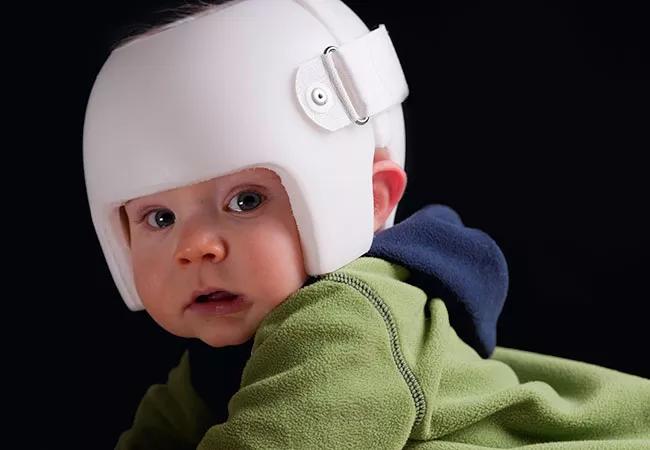
Image content: This image is available to view online.
View image online (https://assets.clevelandclinic.org/transform/dbafc93c-e245-4ced-8ab3-758dd6faf5f0/650x450-Congenital-muscular-torticollis-rehab_jpg)
650×450-Congenital-muscular-torticollis-rehab
By Deborah Bercik, PT
Advertisement
Cleveland Clinic is a non-profit academic medical center. Advertising on our site helps support our mission. We do not endorse non-Cleveland Clinic products or services. Policy
A two-month old boy was referred for treatment of congenital muscular torticollis. He was born at 35 weeks gestation, had a significant plagiocephaly, and his score on the Alberta Infant Motor Scales (AIMS) was at the 4% level when he was first evaluated. He tended to keep his hands fisted, and did not appreciate prone positioning. He was seen at Cleveland Clinic Children’s Hospital for Rehabilitation on a weekly basis for skilled outpatient physical therapy services, with a focus on positioning, massage, strengthening and range of motion activities.
Congenital muscular torticollis (CMT) is a diagnosis applied to infants with atypical head posture and unequal cervical muscle strength. CMT is typically characterized by cervical lateral flexion to one side, with the head rotated to the opposite side secondary to a restriction in the sternocleidomastoid muscle. In a 2008 article, the incidence rate for CMT was listed at 0.3% to 2%. The same article cited that 12% of all Dutch newborns demonstrate a positional preference. Over a recent five-year time period (2010-2015), more than 2,500 babies under one year of age diagnosed with torticollis were seen at Cleveland Clinic Children’s.
Babies with CMT are frequently referred to pediatric physical therapists for evaluation and treatment. Physical therapists provide range of motion, positioning and strengthening activities for babies and educate caregivers in strategies for use at home. A typical physical therapy course will continue until the baby is independently standing and taking a few steps. In 2018, the American Physical Therapy Association published a clinical practice guideline to provide a framework for torticollis care. The CPG contains 17 action statements to guide physical therapists throughout history-taking, physical assessment and referral recommendations for babies whose screenings are concerning for neurological, ocular or orthopedic findings.
Advertisement
Early referral for CMT has been associated with a more complete recovery and a shorter duration of care, according to the 2018 CPG. Factors that correlate with a longer episode of treatment include severity of the head tilt, the presence of a mass and delivery history. Many babies arrive at physical therapy with an atypical head posture; however, there are babies who have a variety of complicating factors. Some of the more typical co-morbidities include prematurity, gastroesophageal reflux (GERD), plagiocephaly, developmental dysplasia of the hip and brachial plexus injury (BPI). A history significant for any of these diagnoses may complicate a baby’s treatment course and lengthen the intensity and duration of physical therapy.
Prematurity and GERD may dampen a parent’s or caregiver’s enthusiasm for providing opportunities for awake and active prone play. The flattened area on a baby’s head may limit active cervical rotation, especially when the baby is in supine, and the bracing necessary for babies with either BPI or DDH may also limit positioning and play options. As physical therapists, we know that tummy time play and prone mobility skills are essential to torticollis resolution and gross motor development. Infants who get three intervals of prone positioning during the day have significantly higher AIMS scores than babies who did not have prone play opportunities, according to one study.
The cranial remolding helmet aided with the resolution of his plagiocephaly. His parents were provided with techniques to carry over at home, and their investment in his care supported his development. The patient demonstrated a head tilt for a longer than expected duration, but his torticollis resolved, and at discharge from physical therapy, his gross motor developmental skills were on track for his adjusted age.
Advertisement
The patient was seen for ongoing PT until 11 months of age, and was followed up at 16 months of age, when he began ambulating independently. Important factors in his torticollis treatment included early referral, quick assessment of his baseline developmental skills, and incorporating stretching, positioning and strengthening strategies into his daily regimen. His parents were dedicated to carrying over treatment activities, and their investment in his care supported his development. He was fitted with a cranial remolding helmet at six months of age, and wore the helmet until age 10 months, with excellent resolution of the plagiocephaly. He demonstrated a residual left head tilt until about nine months of age, but his torticollis resolved. His independent ambulation at discharge was symmetric and fluid.
Advertisement
Advertisement

Try these moves to relieve butt pain and numbness

Systemic change needed to improve health outcomes for parents and children, say researchers
Rare genetic variant protected siblings against seizures and severe hypoglycemia

Movie has more positive impact than expected, says Head of Adolescent Medicine
Genetic changes are similar between some vascular anomalies and cancers
Expert panel advises a two-tier structure for surgical centers
Our new head of pediatric general and thoracic surgery shares his passion and vision
Basic understanding of condition and treatment is lacking
 Search