Locations:





Diabetes is hard for adults, even harder for children
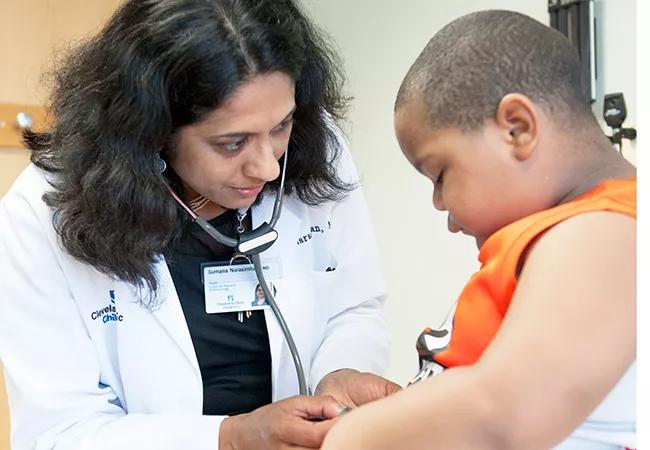
Image content: This image is available to view online.
View image online (https://assets.clevelandclinic.org/transform/30921e14-a400-42ce-bc0e-8bdad7413659/650x450-Endo-Type-2-Diabetes_jpg)
650×450 Endo Type 2 Diabetes
Four-year-old Demetric Stewart knows the alphabet and can write his name — although he’s never been to preschool. He likes to run and play — but stops throughout the day to check his blood glucose. He loves chicken nuggets and ice cream — but eats vegetables and yogurt instead.
Advertisement
Cleveland Clinic is a non-profit academic medical center. Advertising on our site helps support our mission. We do not endorse non-Cleveland Clinic products or services. Policy
Living with type 2 diabetes is hard enough for adults. It’s even harder for children.
“In the early 2000s, when incidence of type 2 in children began increasing, we treated it as in adults,” says Sumana Narasimhan, MD, of Cleveland Clinic’s Center for Pediatric Endocrinology. “Today we know the disease is more aggressive in children and requires more aggressive treatment.”
Dr. Narasimhan references NIH-funded research as well as other studies that indicate diabetes-induced kidney disease, retinopathy and cardiovascular disease progress faster in children.
“The best way to treat type 2 is to prevent it — by addressing obesity,” says Dr. Narasimhan. “Otherwise, treatment requires four things: lifestyle changes, aggressive control of blood glucose by medication, monitoring blood glucose levels and communication. With children, all of that hinges on parental involvement.”
Tracy Stewart knew her son had diabetes. She recognized the symptoms. But getting Demetric the right medical support wasn’t easy, especially since she’d been sidelined by a devastating car accident and was homeless with her husband and children.
“When we met Dr. Narasimhan, she was very understanding,” says Mrs. Stewart. “She knew what we needed and started pulling a team together.”
The family met with a dietitian, diabetes educator and social worker. Pulmonary, cardiology, orthopaedic and other specialists began helping Demetric combat sleep apnea and joint problems entwined with obesity. He will be carefully monitored for kidney, eye and cholesterol issues as he gets older.
Advertisement
The Stewarts then started making changes. Demetric became excited about boxing classes and swim lessons. The whole family began eating healthier.
“Now we eat more baked chicken and turkey burgers instead of fast food,” says Mrs. Stewart. “Demetric drinks water instead of juice. When he’s hungry between meals, he can have as many vegetables as he wants. We’re firm on it.”
After four months of lifestyle changes, along with daily metformin, Demetric’s blood glucose level has fallen to the non-diabetic range. His weight also has decreased.
“It’s all because Demetric’s mom is working with us,” says Dr. Narasimhan. “She is making him eat well and exercise. Managing type 2 diabetes takes a coordinated multidisciplinary team, but when parents are on board, it’s easier to be successful.”
Advertisement
Advertisement

Try these moves to relieve butt pain and numbness

Systemic change needed to improve health outcomes for parents and children, say researchers

Rare genetic variant protected siblings against seizures and severe hypoglycemia

Movie has more positive impact than expected, says Head of Adolescent Medicine

Genetic changes are similar between some vascular anomalies and cancers

Expert panel advises a two-tier structure for surgical centers

Our new head of pediatric general and thoracic surgery shares his passion and vision

Basic understanding of condition and treatment is lacking
 Search