Locations:





Procedure halts refractory ventricular arrhythmias in teenager with HCM
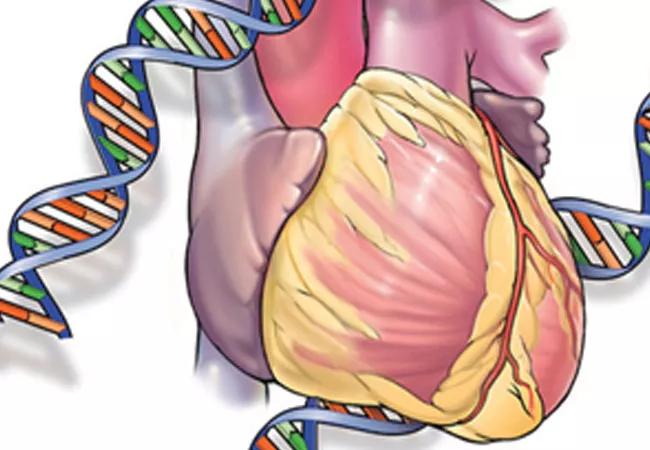
Image content: This image is available to view online.
View image online (https://assets.clevelandclinic.org/transform/12f73fa5-59a4-41df-af11-0d56b35d9717/19-HRT-3982-Tang-_CQD_650x450_2_jpg)
19-HRT-3982-Tang-_CQD_650x450_2
By Benjamin H. Hammond, MD, Madeleine L. Townsend, MD, and Peter F. Aziz, MD
Advertisement
Cleveland Clinic is a non-profit academic medical center. Advertising on our site helps support our mission. We do not endorse non-Cleveland Clinic products or services. Policy
We present the known case of a 15-year-old male with hypertrophic cardiomyopathy (HCM) and intractable ventricular arrhythmias, who was successfully treated with left cardiac sympathetic denervation as an alternative to heart transplantation.
The patient first presented to Cardiology at age 7, following an abnormal electrocardiogram during ADHD screening. Echocardiography confirmed hypertrophic cardiomyopathy (HCM), and genetic testing revealed a pathogenic variant in the MYH7 gene. He was asymptomatic at the time.
The patient was then lost to follow-up until he suffered a cardiac arrest three years later while playing basketball and was resuscitated by a bystander using CPR and an automated external defibrillator. He was subsequently hospitalized and received an implantable cardioverter-defibrillator (ICD) prior to being discharged home.
Within one year following ICD placement, the patient experienced syncopal events on two occasions. Both times, ventricular fibrillation (VF) was detected, and his device delivered appropriate, successful therapy. Medical treatment with sotalol and metoprolol was initiated. After the second event, sotalol was replaced with amiodarone, and he was given an ambulatory monitor, but no occult arrhythmias were detected.
Another arrest occurred two years later. An initial shock converted him to sinus rhythm, but he rapidly returned to ventricular tachycardia (VT), which degenerated to VF. Two subsequent shocks were unsuccessful, and he required external defibrillation to restore sinus rhythm. He recovered and went for defibrillation threshold testing (DFT) two days later, at which time we decreased his VF zone, programmed a VT zone and decreased his interval detection. Amiodarone was discontinued out of concern that it was causing lower ventricular arrhythmia rates as well as DFTs.
Advertisement
Ten months later, the patient was playing outside when he was shocked nine times for several VT and VF episodes. We increased his metoprolol dose. Five months later, he was back in the hospital following six VF events, which were treated successfully with ICD therapy.
At this time, given his history of intractable ventricular arrhythmias, evaluation for heart transplant was initiated. As we consider transplantation a last option, we felt left cardiac sympathetic denervation (LCSD) would be worth exploring as an alternative. His parents agreed, and he underwent video-assisted left cardiac sympathectomy with transection of the bottom half of the stellate ganglion and remaining sympathetic chain in March 2018.
The patient recovered well from the procedure. Complications of ptosis and miosis were temporary and resolved within 3 months. He was transitioned to nadolol for beta blockade. A brief postoperative exercise test showed no arrhythmias and he was discharged home on postoperative day 6. During the ensuing 18 months, no further ventricular arrhythmias were detected.
HCM is the most common cause of sudden cardiac death from ventricular arrhythmias in young people. In those who survive, ICDs are indicated for secondary prevention. Heart transplant is considered when patients continue to experience intractable ventricular arrhythmias despite medical therapy. LCSD is increasingly used as anti-arrhythmic therapy in patients at risk for sudden arrhythmic death, particularly in patients with inheritable channelopathies.
Advertisement
The risk of ventricular arrhythmias in patients with HCM, particularly in the young, is difficult to predict. To our knowledge, there is only one other case of LCSD in HCM reported in the literature: A 3-year-old, who was successfully treated in 2011, with effective postponement of transplantation.
Given the limited experience in this population, LCSD will likely remain an alternative therapy until multicenter studies can be conducted. However, we feel it is reasonable to consider LCSD in patients with HCM and intractable ventricular arrhythmias undergoing evaluation for heart transplantation.
Advertisement
Advertisement

Try these moves to relieve butt pain and numbness

Systemic change needed to improve health outcomes for parents and children, say researchers
Rare genetic variant protected siblings against seizures and severe hypoglycemia

Movie has more positive impact than expected, says Head of Adolescent Medicine
Genetic changes are similar between some vascular anomalies and cancers
Expert panel advises a two-tier structure for surgical centers
Our new head of pediatric general and thoracic surgery shares his passion and vision
Basic understanding of condition and treatment is lacking
 Search