Locations:





 Search
Mild symptoms belied dramatic kidney failure
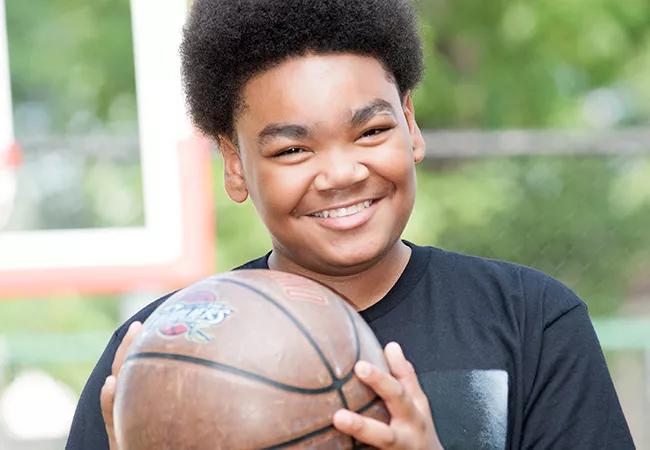
Image content: This image is available to view online.
View image online (https://assets.clevelandclinic.org/transform/01221999-5375-4e2a-8654-06156f65042f/650x450-Davion_jpg)
100016 Valleriano 07-07-15
Kidney transplantation is considered the gold-standard treatment for renal failure in children for its ability to restore quality and length of life. Cleveland Clinic has been performing kidney transplants in pediatric patients since 1963.
Advertisement
Cleveland Clinic is a non-profit academic medical center. Advertising on our site helps support our mission. We do not endorse non-Cleveland Clinic products or services. Policy
Today, kidney transplantation anchors a comprehensive Cleveland Clinic Children’s program for the care of acute and chronic kidney disease that is unsurpassed in breadth and depth. The multidisciplinary team includes:
“We can provide anything a child with kidney issues needs in the form of diagnosis, management, dialysis and transplantation,” saysCharles Kwon, MD, Head of Cleveland Clinic Children’s Center for Pediatric Nephrology.
Many of the program’s resources were brought to bear for Davion Johnson, who received a kidney transplant in March 2015 for end-stage renal disease. The boy had been healthy until age 12, when he began complaining of muscle cramps.
“Such cramps are common in this age group, but his seemed more severe and frequent than I would suspect from growing pains or physical activity,” says Davion’s longtime Cleveland Clinic general pediatrician, Kimberly Giuliano, MD.
So Dr. Giuliano ordered blood tests, which revealed significantly abnormal electrolyte and muscle enzyme levels. “Davion’s renal function was the worst I have ever seen in an outpatient,” she says. “It was hard to believe he was still urinating.”
Advertisement
She immediately called Dr. Kwon, who contacted Davion’s mother. Only a couple of hours after Davion had seen Dr. Giuliano, he was admitted to the PICU for hemodialysis. “Metabolic and electrolyte issues are most effectively corrected urgently with hemodialysis,” says Dr. Kwon.
As soon as the boy’s condition was stabilized, he was transitioned to peritoneal dialysis. “The two dialysis methods have comparable outcomes for children,” explains Dr. Kwon. “It’s an issue of how much responsibility the family wants to assume.”
Outpatient hemodialysis is provided — and peritoneal dialysis monitored — at the Judith M. Power Pediatric Dialysis Unit. Cleveland Clinic Children’s has the only kidney transplant program in northern Ohio with a dedicated pediatric dialysis unit. This child-tailored unit is located with all pediatric nephrology staff and services in a single location at Cleveland Clinic Children’s Hospital for Rehabilitation.
“It’s a huge advantage to have all services at one site, as it allows us to get to know patients intimately,” says Dr. Kwon.
Dialysis serves as a transition time to prepare the patient physically and emotionally for transplantation. “Transplantation for kidney failure is never emergent,” explains Dr. Kwon. “We may delay the surgery until medical and psychosocial issues are optimized. This is especially important with teens, since the most common cause of kidney failure is treatment nonadherence. We never proceed until they are on board.”
In some cases when the child is known to the staff, preemptive transplantation may be offered before dialysis is needed.
Advertisement
In Davion’s case, the sudden diagnosis of end-stage renal disease rocked his life. “He didn’t see it coming,” says Dr. Kwon. In short order, however, Davion took ownership of his disease and was approved for transplantation.
Cleveland Clinic Children’s offers living-donor and deceased-donor kidney transplants, as well as kidney-pancreas transplants. Davion received a deceased-donor organ, which began functioning immediately. He had an uneventful recovery and was discharged six days later. His appetite, energy and concentration quickly improved, as did his grades. He remains engaged and committed to his care.
“Davion is excited to be living life off dialysis,” says Dr. Giuliano, who continues to see him for routine care. “He’s all smiles.”

Image content: This image is available to view online.
View image online (https://assets.clevelandclinic.org/transform/8875c81c-c356-46f9-8c27-499aa2d46a89/590x-Inset-Kidney-Transplant_jpg)
Davion with his mom, several months post-transplant.
Because kidneys often last only 10 to 15 years, many young kidney recipients will require several kidney transplants over their lifetime. “Our goal is to keep every organ alive as long as possible,” says Halima Janjua, MD, Medical Director of Pediatric Kidney Transplantation.
Close monitoring is key. Patients continue to receive regular checkups until they are carefully transitioned to adult nephrology care around age 21.
Davion’s dramatic kidney failure despite his mild symptoms was an unusual case, because his blood pressure was normal. High blood pressure is often the only sign of a congenital kidney malformation, the most common cause of renal failure in childhood. It’s one reason the American College of Pediatricians advocates blood pressure screenings starting at age 3.
Advertisement
“Screening is quick and easy,” says Dr. Janjua. “Without it, unless a malformation gets identified through prenatal ultrasound, the child may go on for years with low kidney function. At puberty, when the body is changing and undergoing stress, the kidneys may suddenly give out.”
In the absence of high blood pressure, making the diagnosis requires more sleuthing. Dr. Giuliano advocates taking a thorough history, even for minor and typical problems. “Often something will emerge that indicates there may be a different or unusual process going on,” she explains.
In Davion’s case, it was an offhand comment by his father that led her to suspect the boy’s leg cramps were more than growing pains. “He said his son was tough but that he’d occasionally limp and grimace,” she says. “That level of severity told me we needed to look beyond the ordinary.
Advertisement
Advertisement

Try these moves to relieve butt pain and numbness

Systemic change needed to improve health outcomes for parents and children, say researchers
Rare genetic variant protected siblings against seizures and severe hypoglycemia

Movie has more positive impact than expected, says Head of Adolescent Medicine

Genetic changes are similar between some vascular anomalies and cancers
Expert panel advises a two-tier structure for surgical centers
Our new head of pediatric general and thoracic surgery shares his passion and vision
Basic understanding of condition and treatment is lacking