Locations:





A Sunrise Seminar by a Cleveland Clinic expert
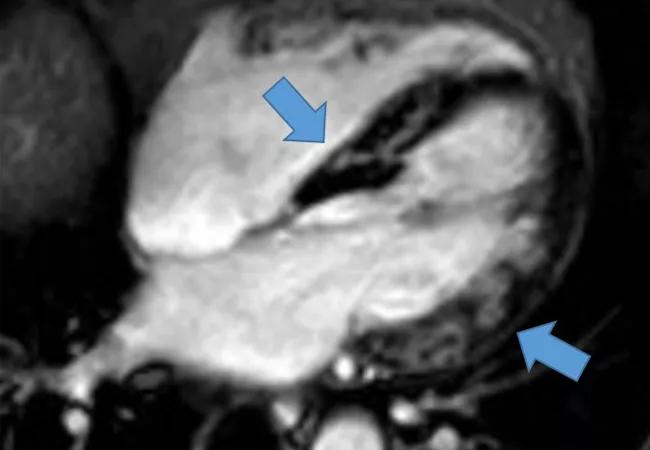
Image content: This image is available to view online.
View image online (https://assets.clevelandclinic.org/transform/2ef96d7c-ba02-4e02-8720-785c87dbbae0/Cardiac-MRI-w-Arrows-650x450pxl_jpg)
Cardiac-MRI-w-Arrows-650x450pxl
Attending the 2018 American Thoracic Society (ATS) International Conference? Spend an early morning learning the diagnosis and management of two very challenging manifestations of sarcoidosis — neurologic and cardiac — with Cleveland Clinic staff pulmonologist Manuel Ribeiro Neto, MD. This Sunrise Seminar will include case-based discussion and an overview of current evidence.
Advertisement
Cleveland Clinic is a non-profit academic medical center. Advertising on our site helps support our mission. We do not endorse non-Cleveland Clinic products or services. Policy
“Quality evidence is lacking in both cardiac and neurosarcoidosis, and these topics always generate great discussion at ATS,” says Dr. Ribeiro. “I decided that, given Cleveland Clinic’s expertise in the area with our World Association of Sarcoidosis and Other Granulomatous Disorders (WASOG) Sarcoidosis Clinic, a Sunrise Seminar would be a good way to address current evidence, guide clinical care and assess research gaps.”
As a WASOG Sarcoidosis Clinic, Cleveland Clinic provides a multidisciplinary approach to patients with neurologic and cardiac sarcoidosis and continues to research treatment approaches.
Add this session to your registration here and read on for details:
SS107 — Diagnosis and Management of Neurologic and Cardiac Sarcoidosis: A Guide for Pulmonologists
May 21, 2018, 7-8 a.m.
Temecula 1-2 (North Tower, First Floor) — Marriott Marquis San Diego Marina
Advertisement
Advertisement
Volatile organic compounds have potential in heart failure diagnostics
Caregivers are provided with real-time bronchoscopy patient findings
Insights for diagnosing, assessing and treating
A Cleveland Clinic pulmonologist highlights several factors to be aware of when treating patients

New program sets out to better support underserved patient populations
Cleveland Clinic pulmonologists aim to further lower waitlist times and patient mortality
Lessons learned from cohorting patients and standardizing care
New tools and protocols to improve care
 Search