Locations:





Also benefits patients with thalassemia
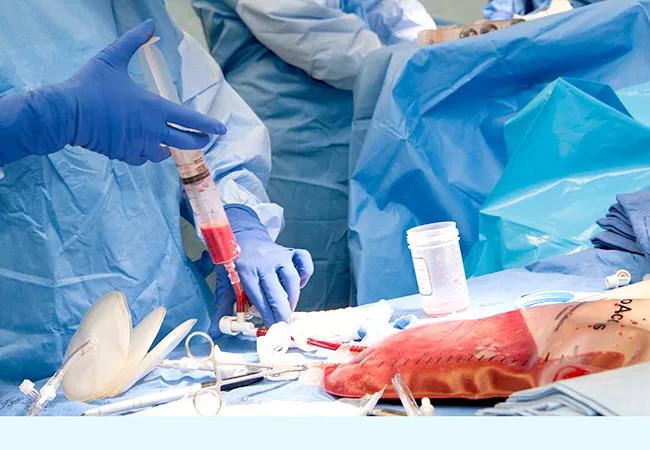
Image content: This image is available to view online.
View image online (https://assets.clevelandclinic.org/transform/5383b2e2-9a3f-47d4-8d0e-8cbeeea6bf3b/650x450-Sickle-Cell_jpg)
650×450-BMT
Cleveland Clinic Children’s is offering bone marrow transplantation (BMT) for patients with sickle cell disease and thalassemia. BMT results in a high rate of cure and restores quality of life for patients with these devastating hemoglobinopathies.
Advertisement
Cleveland Clinic is a non-profit academic medical center. Advertising on our site helps support our mission. We do not endorse non-Cleveland Clinic products or services. Policy
“Transplantation for sickle cell provides the only chance of cure for these patients: At Cleveland Clinic, 100 percent end up being cured of their disease when bone marrow is obtained from an HLA-matched family member,” says Rabi Hanna, MD, Director, Pediatric Blood & Marrow Transplant Program at Cleveland Clinic Children’s.
Patients with sickle cell disease often require multiple hospital admissions for extended periods of time due to excessive pain crises, acute chest syndrome or, occasionally, stroke. Successful BMT improves quality of life by eliminating hospitalizations, and may potentially reduce long-term healthcare costs. “Over a life span, the cost of transplantation is far less than that of multiple hospital admissions for high-risk patients” says Dr. Hanna.
The best scenario is for BMT to be performed with an HLA-matched donor, either an HLA-identical sibling or an HLA-matched unrelated donor. Any sickle cell patient with an HLA-matched family donor is eligible for transplantation at Cleveland Clinic.
But just as sickle cell affects a disproportionate number of African-Americans, a low percentage of these patients have HLA-matched family donors. Fortunately, many qualify for Cleveland Clinic’s haplo-identical donor transplantation program. This program uses bone marrow from HLA-half matched (haplotype) donors—usually biological parents and half-matched siblings—or umbilical cord blood.
“Our haplo-identical donor transplant program is a huge step forward in increasing access to BMT for these patients,” says Dr. Hanna. “The protocol was built on the success of haplo-identical BMT in providing lifesaving therapy for patients with hematological malignancy. However, the same protocol yielded a high graft-rejection rate in patients with sickle cell. To overcome this, we added another phase called ‘pre-conditioning therapy’ and increased the intensity of conditioning therapy by adding thiotepa to the chemotherapy regimen,” he explains.
Advertisement
Cleveland Clinic offers haplo-identical transplantation for sickle cell through an institutional protocol and, soon, through participation in a national phase 3 clinical trial (BMT Clinical Transplant Network Protocol #1507). This study will be open to adult and pediatric patients. Adult patients must meet NIH criteria for severe sickle cell, and pediatric patient (<15 years of age) should have documented stroke.
“This study will aim to decrease the risk of graft rejection in haplo-BMT, hopefully making it more accessible to patients with sickle cell disease. We are encouraged by the low incidence of severe and chronic graft-versus-host disease with haplo-BMT,” says Dr. Hanna.
Unlike sickle-cell disease, which causes the body to produce malformed red blood cells that cause complications such as pain crises, acute chest syndrome and stroke, patients with major thalassemia produce defective blood cells that are immediately hemolyzed, rendering them ineffective. Patients suffer from severe anemia and iron overload in organs such as the liver, heart and pancreas. Patients with thalassemia have shorter life spans due to these long-term complications.
BMT is the currently the only potential cure for thalassemia, and Cleveland Clinic has transplanted many patients with the disease—all from countries where the disease is more prevalent than in the United States.
“We have gained experience in transplanting these patients using the haplo-BMT protocol with post-transplant high-dose cyclophosphamide. Results are encouraging so far,” says Dr. Hanna.
Advertisement
In the future, Dr. Hanna envisions BMT being applied to other benign hemoglobinopathies in which blood production is inadequate or ineffective
“BMT is a potential life-saving treatment for many blood disorders,” he says.
Advertisement
Advertisement

Try these moves to relieve butt pain and numbness

Systemic change needed to improve health outcomes for parents and children, say researchers
Rare genetic variant protected siblings against seizures and severe hypoglycemia

Movie has more positive impact than expected, says Head of Adolescent Medicine
Genetic changes are similar between some vascular anomalies and cancers
Expert panel advises a two-tier structure for surgical centers
Our new head of pediatric general and thoracic surgery shares his passion and vision
Basic understanding of condition and treatment is lacking
 Search