Locations:





Preop confidence independent predictor of patient success after TJA
Image content: This image is available to view online.
View image online (https://assets.clevelandclinic.org/transform/73e64e31-f2c6-4502-8f1a-8b394c1adcd8/16-ORT-2546-Iannotti-Hero-Image-650x450pxl_jpg)
16-ORT-2546-Iannotti-Hero-Image-650x450pxl
By Joseph Iannotti, MD, PhD; Gregory Strnad, MS; Alison K. Klika, MS; and Carlos Higuera Rueda, MD
Advertisement
Cleveland Clinic is a non-profit academic medical center. Advertising on our site helps support our mission. We do not endorse non-Cleveland Clinic products or services. Policy
Patients often cite resumption of physical activities and pain relief as their reasons for undergoing a total knee or hip arthroplasty (TKA or THA). Success in those two areas depends on a range of factors. The work of surgeons and hospitals is paramount, but patients’ mental status may also have a role to play in achieving such goals.
Recently, our department studied whether patients who express greater confidence before surgery that they will return to their desired activity level—such as working outside the home, performing light exercise or participating in sports—have better outcomes after surgery.
Our results indicate that identifying patients’ desired and expected functional outcomes might assist surgeons in managing patients’ expectations preoperatively.
While most patients report high satisfaction following a TKA or a THA, not all patients reap the same functional benefits. Earlier studies have indicated that a variety of characteristics can negatively affect patients’ outcomes, including having lower preoperative functionality, being female or older and earning a lower income.
Preoperative expectations also play a role and vary by patient characteristic. Men, for instance, are more likely to report expecting greater functional outcomes following a TKA than women. Finally, investigations have shown that patients’ mental status, when measured as motivation or mental health, influences patients’ functional outcome.
From January 2008 to January 2015, we surveyed 5,386 primary unilateral TKA and 3,824 primary THA patients as they were waiting for their preoperative consultation with their orthopaedic surgeon. Our survey contained a modified physical function scale based on the 12-item Short-Form Health Survey (SF-12) and either a Knee injury and Osteoarthritis Outcome Score (KOOS) survey or a Hip disability and Osteoarthritis Outcome Score (HOOS) survey.
Advertisement
Our questionnaire also asked patients to indicate the level of functionality they expected to have after TJA by ranking on an ordinal scale (one to six) the following activities: perform self-care, perform housework, work outside the home, perform light exercise, perform heavy exercise or participate in sports. Finally, our questionnaire asked patients to rate their level of confidence in reaching this desired level of functionality on a scale from 0 to 10. We followed patients for a minimum of six months.
Outcomes of interest included patients’ postoperative physical function scores based both on the SF-12 physical composite subscore (PSC) and the KOOS/HOOS function in daily living subscale. Both are scored on a scale of 0 to 100 with higher values indicating superior scores. Other outcomes of interest were pain—measured on the KOOS/HOOS pain subscale— self-reporting of patients’ satisfaction with their new joint, patients’ acute care hospital length of stay in days (LOS) during their arthroplasty, and readmission within 30 days of surgery. We used independent variables—such as age at time of surgery, sex, BMI and others—to adjust patient outcome models, and employed multivariable models to analyze the data. We also stratified patient level of confidence as low (0 to 5), moderate (6 to 9) and high (10) to make the results more interpretable for practitioners.
We found a very strong association between patients’ confidence in attaining their desired level of physical activity following TKA and THA and actually achieving improved postoperative functionality. Nearly one-third of patients reported complete confidence—score of 10— in their ability to attain their desired functional outcome. Also, highly confident TKA patients had 49 percent lower odds of a 30-day readmission than patients with low confidence.
Advertisement
For both TKA and THA patients, being highly confident was associated with greater improvement in terms of function and decreased pain as measured by KOOS or HOOS respectively—5 to 7 points improvement for function—and 6.7 points improvement for decreased pain. Highly confident patients also had a 3 to 5 point improvement in physical function on the modified SF-12 score.
A strength of our study is that it adjusted for a range of known potential cofounders—older age, history of depression, having a low SF-12 mental composite score—that are all highly associated with poorer outcomes following TJA, and it still found that confidence was a significant independent predictor of patients’ outcome.
Based on our analysis, we believe patients’ preoperative confidence in attaining functional goals after TJA has a direct association with improved outcomes independent of the patients’ characteristics or baseline functional conditions. Thus, patients’ confidence and factors affecting it should be considered as risk modifiers for patients undergoing TJA.
Dr. Iannotti is Chair of the Orthopaedic and Rheumatologic Institute. Mr. Strnad is Lead Database Designer, Ms. Klika is Research Program Manager and Dr. Higuera Rueda is staff in the Department of Orthopaedic Surgery.
Advertisement
Advertisement
Biologic approaches, growing implants and more
Study reports zero infections in nearly 300 patients
How to diagnose and treat crystalline arthropathy after knee replacement
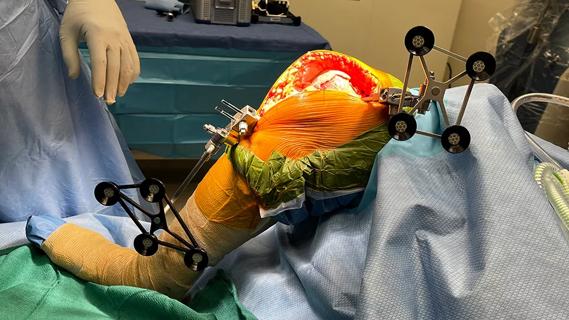
Study finds that fracture and infection are rare
Center will coordinate, interpret and archive imaging data for all multicenter trials conducted by the foundation’s Osteoarthritis Clinical Trial Network

Reduced narcotic use is the latest on the list of robotic surgery advantages
Cleveland Clinic specialists offer annual refresher on upper extremity fundamentals
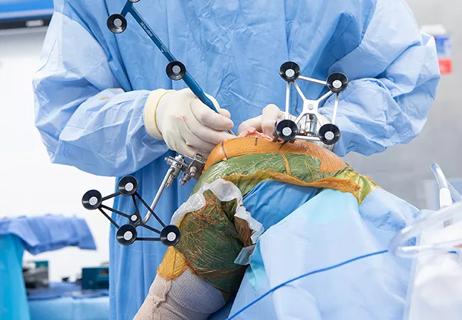
Cleveland Clinic orthopaedic surgeons share their best tips, most challenging cases and biggest misperceptions
 Search