Locations:





Exposure warrants scrutiny for surgical patients
Image content: This image is available to view online.
View image online (https://assets.clevelandclinic.org/transform/c9c0e86e-b0cc-464f-b894-8e29ccb12dbe/15-PUL-3012-Antibiotics-CQD-650x450_jpg)
Antibiotics Are a Common Cause of Perioperative Anaphylaxis
By Lily C. Pien, MD, MHPE, Alexei Gonzalez-Estrada, MD, and David M. Lang, MD
Advertisement
Cleveland Clinic is a non-profit academic medical center. Advertising on our site helps support our mission. We do not endorse non-Cleveland Clinic products or services. Policy
Perioperative anaphylaxis is an acute, systemic, potentially life-threatening reaction that occurs during the operative period. Comprehensive evaluation of these cases is complicated, as patients who experience perioperative anaphylaxis routinely receive multiple pharmacologic agents simultaneously during general anesthesia. For this reason, establishing the cause of perioperative anaphylaxis is usually quite challenging.
The differential diagnosis consists of not only medications, but also other potential etiologies, including latex allergy and systemic mast cell disorders. Identifying the etiology, or responsible agent, in a case of perioperative anaphylaxis is essential to provide direction to the surgeon and anesthesiologist so that the causative agent can be avoided in future surgical procedures.
Diagnostic evaluation using skin or in vitro tests for specific immunoglobulin E (IgE) antibodies to suspected agents is recommended, ideally four to six weeks after the event. This evaluation should include all the agents administered during the procedure in addition to other possible etiologic factors (e.g., latex and chlorhexidine).
A recent study from Cleveland Clinic reported an incidence of perioperative anaphylaxis of one in every 4,583 procedures. Previous studies found neuromuscular blocking agents were the most common identifiable cause of perioperative anaphylaxis. In our Department of Allergy and Clinical Immunology, we sought to identify the patterns and causes for perioperative anaphylaxis at Cleveland Clinic.
Advertisement
We performed a retrospective medical record review from July 1, 2002, to Oct. 31, 2013, and identified 30 cases of perioperative anaphylaxis. The demographic characteristics of these cases were female gender (63%), Caucasian background (83%) and nonatopic status (67%), with a median age of 53.5 years.
The most frequent presenting sign of perioperative anaphylaxis was hypotension (97%); almost one in four (23%) cases presented with cardiac arrest. The majority of reactions occurred during the induction phase of anesthesia. An IgE-mediated allergen was identified in 57 percent of cases.
The most common identifiable cause for perioperative anaphylaxis was antibiotics (59%), followed by neuromuscular blocking agents (23%) and latex (18%). Among the responsible antibiotics, nine out of 10 were beta-lactam antibiotics, with the most common drug being cefazolin.
In 13 cases, no causative agent was identified. Among those cases in which serum tryptase levels were obtained, elevated tryptase was found in 10 out of 10 (100%) cases of IgE-mediated anaphylaxis, compared with four out of 10 (40%) cases without identifiable cause. No deaths were reported in the 30 cases of perioperative anaphylaxis. Twenty-one patients went on to have subsequent surgery without remarkable adverse reactions.
Perioperative anaphylaxis, though rare, remains a clinical challenge and a surgical obstacle for clinicians and patients. Our study is valuable in several respects:
Advertisement
Our report illustrates the utility of performing a systematic allergy/ immunology evaluation for patients who have had perioperative anaphylaxis. This evaluation can identify responsible agents to be avoided in the future, direct management when patients require future surgical procedures and lead to better outcomes for involved patients.
Dr. Pien is a member of the Department of Allergy and Immunology who can be reached at pienl@ccf.org or 216.444.6933. Dr. Gonzalez is a former fellow in the department who is now on the faculty at East Tennessee State University. Dr. Lang is Chair of the Department of Allergy and Immunology, Co-Director of the Asthma Center and Director of the Allergy/Immunology Fellowship Training Program. He can be reached at langd@ccf.org or 216.445.5810.
Advertisement
Advertisement
Volatile organic compounds have potential in heart failure diagnostics
Caregivers are provided with real-time bronchoscopy patient findings
Insights for diagnosing, assessing and treating
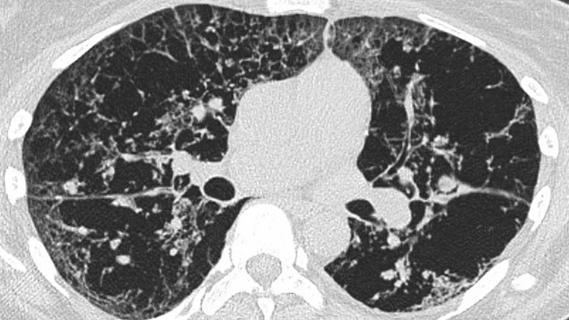
A Cleveland Clinic pulmonologist highlights several factors to be aware of when treating patients

New program sets out to better support underserved patient populations
Cleveland Clinic pulmonologists aim to further lower waitlist times and patient mortality
Lessons learned from cohorting patients and standardizing care
New tools and protocols to improve care
 Search