Locations:





A complement to medicine and other treatments
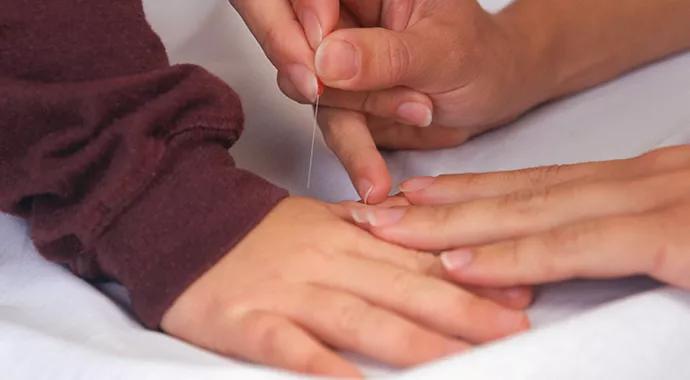
Image content: This image is available to view online.
View image online (https://assets.clevelandclinic.org/transform/506c0370-87b0-4c57-a510-69fe6af5e7ab/690x380-Acupuncture_jpg)
690×380-Acupuncture
Sometimes medication can do only so much, especially in children who have medication sensitivities or dose limitations. But Cleveland Clinic Children’s Hospital offers a treatment that can complement medication and other treatments while causing few side effects: acupuncture.
Advertisement
Cleveland Clinic is a non-profit academic medical center. Advertising on our site helps support our mission. We do not endorse non-Cleveland Clinic products or services. Policy
Since August 2012, pediatric rehabilitation physician Benjamin Katholi, MD, has been offering the treatment for patients from birth to age 25 at Children’s Hospital Shaker Campus.
“Acupuncture is a complementary tool,” says Dr. Katholi. “It doesn’t replace conventional medical treatments. If you have diabetes, you still need insulin. If you have seizures, you still need epilepsy medications. But there’s a place for both.”
Dr. Katholi finds acupuncture especially helpful in treating children and teens with complex conditions such as brain injuries and chronic pain. It’s proven to provide relief from a wide range of symptoms (see symptoms list below) without causing side effects, as medication sometimes does. And a single treatment can address multiple symptoms.
How acupuncture works isn’t completely understood. “In terms of pain control, acupuncture encourages the release of endorphins, the body’s natural painkillers,” Dr. Katholi notes. “There is ongoing research worldwide in adults and children to identify how acupuncture works and to validate its therapeutic uses.”
In general, acupuncture involves the selection of local, regional or global points to achieve different effects. Techniques include:
Needle stimulation is the most powerful treatment, but not everyone requires it.
“I prefer not using needles for younger patients,” Dr. Katholi says. “Acupressure, laser and electrical stimulation are painless and can provide some of the same effects.”
Advertisement
He also teaches patients how to use acupressure therapies on their own, especially to reduce symptoms such as nausea, headache and stress.
For older children who may benefit from needle treatment, Dr.Katholi is careful to explain that acupuncture needles are different from the needles used to draw blood. They are hair-thin and nearly painless. He explains that treatment doesn’t typically require dozens of needles. He uses the fewest necessary.
However, it can take four to six sessions to accurately gauge the treatment’s success. The effect of acupuncture is additive, similar to consistent use of a medication.
Often acupuncture techniques can be incorporated into a child’s regular therapy sessions. For example, if a physical therapist is working to loosen tight muscles, Dr. Katholi can assist with acupuncture during the same session.
“Physicians and therapists tell me the goals they’ve set for the patient, and I plan acupuncture treatments to support them,” says Dr. Katholi. “It’s a collaborative effort.”
To learn more about acupuncture at Cleveland Clinic Children’s Hospital or how it could be an effective part of your patient’s treatment plan, call 216.448.6679.
Despite perceptions that acupuncture is just for pain, it helps children and teens with a wide range of issues, including:
Advertisement
Advertisement

Try these moves to relieve butt pain and numbness

Systemic change needed to improve health outcomes for parents and children, say researchers
Rare genetic variant protected siblings against seizures and severe hypoglycemia

Movie has more positive impact than expected, says Head of Adolescent Medicine
Genetic changes are similar between some vascular anomalies and cancers
Expert panel advises a two-tier structure for surgical centers
Our new head of pediatric general and thoracic surgery shares his passion and vision
Basic understanding of condition and treatment is lacking
 Search