Locations:





Reducing variability in practice
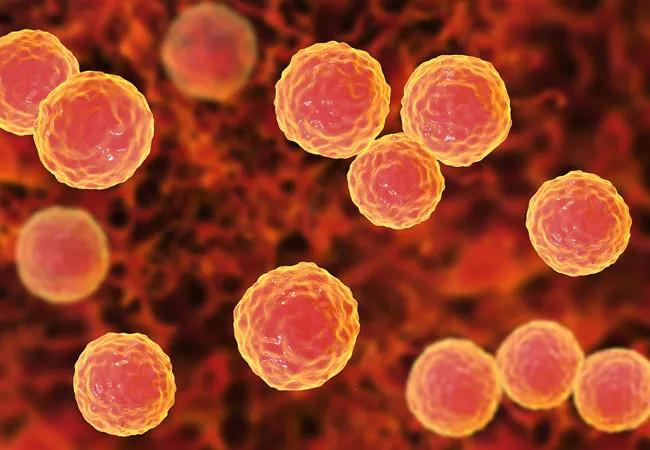
Image content: This image is available to view online.
View image online (https://assets.clevelandclinic.org/transform/dac79484-9acd-41d1-96a6-93e3ca8c9ef9/19-NUR-4337-SHINEProgram-650x450-002_jpg)
19-NUR-4337-SHINEProgram-650×450 (002)
Central line-associated blood stream infections (CLABSIs) cause significant morbidity and mortality, especially for extremely low birth weight infants (i.e., < 1,000 g) admitted to neonatal intensive care units (NICUs). The heightened risk in this population is due to a variety of factors, including patient acuity, prolonged hospitalization and use of total parenteral nutrition. As the largest provider of neonatal intensive care in Northeast Ohio, Cleveland Clinic Children’s is committed to reducing the incidence of CLABSIs and developing best practices to standardize and optimize the management of extremely low birth weight patients.
Advertisement
Cleveland Clinic is a non-profit academic medical center. Advertising on our site helps support our mission. We do not endorse non-Cleveland Clinic products or services. Policy
“Our NICU patients are often small and immunocompromised. They need central lines to facilitate nutrition and medication management, but with immature skin and in their immunocompromised state, they are at high risk for infection – and infection can be a very important factor in determining the outcomes for these infants,” says Firas Saker, MD, Chair of the Neonatal Quality Council at Cleveland Clinic Children’s.
Quality improvement and patient safety is a foundational principle of Cleveland Clinic Children’s Department of Neonatology. The team staffs three units with a total 87 beds in three hospitals. One, a Level IV NICU, is predominately a surgical unit contained within a large adult academic center. The other two are Level III NICUs, located in regional hospitals that operate as regional referral centers.
Past efforts to reduce CLABSI rates have been successful, including applying line insertion and maintenance bundles, which led to a dramatic reduction in CLABSI rates about seven to eight years ago. This sustained eradication of CLABSIs followed years of improvement, and stemmed in part from the development of a culture of safety and high reliability, as well as long-standing participation in the Children’s Hospitals Solutions for Patient Safety (SPS).
At Cleveland Clinic Children’s main campus NICU, the CLABSI rate was 0 per 1,000 central line days in 2019. “We had two infections in the first quarter of 2020, and our CLABSI rate of 0.9 compares favorably with the SPS target goal of 1.07. With constant vigilance and quality improvement steps put in place, we were able to reduce the CLABSI rate again to 0 in the subsequent three quarters of 2020,” says Dr. Saker.
Advertisement
These achievements stem in part from Cleveland Clinic Children’s participation in the Ohio Perinatal Quality Collaborative, a statewide effort to reduce the incidence of CLABSIs and develop best practices to manage patients with extremely low birth weights. “When the Ohio Perinatal Quality Collaborative began its work, an Ohio-born infant weighing less than 1,000 g at birth had approximately a 20% chance of developing at least one late onset infection. More than two-thirds of these late onset infections were CLABSIs,” notes Tina Di Fiore, MSN, RN, CNP, an advance practice nurse with Cleveland Clinic Children’s.
According to Di Fiore, the team’s initial efforts to reduce CLABSIs included implementing care bundles to reduce exposure to pathogens, using procedure carts so that the right equipment was at the bedside when needed, and ensuring that caregivers practiced hand hygiene and wore appropriate PPE when performing insertion, care and maintenance of the lines.
But being below benchmark wasn’t good enough for Cleveland Clinic Children’s. “We regularly review our outcomes to look for opportunities for improvement,” Dr. Saker says.
“Our goal is to build a high reliability organization. We already manage high-hazard potential with really positive outcomes. But after implementing the bundles, variability in our practices remained, which we found interesting because we share physicians and nurses across our sites. We developed a subcommittee to identify and address the variability. As a result, we’ve seen a 30% year-to-year decrease in the number of CLABSIs – even in the smallest, most fragile patients,” explains Di Fiore.
Advertisement
The team conducted a gap analysis, which revealed variations in routine disinfection of the lines, tubing change technique, supply brands, dressing changes and auditing. By standardizing these elements across the three NICU sites, the group achieved a CLABSI rate of 0.84. They also addressed other quality and safety issues simultaneously to further improve outcomes, including methodically advancing infants’ feeds in an effort remove the central line as quickly as possible.
Central to this success was creating a culture of quality in which all voices are heard and everyone works to achieve a common goal, according to neonatal quality lead physician Tetyana Nesterenko, MD. “Not only that, it was very important to clearly define our interventions so that every caregiver knew what we are doing and why. Visible and transparent metrics are key to improvement.”
Maintaining a below-benchmark CLABSI rate requires vigilance from all members of the care team. “When we have an infection, we look at each step to ensure there wasn’t something we could have done differently. We do that locally at each site, and then share our lessons learned, not only in our CLABSI subcommittee, but also in Cleveland Clinic Children’s daily safety briefing,” Dr. Nesterenko says. “This way, every patient throughout our system receives the same high-quality care.”
A multidisciplinary team participates in these CLABSI huddles to identify causal factors and possible solutions to the systems and process issues. “We don’t focus on individual performance,” says pediatric clinical nurse Carol Bennett, MSN, MBA, APRN, PCNS-BC, CCRN, CPN. “Nurses’ input is critical to the complete investigation of the process deficiency that contributed to a CLABSI. We invite input from the frontline nurses and want them to be part of the investigation. These thoughtful responses from nurses are key to prevention.”
Advertisement
Advertisement

Try these moves to relieve butt pain and numbness

Systemic change needed to improve health outcomes for parents and children, say researchers
Rare genetic variant protected siblings against seizures and severe hypoglycemia

Movie has more positive impact than expected, says Head of Adolescent Medicine

Genetic changes are similar between some vascular anomalies and cancers
Expert panel advises a two-tier structure for surgical centers
Our new head of pediatric general and thoracic surgery shares his passion and vision
Basic understanding of condition and treatment is lacking
 Search