Locations:





Stick with chest strap monitors when accuracy counts, study says
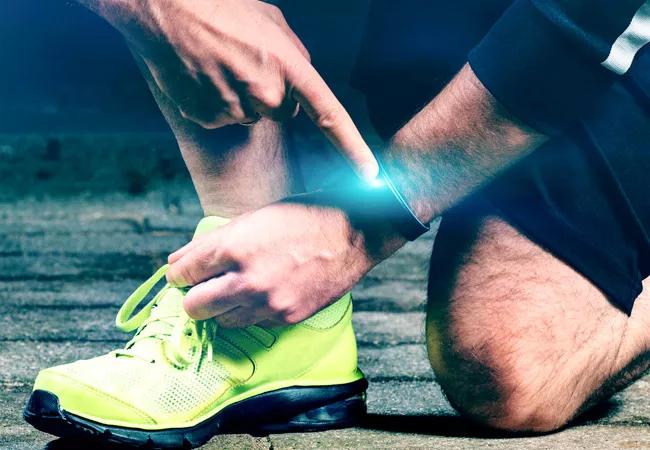
Image content: This image is available to view online.
View image online (https://assets.clevelandclinic.org/transform/e7a845ac-a53f-4f38-aade-eee41a394ec6/16-HRT-2193-Heart-Rate-Monitor-CQD-650x450_jpg)
Wrist-Worn Devices Not Up to Snuff for Heart Rate Monitoring
Next time a patient comes in asking about the off-the-chart heart rates she’s seeing on her wrist-worn fitness device, you can now reassure her that research shows those devices aren’t reliably accurate.
Advertisement
Cleveland Clinic is a non-profit academic medical center. Advertising on our site helps support our mission. We do not endorse non-Cleveland Clinic products or services. Policy
That’s thanks to a new Cleveland Clinic study published online as a research letter by JAMA Cardiology on Oct. 12.
“Heart rate monitors and other wearable fitness devices are incredibly popular, and patients are always asking, ‘Are they accurate?’” says the paper’s corresponding author, cardiothoracic surgeon A. Marc Gillinov, MD. “When we saw there were very limited data on this question in the literature, we decided to study it ourselves.”
He and colleagues from Cleveland Clinic’s Sydell and Arnold Miller Family Heart & Vascular Institute recruited 50 healthy adults without cardiovascular disease and randomized them to wear two of the following four commercially available wrist-worn fitness and heart rate monitors (one on each wrist) during a treadmill protocol:
All participants also wore standard electrocardiographic (ECG) limb leads and a Polar H7 electrode-containing chest strap monitor.
Heart rate was measured with participants on a treadmill at rest and at 2, 3, 4, 5 and 6 mph. Participants exercised for three minutes at each setting, with heart rate recorded at the three-minute point. Recovery heart rate was also measured at 30, 60 and 90 seconds after treadmill protocol completion.
When heart rate readings from the four wrist-worn devices and the chest strap monitor were compared with the ECG measures across all time points, analysis showed the following concordance correlation coefficients with ECG-based heart rate:
Advertisement
Specific findings included the following:
The researchers concluded that accuracy among wrist-worn heart rate monitors is variable and that none matches the accuracy of chest strap monitors, which had been confirmed in prior studies and replicated in the present study. “Electrode-containing chest monitors should be used when accurate heart rate measurement is imperative,” they wrote.
“If I want to know someone’s true heart rate, I’ll hook them up to an ECG machine,” says Dr. Gillinov. “But I’d feel comfortable with a Polar chest strap monitor too, as it is highly accurate and works on electricity, in contrast to the optical sensing used by wrist-worn monitors.” He notes that chest strap monitors, which are available at sporting goods stores, are popular among elite athletes and a good recommendation for patients who want a reliable heart rate monitor.
For patients who want to stick with wrist-worn devices, Dr. Gillinov points out that the Apple Watch and Mio Fuse were considerably better than the other two products tested. He adds this advice for users of wrist-worn monitors: “Don’t make too much of a single reading, or even two readings. Do several readings because you can’t count on these devices to be accurate every time.”
Advertisement
He notes that his team’s new paper tested “last year’s models” of the various wrist-worn devices and that they’ve just finished testing the latest generation of the devices to assess for any incremental improvements in accuracy. “Those results are coming,” he says.
Advertisement
Advertisement

A sampling of outcome and volume data from our Heart & Vascular Institute
Concomitant AF ablation and LAA occlusion strongly endorsed during elective heart surgery

Large retrospective study supports its addition to BAV repair toolbox at expert centers

Young age, solid tumor, high uptake on PET and KRAS mutation signal risk, suggest need for lobectomy
Surprise findings argue for caution about testosterone use in men at risk for fracture
Residual AR related to severe preoperative AR increases risk of progression, need for reoperation

Findings support emphasis on markers of frailty related to, but not dependent on, age
Provides option for patients previously deemed anatomically unsuitable
 Search