Locations:





Wound, ostomy and continence nurses touch patients’ lives
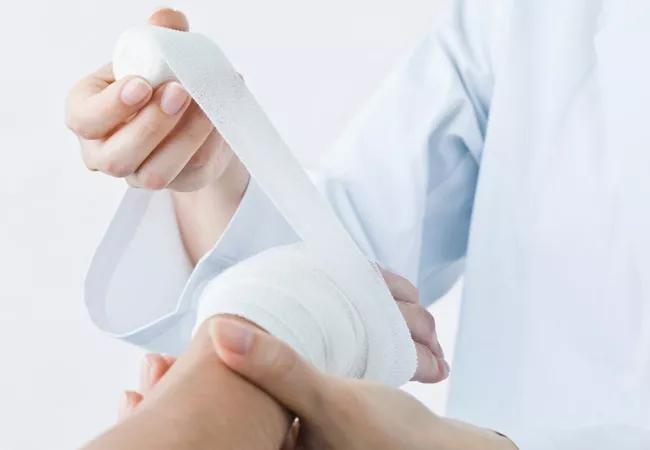
Image content: This image is available to view online.
View image online (https://assets.clevelandclinic.org/transform/250399ab-f4fe-4e4b-902f-1b2d6f0967ba/17-NUR-918-Rock-Hero-Image-650x450pxl_jpg)
17-NUR-918-Rock-Hero-Image-650x450pxl
Linda Stricker’s path to becoming a wound, ostomy and continence (WOC) nurse is a common one. As a home healthcare nurse in rural Ohio in the late 1980s, she was frustrated caring for patients with wound and continence needs with little knowledge on how to truly help them. “I found my way to education programs at conferences and learned about Cleveland Clinic’s WOC school,” says Stricker, MSN, RN, CWOCN, who now serves as the Director of WOC Nursing Education at Cleveland Clinic. “Three months later I was in the program, and three months after that I was establishing my own practice.”
Advertisement
Cleveland Clinic is a non-profit academic medical center. Advertising on our site helps support our mission. We do not endorse non-Cleveland Clinic products or services. Policy
Cleveland Clinic’s R.B. Turnbull, Jr. MD, School of WOC Nursing, which was established 56 years ago, was the first-ever WOC school. It remains one of only four schools in the United States to teach the full scope of the nursing specialty – wound, ostomy and continence. The school now educates more than 100 students per year. “WOC nurses provide specialized and focused assessment and care for patients with chronic or acute wounds, any stoma types and continence issues,” says Stricker. “The WOC nurse specialist uses a holistic approach to promote healing and self-esteem.”
WOC nurses cross specialties, caring for patients in the colorectal surgery, urology, pediatrics, oncology and rehabilitation departments. They work in a variety of settings, including outpatient clinics, private practice, home care, extended care facilities and hospitals. Cleveland Clinic currently employs approximately 40 WOC nurses throughout Northeast Ohio.
While Cleveland Clinic’s WOC nurses are educated in all aspects of the field, some choose to focus their practice on one area. For instance, Cleveland Clinic has a five-member Wound Care Consult Team. “Each day, we get consults on everything from scabs to stage 4 pressure injuries – any kind of skin impairment,” explains Mary Montague, MSN, APRN, ACNS-BC, CWOCN, Manager APN/PA, Wound Consult Team. “We are well prepared in the principles of wound healing. By applying these principles, in conjunction with our knowledge of how dressings work, we can provide better patient outcomes.”
Advertisement
Ron Rock, MSN, APRN, ACNS-BC, Nurse Manager, WOC Nursing, oversees a team of 23 WOC nurses who focus primarily on stoma-related and surgical wounds. Much of their work centers on patient education. For example, they counsel patients prior to ostomy surgeries, helping them prepare for surgery and what to expect afterward. After surgery, WOC nurses offer instruction on application techniques, appliances and equipment necessary to care for an ostomy and ways to protect the skin. “The one-on-one time you spend with patients is crucial,” says Rock. “WOC nurses become extremely close to patients and their families. We tailor education specifically to their needs.”
WOC nurses at Cleveland Clinic’s main campus care for 50 to 60 patients a day. In 2016, they conducted more than 16,100 patient visits.
Nearly a decade ago, Stricker was hired to convert Cleveland Clinic’s WOC school to an online program. “We can now reach a wider audience and draw students from all over the world into our program,” she says. The school has grown considerably in the last five years through the online option, adds Stricker.
To enroll, students must be a registered nurse with a bachelor’s degree in nursing or a related field. They also must have one full year of RN clinical experience. The school features four didactic modules covering beginning concepts in WOC nursing, acute and chronic wounds, fecal and urinary diversions (ostomies) and urinary and fecal incontinence. After finishing the online modules, participants complete 120 clinical hours performing all related specialty skills, such as stoma site marking, lower extremity assessment and wrapping, and application of containment products.
Advertisement
When students complete the program, they are eligible to take wound, ostomy and continence exams to earn one of five credentials from the Wound, Ostomy and Continence Certification Board. Many join the Wound, Ostomy and Continence Nurses Society® (WOCN), which will celebrate its 50th anniversary in 2018. Stricker is Track Chair for Professional Practice on the WOCN National Conference Planning Committee. She also is president-elect for WOCN’s Mideast Region and will begin serving her term in October 2018.
Like Rock and Montague, Stricker is a staunch advocate for the field of WOC nursing. “The WOC nurse reaches the core of someone’s basic self-confidence and how they see themselves as a person,” she says. “WOC nurses touch patients’ lives in unique ways.”
Advertisement
Advertisement
Nurses play key role in comprehensive lifetime treatment program
Customized bots improve speed, efficiency by streamlining daily clinical, clerical tasks

Nurses play pivotal role in patients’ ability to recover in the comfort of their own homes
New protocol reduces costs, increases patient and caregiver satisfaction

Advocating for patient safety is imperative in fast-paced surgical settings

M-Power program improves the perinatal experience for people who have survived abuse

Advice for those pursuing a WOC nursing career

Veteran nurse shares his experience as a caregiver and community volunteer
 Search