Locations:





Lower risk may allow sports participation for some

Image content: This image is available to view online.
View image online (https://assets.clevelandclinic.org/transform/279248ad-0294-4f5d-9b2c-153accd5a15f/Aziz-690x380_jpg)
Aziz-690×380
Most competitive sports participation is limited — if not ruled out entirely — for children and young adults diagnosed with congenital long QT syndrome (LQTS).
Advertisement
Cleveland Clinic is a non-profit academic medical center. Advertising on our site helps support our mission. We do not endorse non-Cleveland Clinic products or services. Policy
But Peter Aziz, MD, FHRS, a pediatric electrophysiologist in Cleveland Clinic’s Center for Pediatric and Congenital Heart Disease and Director of its Inherited Arrhythmias Clinic, says patients at a lower risk for arrhythmia triggers may be able to participate in sports if the right conditions are met.
LQTS is a cardiac ion channelopathy characterized by syncope, ventricular arrhythmias and sudden death. Arrhythmia triggers are often the result of catecholaminergic surge seen with competitive exercise, leading to recommendations to limit or eliminate most competitive sports participation for young patients with LQTS.
But more recent studies demonstrate a significant risk reduction in patients who are compliant with beta-blocker therapy.
“The guidelines are pretty clear about not doing anything,” Dr. Aziz says. “It’s important to mention that sports participation is not for everyone with long QT syndrome, and some patients are at higher risk. But for individuals who appear to be at lower risk, it’s reasonable to explore their options.”
A young soccer player from Columbus, Ohio, who was diagnosed with LQTS came to Dr. Aziz for a second opinion after physicians sidelined her soccer career. The girl was diagnosed with LQT1, a common form of LQTS, that Dr. Aziz says is amenable to therapy. She is on a beta blocker — nadolol — taken once daily.
The girl was diagnosed with LQTS after a fainting spell led her to physicians for an initial evaluation. A suspicion about LQTS was confirmed through gene testing.
Advertisement
After looking at her history and assessing her risk, Dr. Aziz decided it was reasonable for her to play soccer as long as the people around her understood she has heart disease, were trained in CPR and had an automated external defibrillator available. Her medication compliance is of the utmost importance as well.
But more important, her soccer coach is her father.
“He knows quite a bit about this, and that dynamic made us feel a lot more comfortable about the decision to let her play,” Dr. Aziz explains. “He understands her risk and needs pretty well.”
Dr. Aziz says the approach in the Cleveland Clinic’s Inherited Arrhythmias Clinic is to make therapies as personalized as possible. Physicians who manage patients with LQTS, he says, should consider symptoms (or lack thereof), how the ECG looks and the specific LQTS genotype. Assessing the patient’s compliance with medications and taking his or her medical history into account can help determine the predicted risk of the patient having an event.
“If we consider that to be an acceptable or low risk, we can explore things a little outside the box,” Dr. Aziz notes. “When evaluating, testing and treating someone with a life-threatening illness, ask yourself about therapy and approach, causes and morbidity, and the effects of what you prescribe.
“It’s a lot easier to tell someone not to play —you don’t have to assume the risk of them playing. The counter argument is to let them play and try to figure out a way to make it a low-risk situation.”
Advertisement
Dr. Aziz adds that the mental health of patients is as important as everything else, including the perception of wanting to feel normal.
“We want to make them feel normal despite them having a significant disease,” he says.
Advertisement
Advertisement

A sampling of outcome and volume data from our Heart & Vascular Institute
Concomitant AF ablation and LAA occlusion strongly endorsed during elective heart surgery
Large retrospective study supports its addition to BAV repair toolbox at expert centers
Young age, solid tumor, high uptake on PET and KRAS mutation signal risk, suggest need for lobectomy
Surprise findings argue for caution about testosterone use in men at risk for fracture
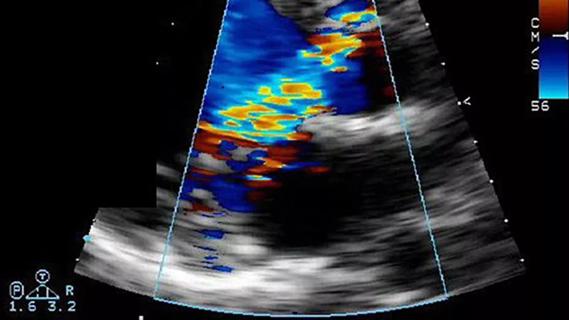
Residual AR related to severe preoperative AR increases risk of progression, need for reoperation

Findings support emphasis on markers of frailty related to, but not dependent on, age
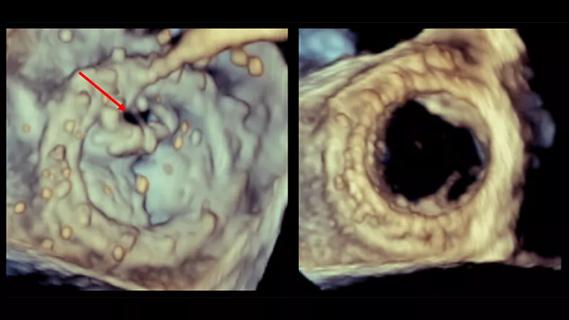
Provides option for patients previously deemed anatomically unsuitable
 Search