Locations:





Dance Medicine Clinic draws on insights of current and former dancers
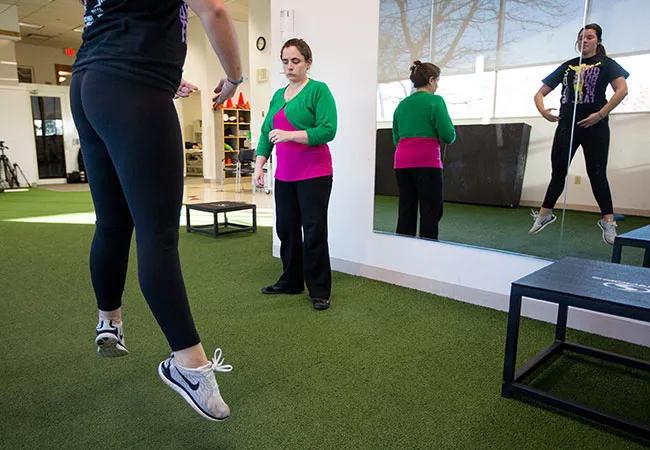
Image content: This image is available to view online.
View image online (https://assets.clevelandclinic.org/transform/ad660b74-f2f6-441d-930d-3505ed889092/19-NEU-525-dance-medicine-650x450_jpg)
19-NEU-525-dance-medicine-650×450
When more than 500 dance professionals travel to Cleveland for the Dance/USA Annual Conference in mid-June, they will have the opportunity to attend a panel discussion on healthcare access for dancers. Among the experts on the panel will be Kim Gladden, MD, a physical medicine and rehabilitation (PM&R) physician, and Dawn Lorring, PT, MEd, MPT, CSCS, clinical rehabilitation manager, both with Cleveland Clinic.
Advertisement
Cleveland Clinic is a non-profit academic medical center. Advertising on our site helps support our mission. We do not endorse non-Cleveland Clinic products or services. Policy
They are well positioned to share insight on healthcare for dancers: Dr. Gladden is co-founder of the Dance Medicine Clinic offered by Cleveland Clinic’s Sports Health Center, and Lorring, her fellow co-founder, has worked by her side since the clinic’s inception in 2014.
The Dance Medicine Clinic treats dancers of all ages and levels for injuries ranging from torn ligaments to tendonitis and muscle pain. “We look at the whole dancer — how the injury is affecting their work, their life and their state of mind,” says Dr. Gladden.
One reason for the clinic’s success may be the unique qualifications of its healthcare providers: They all are current or former dancers. Dr. Gladden earned an undergraduate degree in dance and danced with choreographers and small companies in Seattle before joining Cleveland Clinic. Lorring was a member of her college dance team, studied dance for 14 years and competed in figure skating for 18 years. Additional PTs who manage patients for the clinic have dance backgrounds as well.
“We know very well the ramifications of an injury,” Dr. Gladden notes. “We understand the physical training involved in dance and what aspects will be impacted by an injury, as well as the psychological aspects behind the pressure to perform.”
One of the first things Dr. Gladden asks patients is to do a plié, a basic dance movement that reveals a lot about how a dancer takes off and lands from jumps and performs other movements. “There are subtleties to that movement that are hard to explain unless you’ve done it thousands of times and understand how it’s supposed to be done,” she says. “There’s a biomechanical chain of events that should be happening, including where the weight is shifted and how the dancer engages specific muscles.”
Advertisement
The staff at the Dance Medicine Clinic also understand the physical demands particular to dance. “Dance movements are not normal movement patterns,” Lorring says. “You are not trying to put your leg above your head in daily life. So it’s important to understand the movements and extremes of motion required.”
When the Dance Medicine Clinic opened, it had dedicated appointments for dancers every other Tuesday at the Sports Health Center. But the clinic has grown, and patient demand has required additional appointment scheduling. Now Dr. Gladden sees dancers at three locations across Northeast Ohio and sends them to one of three primary PTs in different Cleveland Clinic facilities.
The team offers the following advice to PM&R and other physicians who may be considering dedicating time to dancers:
Advertisement
The Dance Medicine Clinic has evolved into a sought-after service. The clinic team is currently in negotiations to be the preferred healthcare provider for a local professional dance company.
But as its reputation grows, the clinic remains true to its initial mission: “We want to make sure the dance population knows there are folks at Cleveland Clinic who want to take care of artistic athletes,” says Dr. Gladden.
Advertisement
Advertisement

New study advances understanding of patient-defined goals
Testing options and therapies are expanding for this poorly understood sleep disorder
Real-world claims data and tissue culture studies set the stage for randomized clinical testing
Digital subtraction angiography remains central to assessment of ‘benign’ PMSAH

Cleveland Clinic neuromuscular specialist shares insights on AI in his field and beyond
Findings challenge dogma that microglia are exclusively destructive regardless of location in brain
Neurology is especially well positioned for opportunities to enhance clinical care and medical training
New review distills insights from studies over the past decade
 Search