Locations:





Q&A with new Cardiothoracic Surgery Chair Marc Gillinov, MD
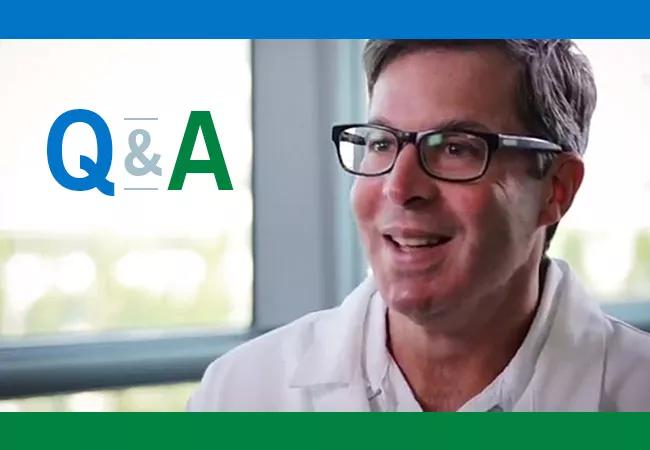
Image content: This image is available to view online.
View image online (https://assets.clevelandclinic.org/transform/f80edc25-114d-4af8-80eb-336076652bdb/17-HRT-3413-Gillinov-QA-CQD_jpg)
17-HRT-3413-Gillinov-QA-CQD
As reported in this post from April, Cleveland Clinic recently appointed A. Marc Gillinov, MD, as Chair of its Department of Thoracic and Cardiovascular Surgery. Consult QD caught up with Dr. Gillinov, whose specialties include mitral valve surgery and robotics, for a quick take on his vision for the department, the future of his specialty and collaboration in cardiovascular care.
Advertisement
Cleveland Clinic is a non-profit academic medical center. Advertising on our site helps support our mission. We do not endorse non-Cleveland Clinic products or services. Policy
Q: Taking the helm of a department as celebrated as this one must be daunting. How will you maintain the tradition of excellence?
A: We already have the best surgeons and teams, and this motivates everyone to operate at the highest level. Today there are a variety of novel challenges that accompany the delivery of first-class surgical care. These include expanding requirements for documentation, complex insurance issues and the pervasive requirement to improve affordability. We will approach these challenges with creativity and innovation.
Q: Continuous improvement is at the heart of the Cleveland Clinic ethic. How would you like this department to further improve under your leadership?
A: Patients often come thousands of miles to see us, and we must ensure that they receive the best care at every stage of their surgical experience. This means we must ensure that we employ evidence-based best practices across the board. The optimal way of doing things changes over time, so we have added a new element to our biweekly staff meeting: We update each other on new developments in our specialty, ensuring that we disseminate our collective knowledge to the group so that each of us may provide the most innovative and successful care.
Q: Which forces impacting cardiac surgery are likely to be most important over the next decade?
A: Innovation in the treatment of structural heart disease is ongoing. Traditionally, surgeons were the experts in this area, but today, cardiologists and heart surgeons are both experts and work together. This requires changes in both the way we consider a patient’s treatment and the resources needed to deliver care. In order to provide multidisciplinary care, right now we are building more hybrid operating rooms with new imaging capabilities, including three-dimensional echocardiography.
Advertisement
Q: Should cardiac surgeons view the expansion of transcatheter procedures as a threat?
A: That depends on where you are and how your organization is structured. The Cleveland Clinic model renders such innovation an advantage. Because we are all part of the Miller Family Heart & Vascular Institute, this is not viewed as a threat but rather as an addition to the armamentarium of treatments we can offer patients.
Q: How is robotically assisted cardiac surgery likely to evolve or expand over the next decade?
A: Robotic cardiac surgery is expanding at Cleveland Clinic. We are committed to this technology. It is optimal for mitral valve repair, cardiac tumor excision and closure of atrial septal defects. We have the most experienced robotic team in the world, by a wide margin. We just recruited Per Wierup [from Lund University in Sweden], one of Europe’s preeminent robotic surgeons. This gives us a total of three cardiothoracic surgeons with robotics expertise in Cleveland and three more at our Cleveland Clinic Abu Dhabi location in the Middle East. A second surgical robot was just added, so we now have a dedicated robot for cardiac cases and one for thoracic cases.
Q: Does reality match rhetoric when it comes to a multidisciplinary heart team approach to complex patients?
A: Here at Cleveland Clinic, we feel that the multidisciplinary approach is very valuable, particularly when we have high-risk patients for whom traditional surgery may not be appropriate. We discuss these patients in multidisciplinary case conferences, which allows us to choose the best treatment option. All team members are part of the Heart & Vascular Institute, and since our practice model focuses on quality and does not provide rewards for procedural volume, we have a single incentive: To do everything we can to determine the best strategy for an individual patient.
Advertisement
Q: What do you want your external colleagues to know about your department?
A: We have the single most important asset: The best people. We will deploy them in the most focused and collaborative environment in order to build and improve on our program.
Contact Dr. Gillinov at gillinom@ccf.org.
Advertisement
Advertisement
A sampling of outcome and volume data from our Heart & Vascular Institute
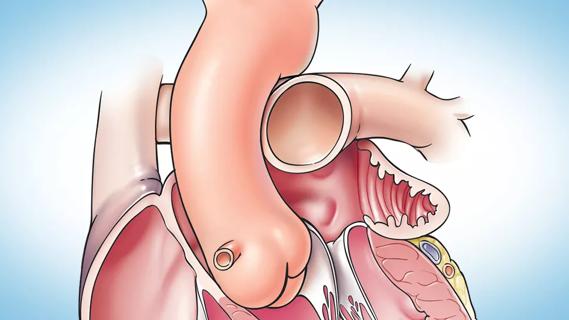
Concomitant AF ablation and LAA occlusion strongly endorsed during elective heart surgery
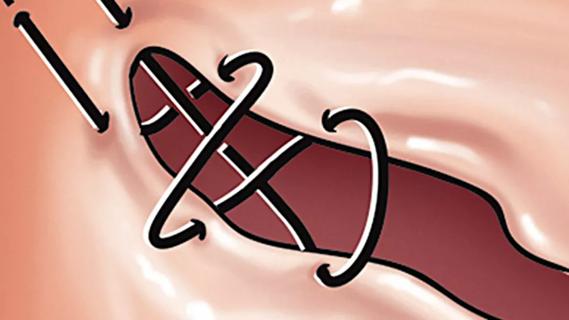
Large retrospective study supports its addition to BAV repair toolbox at expert centers
Young age, solid tumor, high uptake on PET and KRAS mutation signal risk, suggest need for lobectomy
Surprise findings argue for caution about testosterone use in men at risk for fracture
Residual AR related to severe preoperative AR increases risk of progression, need for reoperation

Findings support emphasis on markers of frailty related to, but not dependent on, age
Provides option for patients previously deemed anatomically unsuitable
 Search