Locations:





 Search
The target may be different than what you expect
Image content: This image is available to view online.
View image online (https://assets.clevelandclinic.org/transform/abc8f9bb-a226-467b-b1ef-a155a30fb2ef/650x450-HbA_jpg)
650×450 HbA
A new observational analysis of 6,165 patients with diabetes and chronic kidney disease (CKD) shows a target hemoglobin A1c (HbA1c) of 6-6.9 percent minimizes the likelihood of diabetes-related death.
Advertisement
Cleveland Clinic is a non-profit academic medical center. Advertising on our site helps support our mission. We do not endorse non-Cleveland Clinic products or services. Policy
All other factors aside, patients whose diabetes was tightly controlled, as measured by HbA1c levels below 6 percent, had similar risk of death as patients with levels higher than 9 percent, according to the same study.
“This study confirmed for us there really is a sweet spot in HbA1c levels for patients with diabetes and chronic kidney disease,” says Joseph Nally Jr., MD, now-retired Director of the Center for Chronic Kidney Disease in Cleveland Clinic’s Glickman Urological & Kidney Institute. “The further away patients get from 7.5 percent HbA1c in either direction, the average risk for negative outcomes rises significantly.”
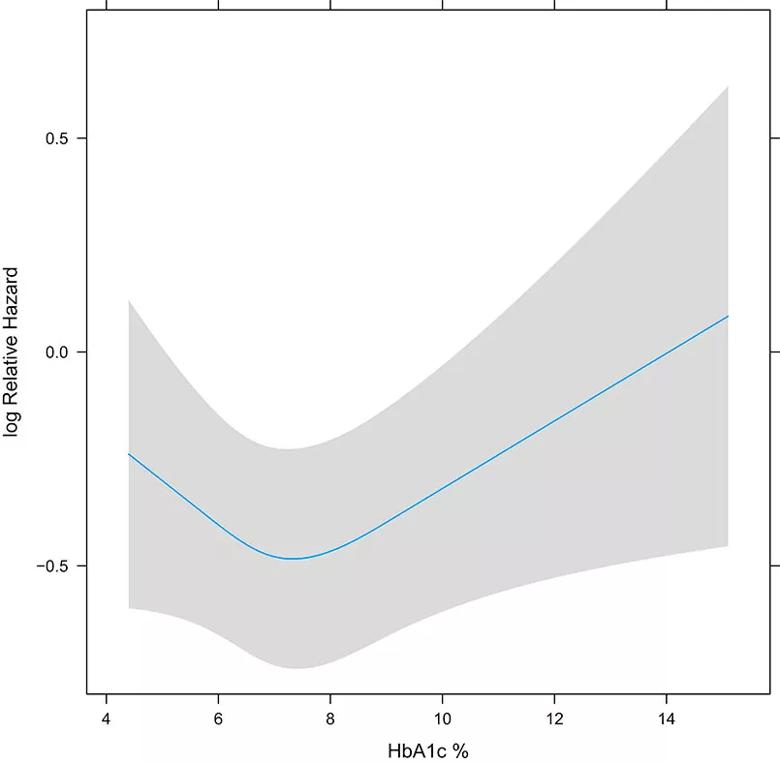
Image content: This image is available to view online.
View image online (https://assets.clevelandclinic.org/transform/20c1e2dc-b881-4928-a8e5-150e2339565e/805x-HbA_jpg)
When considered as a continuous variable, HbA1c level was significantly associated with pre-ESRD mortality. The relationship was nonlinear, with very low and high HbA1c levels having the higher risk for mortality and risk being lowest at HbA1c levels of about 7 to 8 percent. (Figure copyrighted by and reprinted with permission from the American Journal of Kidney Diseases.)
Published in the American Journal of Kidney Diseases, the study included a median follow-up of 2.3 years on people with diabetes (both Type 1 and Type 2) who were patients at Cleveland Clinic.
Among the primary reasons that lower HbA1c can put diabetic patients with kidney disease at increased risk of death is that having CKD predisposes patients to hypoglycemia, itself a life-threatening and emergent condition, according to the study.
Dr. Nally says these findings can help providers “educate their patients on the importance of getting to that target hemoglobin HbA1c of 6 to 7 percent when they have kidney disease and let them know of the very poor outcomes that can be associated with levels that are either too high or too low.”
Advertisement
The study, Diabetes Control and the Risks of ESRD and Mortality in Patients with CKD, was conducted by Dr. Nally; Jesse Schold, PhD; Stacey Jolly, MD; Susana Arrigain, MS; and colleagues at Baylor College of Medicine.
Advertisement
Advertisement

Clinicians should individualize dosing practices based on patient risk factors and preferences
Pioneering and refining the approach in pyeloplasty, nephrectomy and more
Fully-automated process uses preop CT, baseline GFR to estimate post-nephrectomy renal function
Could mean earlier treatment, but also could have negative effects

Unlike earlier pills, new drugs do not cause liver toxicity

Male factors play a role in about half of all infertility cases, yet men often are not evaluated
Surgeons choreograph nearly simultaneous procedures, sharing one robot between two patients

Identifying barriers in the renal genetic assessment of Black patients