Locations:





Treatment sequencing and education may help optimize joint health
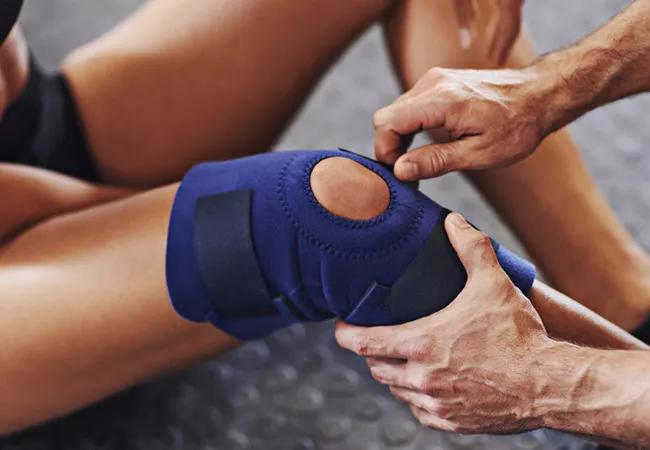
Image content: This image is available to view online.
View image online (https://assets.clevelandclinic.org/transform/2651fb4b-1ad7-4e18-ba99-aa521940c2f7/17-ORT-1253-Spindler-Hero-Image-650x450pxl_jpg)
19-ORT-1181-Genin-Hero-Image-650x450pxl
by Jason Genin, DO, and Dominic King, DO
Advertisement
Cleveland Clinic is a non-profit academic medical center. Advertising on our site helps support our mission. We do not endorse non-Cleveland Clinic products or services. Policy
We have a limited understanding of how some of the orthobiologic products work; however, their underlying role is to create a healthier, less inflammatory environment. At Cleveland Clinic, we have developed a system to measure disease-specific clinical outcomes for every orthopaedic procedure we perform. The next step will be to utilize similar systems at other large academic medical centers, in order to help us decipher which treatments work for which patients at which disease stage. Once we determine that the treatments are effective, we will work toward reimbursement.
Over the next two to three years, we are looking to develop personalized joint care. That is, we hope to be able to treat not just the problematic joint, but to understand the patient’s ability to respond to specific orthobiologics.
We find that getting the sequencing of different treatments right for each individual patient impacts outcomes. Patient education is an important part of the referral process: we want patients to understand why they are referred orthopaedics. Most have been told they need a knee replacement. Some patients are pleased if we can delay surgery by even a year with interventions. However, we often see patients who have experienced pain for five to six years, and this is their last-ditch effort to avoid surgery. This is likely not the most beneficial time to begin the discussion of orthobiologic therapies, as a total joint replacement may likely be their only option.
Generally speaking, we look beyond the problematic joint at the whole patient: are there deformities that can be corrected? Can the patient modify activities, particularly intense exercise like long-distance running, until the inflammation settles? Is the patient moving enough to encourage circulation in the joint? Is the patient overweight? We continue to tell our patients that weight loss, physical therapy and bracing go a long way toward reducing pain and optimizing their joint health prior to surgical intervention.
Advertisement
In discussions with patients, we are careful to emphasize that platelet-rich plasma (PRP) is not going to regenerate their cartilage, though it does appear to improve function and reduce pain. Right now, there is nothing on the market that can regenerate or repair any type of cartilage or tendon fiber. We advise our patients to be wary of any facility or brand that uses those descriptive words as a way to sell their product lines.
When patients come in looking for an injection, we look for simple, straightforward things that have worked in the past, such as physical therapy and rehabilitation, neuromuscular stimulator device use, any benefits from previous surgeries, etc. Our goal is always to optimize a patient’s joint health, whether we use conservative techniques or injections, to potentially delay or optimize a patient for surgery.
Jason Genin, DO, and Dominic King, DO are staff physicians in the Cleveland Clinic Joint Preservation Center of the Orthopaedic & Rheumatology Institute.
Advertisement
Advertisement
Biologic approaches, growing implants and more
Study reports zero infections in nearly 300 patients
How to diagnose and treat crystalline arthropathy after knee replacement
Study finds that fracture and infection are rare
Center will coordinate, interpret and archive imaging data for all multicenter trials conducted by the foundation’s Osteoarthritis Clinical Trial Network

Reduced narcotic use is the latest on the list of robotic surgery advantages
Cleveland Clinic specialists offer annual refresher on upper extremity fundamentals
Cleveland Clinic orthopaedic surgeons share their best tips, most challenging cases and biggest misperceptions
 Search