Locations:





One center’s perspective on its designation from the Parkinson’s Foundation
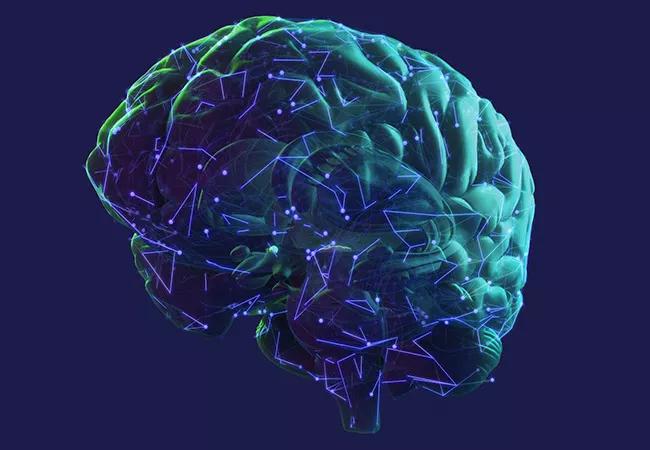
Image content: This image is available to view online.
View image online (https://assets.clevelandclinic.org/transform/a2fec5df-3bf7-48dc-9825-a12a1220cd50/18-NEU-4778_Parkinsons-Brain-650x450_jpg)
18-NEU-4778_Parkinsons-Brain-650×450
In July 2018, the Parkinson’s Foundation named Cleveland Clinic a Parkinson’s Disease Center of Excellence, a designation given to leading Parkinson’s disease (PD) treatment and research institutions. Consult QD checked in with Hubert H. Fernandez, MD, Director of Cleveland Clinic’s Center for Neurological Restoration, to discuss how his team’s program achieved this distinction and what it means for furthering PD care.
Advertisement
Cleveland Clinic is a non-profit academic medical center. Advertising on our site helps support our mission. We do not endorse non-Cleveland Clinic products or services. Policy
Q: Can you provide some background on the Parkinson’s Foundation and its Centers of Excellence?
Dr. Fernandez: The Parkinson’s Foundation — formed by the merging of the National Parkinson Foundation and the Parkinson’s Disease Foundation — is the largest nonprofit, grassroots network in the field. It advances PD care by providing extensive patient support, promoting research through direct funding and operating its Centers of Excellence network, which consists of 31 centers in the U.S. and 14 more worldwide.
Cleveland Clinic has become the first Center of Excellence to receive designation not only for our primary facility in Cleveland but also for our satellite clinics as well, located in Las Vegas, Nevada; Weston, Florida; and Abu Dhabi in the United Arab Emirates. The evaluating team from the Parkinson’s Foundation said they were impressed by how well the care at our main center in Cleveland is integrated with care at our other facilities.
Q: How does an institution become a Center of Excellence?
Dr. Fernandez: Achieving designation is based on a rigorous application and peer-review process, including a full-day site visit from a team of clinicians and Foundation representatives. Several criteria must be met, including having an annual treatment volume of at least 700 unique patients, conducting research or participating in clinical trials, demonstrating exemplary patient care with a team approach, and offering a variety of patient support, outreach and education programs.
Although the application process itself took about a year, our Center for Neurological Restoration has garnered and built on these qualities for decades. We actually treat more than four times the required minimum patient volume every year, and our team consists of not only the specified staff of neurologist, nurse, social worker, physical therapist, occupational therapist and speech-language pathologist, but also includes neurosurgeons, neuropsychologists, biomedical engineers and imaging specialists.
Advertisement
Q: Did the Foundation note anything in Cleveland Clinic’s program beyond fulfilling the specified Center of Excellence criteria?
Dr. Fernandez: Yes. Our “signature program” is our world-class deep brain stimulation (DBS) capabilities. The site visitors were impressed by the volume and depth of our program. They liked the fact that every candidate for DBS is presented to the entire team, including a bioethicist, and that a group decision must be made to proceed with treatment. Our research in DBS is also extensive, and the Foundation expects that we will lead the network in advancing this technology.
The Foundation team also commented on our innovative approaches to clinical care, including the use of telemedicine to provide “virtual visits” to patients at remote locations [as detailed in this recent Consult QD post]. They likewise noted our routine use of patient questionnaires, which provides invaluable data on patient-reported outcomes that are seamlessly integrated into our electronic medical record.
Q: What benefits do you foresee coming from this Center of Excellence designation?
Dr. Fernandez: One immediate benefit is that the designation comes with an annual grant of $60,000, which can be used however we wish. We intend to use these funds to enhance our PD patient outreach programs. We currently have two very successful such programs. One is aimed at “young” patients less than 55 years old. The other is a shared medical visit model for newly diagnosed patients. We will now be evaluating how best to serve our patients further, and we’re considering educational symposia and other community initiatives.
Advertisement
We will also be contributing to the Parkinson’s Outcomes Project, the largest international clinical study of PD. Run by the Parkinson’s Foundation, this project collects and evaluates data on a range of treatment factors from the Centers of Excellence network.
Image at top created for Cleveland Clinic by WP BrandStudio.
Advertisement
Advertisement

New study advances understanding of patient-defined goals
Testing options and therapies are expanding for this poorly understood sleep disorder
Real-world claims data and tissue culture studies set the stage for randomized clinical testing
Digital subtraction angiography remains central to assessment of ‘benign’ PMSAH

Cleveland Clinic neuromuscular specialist shares insights on AI in his field and beyond
Findings challenge dogma that microglia are exclusively destructive regardless of location in brain
Neurology is especially well positioned for opportunities to enhance clinical care and medical training
New review distills insights from studies over the past decade
 Search