Locations:





The short answer from Ajita Prabhu, MD
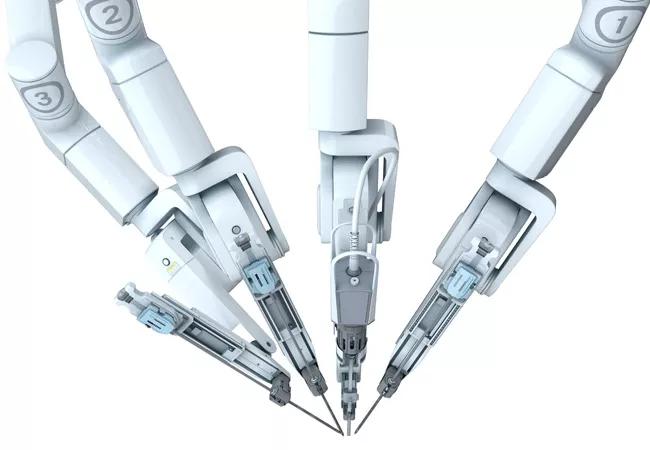
Image content: This image is available to view online.
View image online (https://assets.clevelandclinic.org/transform/5d3c37a1-c82d-4c7d-9399-747fc3ba4bad/Robotic-CQD-650x450_jpg)
Robotic-CQD-650×450
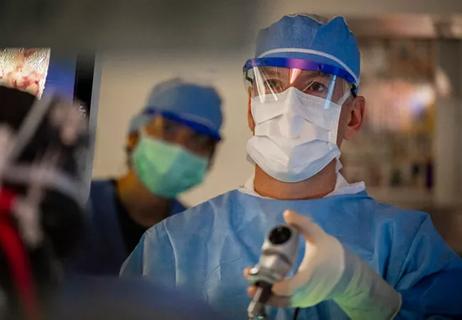
While there’s not a lot new with the technology itself, what’s new at Cleveland Clinic is that we’re now offering robotic hernia repair to more and more patients.
Advertisement
Cleveland Clinic is a non-profit academic medical center. Advertising on our site helps support our mission. We do not endorse non-Cleveland Clinic products or services. Policy
We not only offer it to those who have small ventral hernias, but also in some cases to those who need abdominal wall reconstruction ― which is currently only being done at a handful of U.S. centers.
Not everyone is a candidate for a robotic approach, but the ones who are may benefit from less time in the hospital, a quicker recovery and less pain.
According to a study published in the Annals of Surgery, of which I am a co-author, patients with abdominal wall reconstructions go home an average of at least one full day sooner than if they got an open abdominal wall reconstruction.
Good candidates include those who have central defects, usually 8 to 15 cm in diameter and who are generally candidates for a minimally invasive procedure. Contraindications to robotic hernia repair may include those requiring emergent repair and those needing skin resected from a skin graft or substantial scar.
In our Hernia Center, we are committed to offering these robotic hernia procedures to patients who want them.
It’s always a mixed bag when I offer a robotic approach to patients. Some of them are like, “I don’t want that crazy robotic stuff!” And some of them say, “Wait, I get a smaller incision? Sure, I want to try it!”
I began performing robotic hernia repairs four years ago and am continually increasing my volume of cases on the robot.
We’re dedicated to furthering research in the area and following our outcomes. My partners and I are currently enrolling patients in two randomized controlled trials, looking at outcomes in laparoscopic versus robotic inguinal hernia repairs and laparoscopic versus robotic ventral hernia repairs.
Advertisement
And we’re always looking at outcomes. Every case that we do goes into our Americas Hernia Society Quality Collaborative database so we can continually optimize both outcomes and optimize costs.
Advertisement
Advertisement

Strong patient communication can help clinicians choose the best treatment option
ctDNA should be incorporated into care to help stratify risk pre-operatively and for post-operative surveillance

The importance of raising awareness and taking steps to mitigate these occurrences
New research indicates feasibility and helps identify which patients could benefit

Treating a patient after a complicated hernia repair led to surgical complications and chronic pain
Standardized and collaborative care improves liver transplantations
Fewer incisions and more control for surgeons

Caregiver collaboration and patient education remain critical
 Search