Locations:





 Search
Cleveland Clinic surgeon demonstrates complex procedure
Between 4 and 10 percent of renal cell carcinoma patients have tumor thrombi that manifest within the renal vein or inferior vena cava (IVC).
Advertisement
Cleveland Clinic is a non-profit academic medical center. Advertising on our site helps support our mission. We do not endorse non-Cleveland Clinic products or services. Policy
Surgical treatment of this condition — radical nephrectomy with en bloc vena caval tumor thrombectomy — is challenging and typically has been performed using an open procedure. More recently, surgeons at high-volume centers of excellence have employed laparoscopic or robot-assisted approaches for resection of level I-II tumor thrombi.
Surgeons at Cleveland Clinic’s Glickman Urological & Kidney Institute recently performed the institution’s first robot-assisted level III renal cancer-associated IVC thrombectomy, demonstrating its feasibility in carefully selected patients.
In this five-minute video, Georges Pascal-Haber, MD, PhD, demonstrates each step in the complex robotic procedure, including strategies for success. The surgery was the subject of a presentation at the American Urological Association’s 2016 annual meeting.
Video content: This video is available to watch online.
View video online (https://www.youtube.com/embed/NmQOovHdh9Q?feature=oembed)
Advertisement
Advertisement

Clinicians should individualize dosing practices based on patient risk factors and preferences
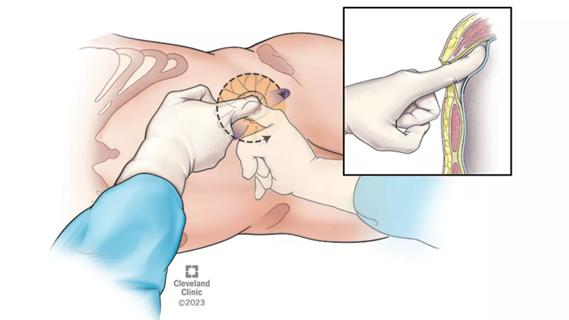
Pioneering and refining the approach in pyeloplasty, nephrectomy and more
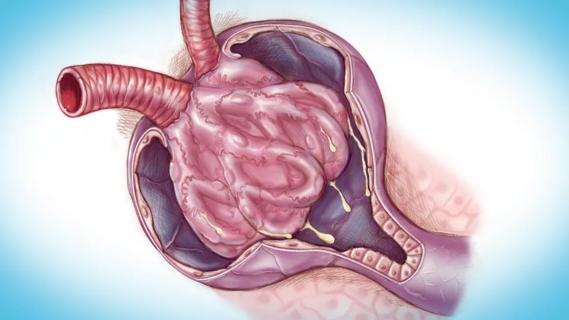
Fully-automated process uses preop CT, baseline GFR to estimate post-nephrectomy renal function
Could mean earlier treatment, but also could have negative effects

Unlike earlier pills, new drugs do not cause liver toxicity

Male factors play a role in about half of all infertility cases, yet men often are not evaluated
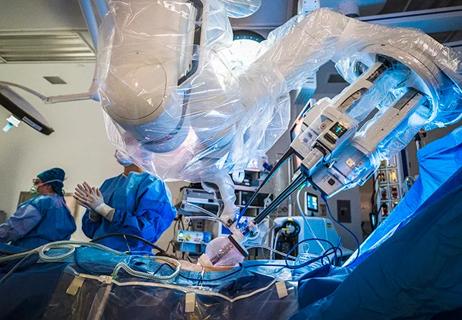
Surgeons choreograph nearly simultaneous procedures, sharing one robot between two patients

Identifying barriers in the renal genetic assessment of Black patients