Locations:





Learn more at the 2018 Advanced Payment Summit
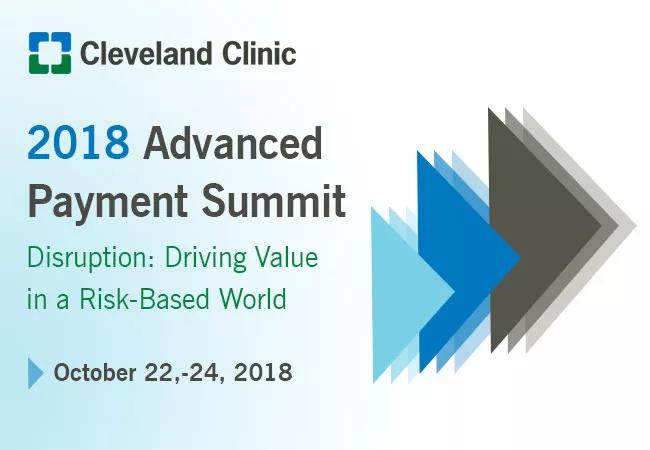
Image content: This image is available to view online.
View image online (https://assets.clevelandclinic.org/transform/698cc803-9d37-4838-9c1f-c2e125f86002/18-CCC-4284b-advPmntSummit-650x450_jpg)
18-CCC-4284b-advPmntSummit-650×450
Proper clinical documentation is essential to improve coding and, ultimately, maximize reimbursement in both fee-for-service and value-based healthcare models. Cleveland Clinic will share insights on improving documentation accuracy at its second annual Advanced Payment Summit, in Cleveland, Oct. 22-24, 2018.
Advertisement
Cleveland Clinic is a non-profit academic medical center. Advertising on our site helps support our mission. We do not endorse non-Cleveland Clinic products or services. Policy
Among other efforts, Cleveland Clinic has deployed a new software tool developed by health IT company Clinovations. Integrated within the electronic medical record (EMR), the software works in line with a caregiver’s typical workflow, helping them at the point of care to:
“Addressing all of a patient’s chronic issues and capturing appropriate HCC scores not only ensures that our EMR truly represents our patients’ medical conditions, it affects our level of reimbursement,” says family medicine physician Cory Fisher, DO, clinical lead of Cleveland Clinic’s Risk Capture Initiative. “Before using this tool, certain medical problems were easy to overlook if I wasn’t the doctor managing them, like chronic eye diseases. The Clinovations tool reminds me to ask the patient when they’ve last seen their ophthalmologist and encourage a visit, if needed.”
Advertisement
Before implementing the software, chronic conditions were tracked manually. Reports would be compiled from patient records or from the payers, themselves. Clinical leaders would remind caregivers to address certain chronic conditions for certain patients. But even with their best efforts, only about 65 percent of known chronic conditions were being captured in Cleveland Clinic’s EMR.
Clinovations software was deployed throughout Cleveland Clinic in April 2017, and by the end of that year the capture rate of patients’ known chronic conditions rose to 84 percent. The rate is trending to just over 90 percent by the end of 2018.
“The clinical impact of this tool cannot be understated,” says Dr. Fisher. “But the financial impact is just as great. Now our documentation and billing more accurately reflect the level of complexity of our population, which in turn leads to appropriate reimbursement. This ultimately leads to better care.”
Learn more about the benefits of improving clinical documentation at Cleveland Clinic’s second annual Advanced Payment Summit, Oct. 22-24, 2018. The summit will bring together leaders in value-based care redesign and payment reform, from a variety of disciplines. You’ll hear insights on alternative payment models and innovative ways to reduce the costs of care while improving patient quality and experience. Register today.
Advertisement
Advertisement
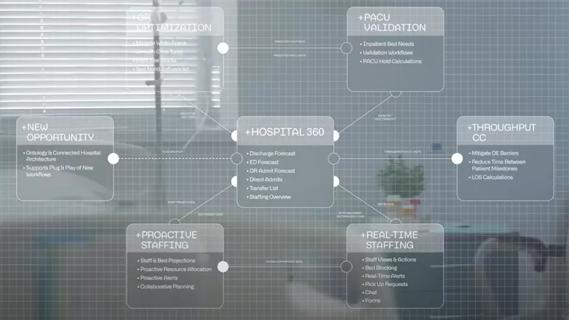
Cleveland Clinic partners with Palantir to create logistical command center

A Q&A with organizational development researcher Gina Thoebes

Cleveland Clinic transformation leader led development of benchmarking tool with NAHQ
Raed Dweik, MD, on change management and the importance of communication

Small business owners expand their networks and gain new insights
Leadership pearls from Margaret McKenzie, MD, hospital vice president

Advice from four CNOs on how to embrace innovation and collaboration

Cleveland Clinic will offer rapid, pinpoint airborne transport of medications and other medical items
 Search