Locations:





Watch the minimally invasive approach to this lung cancer case
A 67-year-old female never-smoker presented with recurrent upper respiratory tract infections requiring repeated hospitalizations. After bronchoscopy at an outside hospital revealed an obstructive mass in the distal left main bronchus, she was transferred to Cleveland Clinic for further evaluation.
Advertisement
Cleveland Clinic is a non-profit academic medical center. Advertising on our site helps support our mission. We do not endorse non-Cleveland Clinic products or services. Policy
Lung CT revealed a mass at the distal left main bifurcation leading to obstructive atelectasis of the upper lobe. Bronchoscopy at Cleveland Clinic confirmed the earlier findings, and aggressive debridement revealed a typical carcinoid neoplasm. Bronchial ultrasound assessment of the paratracheal lymph nodes found no evidence of neoplasm. Extension of the tumor down the upper and lower lobe segmental bronchi, including direct involvement of the secondary carina, ruled out sleeve resection.
Preoperative evaluation revealed an FEV1 of 1.05 (49 percent predicted) and a DLCO of 13.98 (70 percent predicted). Quantitative perfusion scan showed only 10 percent perfusion to the left lung. Stress echocardiogram revealed a fixed defect in the inferior wall with no inducible ischemia and a normal ejection fraction.
The clinical team decided to proceed with left pneumonectomy using a planned video-assisted thoracoscopic surgery (VATS) approach. In the narrated six-minute intraoperative video below, Daniel Raymond, MD, of Cleveland Clinic’s Department of Thoracic and Cardiovascular Surgery, walks clinicians through essential points in the operation after an animation showing the surgical plan.
Video content: This video is available to watch online.
View video online (https://www.youtube.com/embed/bSCbdqGjAZ0?feature=oembed)
Advertisement
Advertisement

A sampling of outcome and volume data from our Heart & Vascular Institute
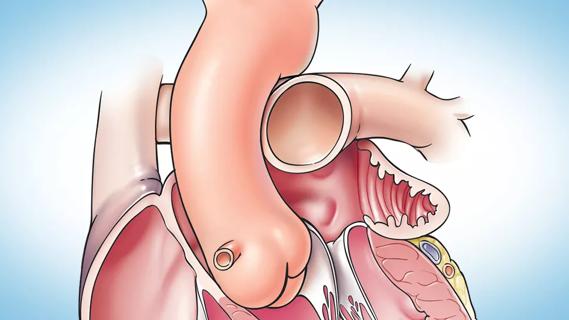
Concomitant AF ablation and LAA occlusion strongly endorsed during elective heart surgery
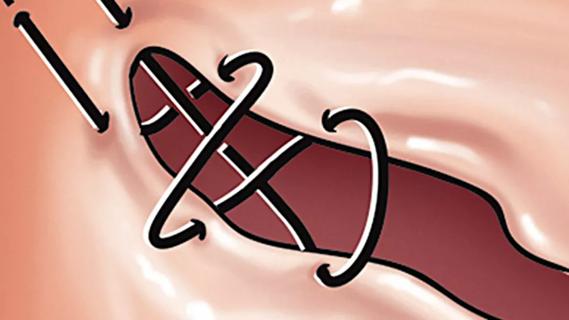
Large retrospective study supports its addition to BAV repair toolbox at expert centers
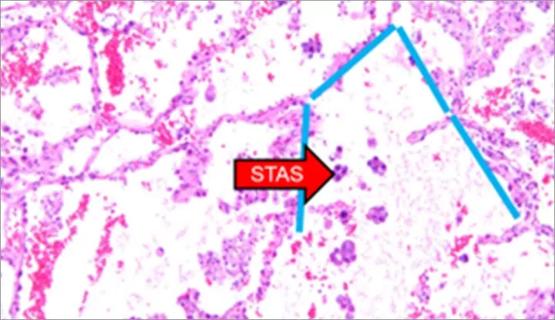
Young age, solid tumor, high uptake on PET and KRAS mutation signal risk, suggest need for lobectomy
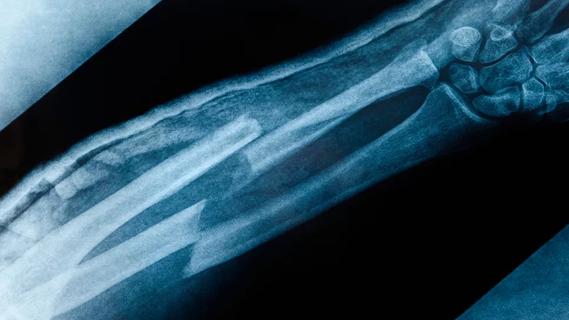
Surprise findings argue for caution about testosterone use in men at risk for fracture
Residual AR related to severe preoperative AR increases risk of progression, need for reoperation

Findings support emphasis on markers of frailty related to, but not dependent on, age
Provides option for patients previously deemed anatomically unsuitable
 Search