Locations:





Physician leaders must become partners with colleagues, patients

Image content: This image is available to view online.
View image online (https://assets.clevelandclinic.org/transform/a02ced60-1aaa-4679-9b95-139e486f51e7/17-GEE-721-maestro-itay-talgam-650x450_jpg)
17-GEE-721-maestro-itay-talgam-650×450
Advertisement
Cleveland Clinic is a non-profit academic medical center. Advertising on our site helps support our mission. We do not endorse non-Cleveland Clinic products or services. Policy
Today’s headlines reflect tremendous uncertainty in the healthcare world. As the industry continues to evolve, we at Cleveland Clinic Florida find ourselves looking for innovative ways to respond to challenges and maximize efficiencies while honoring our commitment to patient-centered care.
How do we lead our teams through such uncertainty?
As the adage goes, leaders must become the change they wish to see. Just as medicine is both art and science, so too is leadership. In most cases, the values of effective leaders become more illuminated as they develop relationships with the teams they lead. Whether we’re referring to a hospital CEO, an ICU nurse or the conductor of a symphony, a visionary leader needs talent, skill, vision and instinct to ensure top performance from his or her team.
Maestro Itay Talgam, in this humorous and spot-on TED talk on leadership, evaluates a generation of famous orchestra conductors to decipher how they lead their ensembles so effectively. He compares an exuberant conductor at a patriotic sing-a-long where the audience is likely to clap and sing, to one leading an orchestra through a Mozart performance, which requires a more contained demeanor.
Maestro Talgam, who left the music world to become a “conductor of people,” finds metaphors for organizational behavior using music. He helps people develop a musician’s sense of collaboration and a conductor’s intuitive sense of leadership.
This approach is reminiscent of situational leadership, in which those at the helm change their approach based on actual circumstances, using their team’s knowledge, readiness and skills to make decisions. In an operating room, a surgeon setting a fracture with his or her surgical team may take a significantly different approach than one whose patient is unexpectedly throwing a blood clot.
Advertisement
These two circumstances are simple explanations but the point illustrates whether one collaborates or directs and is particularly relevant in the current dynamic healthcare environment. The principles of situational leadership are useful here as well.
One facet of situational leadership is task behavior, which is more traditional and authoritarian – and likely to be advantageous during a crisis such as a mass casualty or hurricane strike.
Conversely, orchestras, like other highly effective teams, use 360-degree feedback, which often helps healthcare managers and frontline caregivers achieve their best. This example of relational behavior is especially appropriate each year as new residents and interns learn our culture of teamwork and collaboration, which is critical to success in a tertiary care environment. Many are learning a new way of thinking (and ultimately, leading) as they begin to listen more and focus on engagement with patients and colleagues as a way to improve outcomes.
The focus on collaboration may be new to young doctors because during training, most physicians are rewarded for independence. However, the reality is that practicing physicians must develop their emotional intelligence and become partners with their patients and other caregivers. They soon find that patient-centered care often involves letting the situation at hand determine how best to lead.
For more on the philosophy that drives the Cleveland Clinic Florida focus on patient-centered care, I encourage you to attend the Patient Experience Summit 2017: Empathy by Design.
Advertisement
Dr. Barsoum is President of Cleveland Clinic Florida and staff in the Department of Orthopaedic Surgery.
Advertisement
Advertisement
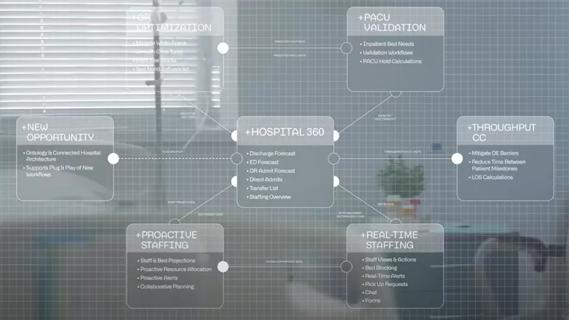
Cleveland Clinic partners with Palantir to create logistical command center

A Q&A with organizational development researcher Gina Thoebes

Cleveland Clinic transformation leader led development of benchmarking tool with NAHQ
Raed Dweik, MD, on change management and the importance of communication

Small business owners expand their networks and gain new insights
Leadership pearls from Margaret McKenzie, MD, hospital vice president
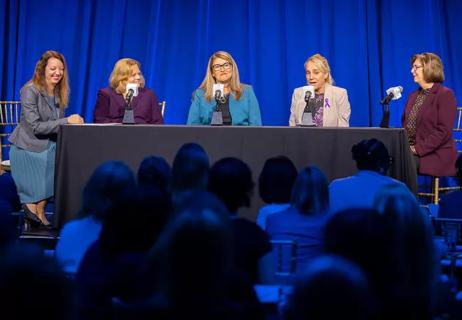
Advice from four CNOs on how to embrace innovation and collaboration

Cleveland Clinic will offer rapid, pinpoint airborne transport of medications and other medical items
 Search