Locations:





 Search
Study offers hope for preventing life-threatening blood clots
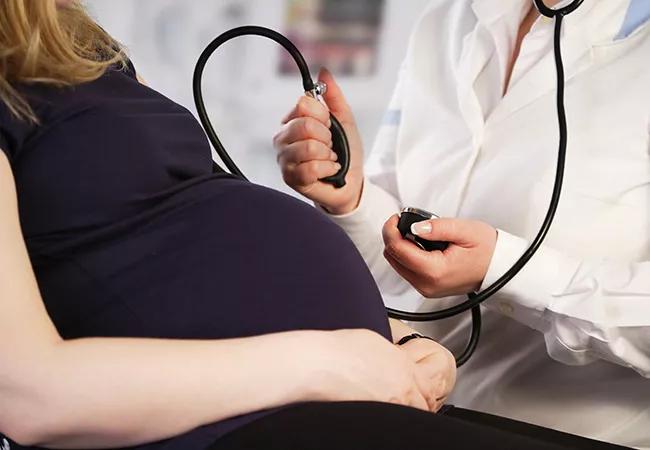
Image content: This image is available to view online.
View image online (https://assets.clevelandclinic.org/transform/3dde54c4-84e4-4d91-adad-8ceadf32cc04/650x450-Pregnant-Blood-Pressure_jpg)
650×450-Pregnant-Blood-Pressure
Preeclampsia can be life-threatening for pregnant women and cause birth defects in children. Although the disease occurs in 8-10 percent of pregnancies, its cause and effective prevention remain elusive.
Advertisement
Cleveland Clinic is a non-profit academic medical center. Advertising on our site helps support our mission. We do not endorse non-Cleveland Clinic products or services. Policy
Qingyu Wu, MD, PhD, Department of Molecular Cardiology, was the first to discover that an enzyme called corin is present in the pregnant uterus and regulates maternal blood pressure. He went on to further elucidate mechanisms of preeclampsia, including discovering that spiral artery remodeling in the uterus is a contributing factor.
In his most recent study, published in Arteriosclerosis, Thrombosis, and Vascular Biology, Dr. Wu and colleagues from Soochow University and Nantong University in China tackled the question of why women with preeclampsia are more likely to develop dangerous blood clots (a condition called thrombophilia). Thrombophilia in pregnant women is known to be associated with both low oxygen (hypoxia) and inflammation in the placenta.
Dr. Wu sought to understand the role of tiny circulating cell particles that are found in the blood of women with preeclampia and are pro-coagulant. In particular, he examined the relationship between these microparticles and a pro-inflammatory protein called HMGB1 (high-motility group box 1).
Using both human samples and a preclinical model, Dr. Wu’s team found that when the placenta is under hypoxic conditions—as it is in preeclampsia—HMGB1 is released from placental cells. High levels of HMGB1 cause inflammatory damage in the endothelial lining of the maternal blood vessels. The damaged blood vessels in turn shed pro-coagulant microparticles that can lead to dangerous clots.
While still early, this is an important study that elucidates the hypoxia-inflammation-thrombus cycle in preeclampsia and offers hope for blocking HMGB1 to prevent life-threatening blood clots in women with preeclampsia.
Advertisement
Advertisement
Advertisement


International collaboration is most genetically diverse study of the disease to date

Preclinical work promises large-scale data with minimal bias to inform development of clinical tests

Matching SNOMED Term with Curated Post. Please do not touch this post or any of its categories/snomed terms, thank you!

Matching Primary -> Secondary SNOMED Term with Curated Post. Please do not touch this post or any of its categories/snomed terms, thank you!
Cleveland Clinic researchers pursue answers on basic science and clinical fronts

Study suggests sex-specific pathways show potential for sex-specific therapeutic approaches

Cleveland Clinic launches Quantum Innovation Catalyzer Program to help start-up companies access advanced research technology