Locations:





A look at our recent study’s findings
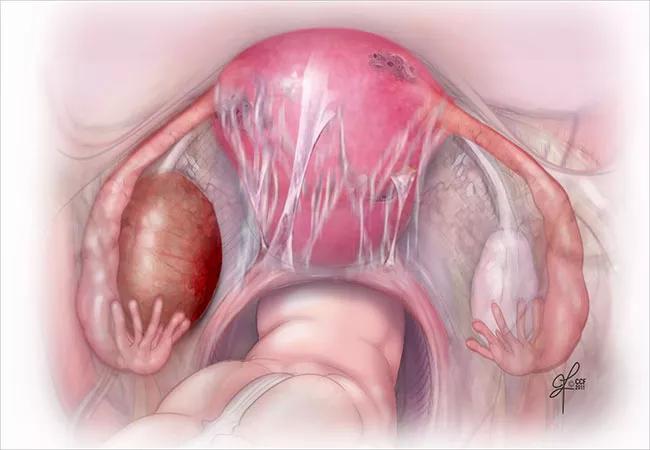
Image content: This image is available to view online.
View image online (https://assets.clevelandclinic.org/transform/82297baf-dfa1-4182-9f89-0ef3037a932a/17-OBG-431-Falcone-650x450_jpg)
17-OBG-431-Falcone-650×450
Endometriomas are one of the most common ovarian cysts. These may be associated with pelvic pain or infertility. Surgical removal is common. There are several controversies surrounding the management of these cysts.
Advertisement
Cleveland Clinic is a non-profit academic medical center. Advertising on our site helps support our mission. We do not endorse non-Cleveland Clinic products or services. Policy
For example, the removal of an endometriotic cyst is known to improve spontaneous fertility, but it may not improve outcomes with in vitro fertilization. In any event, it is unclear whether the presence of the cyst or its removal is associated with decreased ovarian reserve (loosely defined as the quantity of oocytes remaining in the ovary). There are several potential measures for ovarian reserve, of which anti-müllerian hormone (AMH) is the most frequently used.
Our group recently published a study in which we posed two questions: Is the presence of an intrinsic endometrioma associated with decreased ovarian reserve, and does its surgical removal decrease reserve further? This was a prospective study of women aged 18 to 43 years presenting with pelvic pain and/or infertility undergoing surgical management for suspected endometriosis (N = 58) or endometriomas (N = 58). Based on surgical findings, the suspected endometriosis group was further separated into those with evidence of peritoneal disease (N = 29) and those with no evidence of endometriosis (N = 29).
Baseline AMH values were significantly lower in the endometrioma group versus the negative laparoscopy group. Only patients with endometriomas had a significant decline in ovarian reserve at one month. Six months after surgery, AMH hormone values were no longer significantly different from baseline, demonstrating some recovery from surgery.
We concluded that, at baseline, patients with endometriomas had significantly lower AMH values compared with women without endometriosis. Surgical excision of endometriomas appears to have temporary detrimental effects on ovarian reserve. Clinically, this means that we should consider carefully the long-term impact on fertility when we remove an endometrioma.
Advertisement
Advertisement

Counseling and careful surgical considerations are key

Deprivation is linked to impaired glucose intolerance and racial disparities

Perioperative prophylaxis and class III obesity

Artesunate ointment is safe well and tolerated patients with vulvar intraepithelial neoplasia

Endoscopic balloon dilation during pregnancy helps optimize outcomes
Researchers examine waste and implore colleagues to take action

Mode of delivery does not affect patient satisfaction
 Search